





Young farmer turns job loss into smart farming success
 0
 0
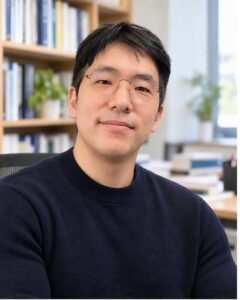
Woo Min-jae, 32, who operates a smart farm in Cheonan, South Chungcheong Province, inspects cherry tomatoes. Korea Times photo by Kang Jin-gu
On Oct. 7, Wooriga Green Farm, a cherry tomato smart farm in Seobuk District in Cheonan, South Chungcheong Province, was filled with rows of tomato vines stretching nearly to the greenhouse ceiling. Ripe red tomatoes hung in clusters along both sides of the aisles. They were the last fruits of the summer growing season.
The farm’s owner, Woo Min-jae, 32, is considered one of the region’s leading young farmers. He worked for a subcontractor of a major company in the Seoul metropolitan area from 2017 until late 2019, but lost his job when the factory relocated to China. Six years after leaving his job, Woo has transformed himself into a full-fledged farmer, operating a greenhouse operation covering 1,900 square meters. His farm generated 150 million won ($110,000) in revenue last year.
Young people like Woo are becoming increasingly scarce in rural areas. According to the Ministry of Data and Statistics, the rural farming population plunged from a little over 3 million in 2010 to just over 2 million in 2024. Over the same period, the proportion of farmers aged 65 and older surged from 31.8 percent to 55.8 percent. The number of designated population decline areas also rose from 89 in 2021 to 92 this year, leaving rural communities increasingly vulnerable to aging and population loss.
The National Agricultural Cooperative Federation, better known as NongHyup, is stepping up efforts to serve as a bulwark against rural aging and the potential disappearance of rural communities. It provides aspiring young farmers with assistance when they encounter challenges, offering agricultural training as well as support with settling down and finding markets for their produce.
Woo realized his dream of becoming a young farmer with NongHyup’s help. At his father’s suggestion that he learn about farming through the organization, he enrolled in the Young Farmers Academy in 2020. He first planted tomatoes for himself during the program and began to see the potential of smart farming.
Woo called the academy’s practical training the most helpful part of the program. In addition to learning how to farm, he learned how to apply for government support programs and improve his chances of being selected.
In 2023, he drew on notes he had taken during the course to prepare his personal statement and farm operation plan for Cheonan’s smart farm pilot project and was ultimately selected for the program.
“NongHyup’s training was a great help when applying for various support programs offered by local governments and other institutions,” Woo said.
NongHyup also helped him establish his farm. Through a policy financing program for young people starting agricultural businesses, he borrowed approximately 450 million won to purchase land. The loan came with a five-year grace period followed by a 20-year repayment period. He built the greenhouse through Cheonan’s pilot project.
Building a farm was only the beginning. Selling the crops he had painstakingly grown proved to be another challenge.
In 2024, his first year of operation, Woo sent his entire harvest to an agricultural wholesale auction market. After the sales, he had only 30 million won in proceeds. Once he deducted his various costs, virtually nothing was left, he said.
Woo decided to compete by offering a premium product. He switched to a sweeter tomato variety and began supplying his produce to NongHyup stores specializing in locally grown food. His tomatoes also received Good Agricultural Practices certification, which recognizes compliance with standards for safe and responsible farming.
As a result, his sales rose by more than 30 percent compared with his first year. After obtaining Cheonan Food certification, a local designation for regional produce, his purchase rate increased by more than 20 percent. He now receives prices higher than the top auction price even when market conditions are at their worst.
“By improving the variety and expanding offline sales channels, I can maintain higher prices even after fees, so I’m doing better than when I had an office job,” Woo said with a smile.
NongHyup also helped him break into online sales. Through the Young Farmers Academy, he took part in a crowdfunding campaign jointly organized by Naver and NongHyup. He later received consulting support from the academy that enabled him to lower his online selling prices.
Woo’s cherry tomatoes, combining an improved variety with competitive prices, quickly gained popularity among homemakers through word-of-mouth. Online sales alone reached 20 million won, far exceeding his initial expectations. He used to consider himself fortunate if he managed to sell even 1 million won worth of produce.
A cherry tomato smart farm in Cheonan, South Chungcheong Province. Courtesy of Woo Min-jae
Settling in rural Korea as young farmer
Woo is now helping others who aspire to become young farmers. This year, his farm was selected as a model farm run by an academy graduate by NongHyup’s Agricultural Startup Support Center. He now advises aspiring farmers who visit his greenhouse, helping them with farm design, cost estimates and other aspects of setting up their operations.
Woo emphasizes that anyone hoping to move to the countryside and take up farming should spend at least a year studying first. He himself spent four to five years learning before starting his farm.
“Even though I’ve studied consistently, I still feel there is a lot I don’t know,” he said, advising aspiring farmers to explore multiple sales channels rather than relying on just one.
He also urged them not to try to find their own way entirely on their own. Many organizations are ready to help — if they know where to look.
“If you’re just starting out in farming, you should build a close relationship with NongHyup,” Woo said. “They look into things beyond my knowledge as if they were their own concerns.”
Woo intends to remain rooted in the countryside.
“Through smart farming, I’m building a stable financial foundation and developing my expertise. The rural environment, close to nature, is also attractive for raising children and starting a family,” he said. “Even after starting a family, I will continue to live in the countryside, firmly establish myself in the region and build a lasting future here as a young farmer.”
This article from the Hankook Ilbo, the sister publication of The Korea Times, is translated by a generative AI system and edited by The Korea Times.