










Kookmin University professor named to World’s Top 2% Scientists list for 6th straight year
 0
 0

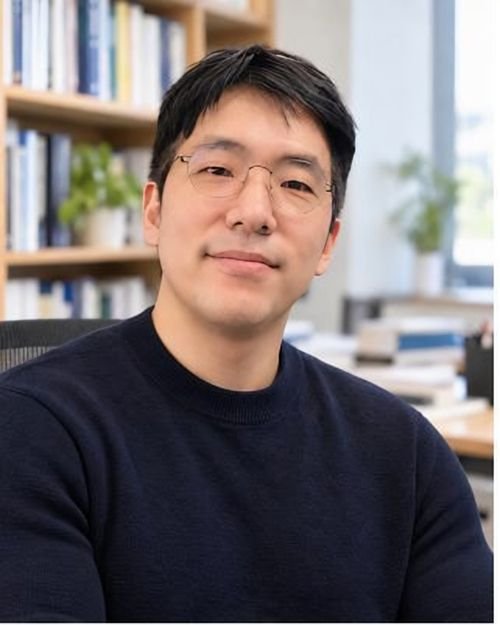
Choi Sung-jin, a professor at Kookmin University’s School of Electrical Engineering / Courtesy of Kookmin University
Choi Sung-jin, a professor at Kookmin University’s School of Electrical Engineering, has been named to the 2026 World’s Top 2% Scientists list jointly released by Stanford University and Elsevier.
The university said Choi has been included in the list for six consecutive years.
The list identifies the top 2 percent of researchers in their respective fields based on a comprehensive analysis of research impact, including citation metrics and research output, using data from Elsevier’s Scopus database.
The list covers two categories: “career-long,” which measures a researcher’s cumulative citation impact throughout their career, and “single-year,” which reflects citation impact in 2025.
Choi was included in both categories in the 2026 edition.
In applied physics, he ranks among the top 1.3 percent of researchers based on career-long impact and the top 0.9 percent based on single-year impact.
He has also demonstrated sustained academic influence, with more than 25,000 citations and an h-index of 70 or higher, according to Google Scholar.
The h-index measures research productivity and citation impact. An h-index of 70 means the researcher has published at least 70 papers that have each been cited at least 70 times.
“This recognition is meaningful because it shows that the research my students, fellow researchers and I have pursued over many years continues to be cited by researchers worldwide,” Choi said.
“Rather than being satisfied with publication counts or rankings, I will continue to pursue research that identifies the limitations of existing technologies and demonstrates new possibilities through actual devices.”
Choi researches next-generation semiconductor devices and three-dimensional integration technologies based on silicon and carbon nanotubes.
In particular, he has developed a low-temperature process that uses lasers to rapidly heat and crystallize silicon and applied it to silicon nanosheet transistors.
The approach reduces heat exposure for devices in lower layers while enabling new devices to be formed in upper layers. It could provide a foundation for highly integrated logic and memory chips.
He also analyzes numerous transistors fabricated on 8-inch wafers, combining experiments with computer simulations to determine how device dimensions and carbon nanotube interconnect structures affect performance.
More recently, Choi has expanded his research into artificial intelligence (AI) and hardware security.
His research spans carbon nanotube-based artificial synapses that mimic the brain’s learning mechanisms, pattern recognition, and security key generation using the distinct electrical properties of individual devices as “electronic fingerprints.”
He is also exploring multi-valued logic, which uses vertically stacked carbon nanotube channels to represent information in three states rather than the conventional binary states of 0 and 1.
The research could contribute to the development of low-power AI devices, authentication technologies for Internet of Things devices and high-density information processing systems.