










From Vietnam to Gulf of Aden: History of Korea’s overseas military deployments
 0
0  0
0 
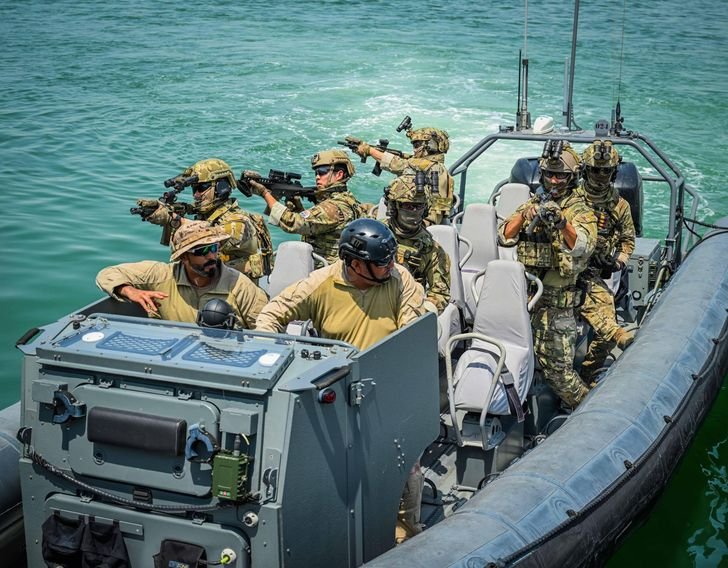
UDT personnel from Korea’s Akh Unit and UAE troops conduct an exercise in this 2024 photo. Courtesy of Joint Chiefs of Staff
Korea’s overseas military deployments have evolved over six decades, from combat operations during the Vietnam War to a broader range of missions focused on peacekeeping, reconstruction and maritime security.
The country’s history of overseas military deployments dates back to 1964, when it first dispatched medical personnel and taekwondo instructors to Vietnam, followed by combat troops in 1965. The deployment was one of the largest in the country’s history, with approximately 310,000 military personnel having served in Vietnam over a decade.
The lasting repercussions of the Vietnam War led to a prolonged decline in overseas military deployments until 1991 during the Gulf War, which broke out following Iraq’s invasion of Kuwait. As a multinational coalition was formed under U.N. resolutions, Korea’s National Assembly approved the dispatch of noncombat personnel: 154 medical personnel and 150-member Air Force transport unit equipped with five transport aircraft.
Following its accession to the U.N. in 1991, Korea began participating in U.N. peacekeeping operations, starting with the deployment of the Evergreen Unit to Somalia in 1993, two years after joining the international organization. Since then, Korean troops have increasingly undertaken noncombat missions, including engineering, medical assistance and reconstruction support.
During the early 2000s, Korea dispatched troops to Afghanistan and Iraq, primarily carrying out reconstruction and security missions.
Korea currently has four military units deployed overseas.
The Dongmyeong Unit — meaning “bright light from the East” in Korean — was first deployed to Lebanon in July 2007 under a U.N. Security Council resolution adopted following escalating clashes between Israel and militant group Hezbollah in southern Lebanon in 2006. With the mandate of the United Nations Interim Force in Lebanon (UNIFIL) set to expire this year, the unit is preparing to withdraw by the end of 2026, bringing nearly two decades of deployment to a close.
The Cheonghae Unit began its mission in March 2009 with the deployment of the destroyer Munmu the Great to the Gulf of Aden. Over the past 17 years, the unit has escorted vessels and supported safe passage in the region. One of its most notable achievements was the 2011 Operation Dawn of the Gulf of Aden, during which Korean naval commandos rescued the crew of Samho Jewelry, a cargo ship hijacked by Somali pirates, without losing a single hostage.
The Akh Unit was deployed to the UAE in 2011, following a request from the UAE government in August 2010, as it sought to enhance its military training capabilities and modernize its defense system by drawing on the experience and expertise of the Korean military.
Lastly, the Hanbit Unit was dispatched to South Sudan on March 31, 2013, following a U.N. request for international support to help stabilize and rebuild the newly independent nation as it formally seceded from Sudan in 2011. Since its deployment, the unit has carried out peacekeeping and reconstruction missions, helping improve infrastructure and support stability in the country.