







AI glasses raise cheating fears ahead of CSAT, putting teachers under pressure
 0
0  0
0 
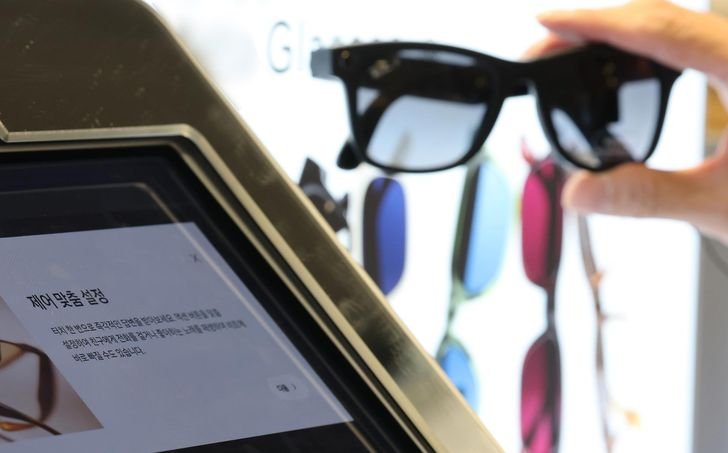
Artificial intelligence-powered smart glasses are displayed for sale at an electronics store in Seoul, Wednesday. Yonhap
A crackdown on cheating using artificial intelligence (AI)-powered smart glasses is raising concerns over mounting pressure on teachers tasked with detecting the devices, with the college entrance exam just a month away.
The Ministry of Education plans to require exam supervisors to inspect all test takers wearing glasses before each session of this year’s College Scholastic Ability Test (CSAT), or Suneung, as part of efforts to prevent AI-assisted cheating.
Under the rules, even possessing smart glasses without using them will be considered cheating. Violators will have their exam results invalidated and be barred from taking Suneung the following year.
The tougher measures come amid a series of cheating cases involving AI glasses during recent university entrance exams.
On Oct. 10, a student was caught wearing smart glasses during an entrance exam at Yonsei University. Although exam supervisors had checked students before the test began, the student reportedly switched glasses afterward, evading detection until later in the test.
A similar case was reported at the University of Seoul on Oct. 3, where a student was caught wearing smart glasses during an essay-based entrance exam. The university immediately removed the student from the examination room and banned them from taking the entrance exam for the next three years.
However, detecting AI glasses remains a challenge, as the devices closely resemble ordinary eyewear and are difficult to identify through visual inspections alone.
The additional checks are expected to increase the burden on teachers serving as CSAT proctors, who must identify potential cheating while overseeing the exam.
Although radio frequency detectors could help identify smart glasses, they are unlikely to be introduced in time for this year’s exam.
During a parliamentary audit on Oct. 7, Education Minister Choi Kyo-jin said that differences in testing environments could cause detection errors, making the devices difficult to deploy immediately.
This leaves exam supervisors largely reliant on visual inspections and their own judgment to identify AI glasses.
In response, the education ministry plans to produce training videos to help exam supervisors identify different types of AI glasses, distinguish them from ordinary eyewear and recognize suspicious behavior that could indicate their use.
However, teachers argue that training alone is insufficient to address the challenges of detecting AI-assisted cheating.
Proctors could face disputes if students challenge or refuse inspections, while prolonged checks risk disrupting the exam for other test takers. Teachers must also identify potential cheating while overseeing exam procedures and handling complaints, adding to concerns over their growing responsibilities.
Against this backdrop, teachers are calling for improved working conditions and clearer guidelines on handling suspected cheating cases.
The National Union of Secondary Teachers launched a nationwide petition Thursday, calling for improved working conditions for CSAT proctors and greater government accountability for exam supervision.
The union called for additional staff to assist with AI glasses inspections, along with clear guidelines for handling disputes and determining responsibility when problems arise.
The union plans to submit the petition results to the education ministry, the Korea Institute for Curriculum and Evaluation and regional education offices, urging immediate measures for this year’s CSAT, as well as longer-term reforms to ease the burden on teachers.