













For K-pop fans, the return of I.O.I, Wanna One is more than nostalgia
 0
0  0
0 
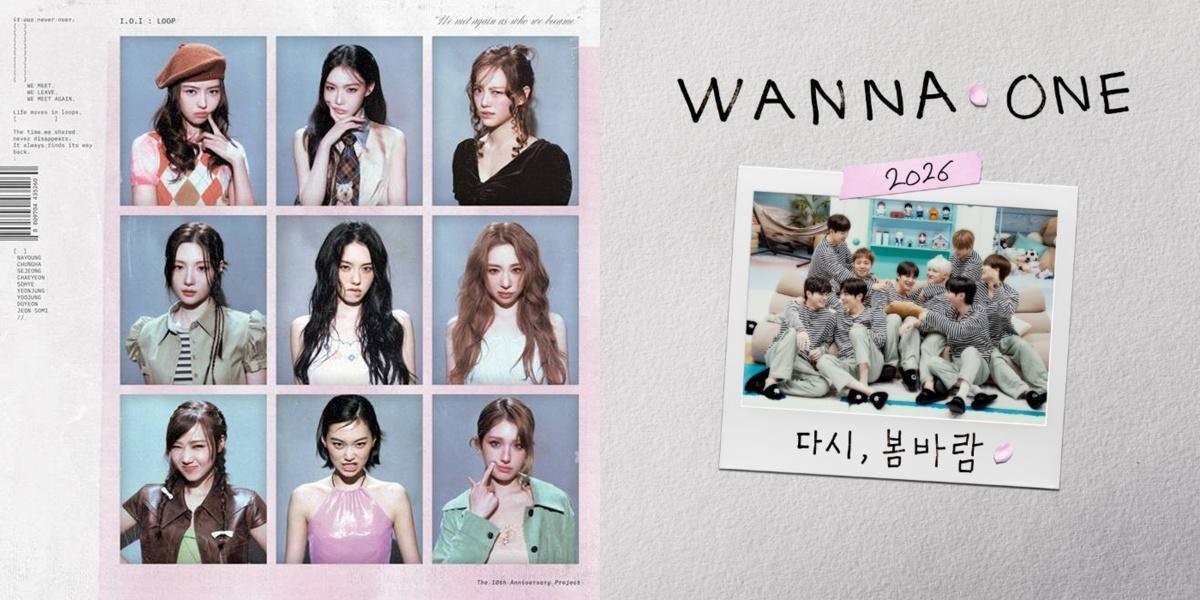
Project groups I.O.I and Wanna One are once again stirring fans’emotions. Courtesy of Swing Entertainment and CJ ENM
I.O.I and Wanna One are returning, bringing two of K-pop’s most symbolic audition-born project groups back into the spotlight.
Their comeback has stirred nostalgia among longtime fans, but the move appears to be more than a sentimental revival. In today’s K-pop content market, familiar names with proven fandoms have become powerful acts capable of competing with newly launched groups.
The two groups represent the golden age of “project groups,” temporary idol acts formed through audition programs. In 2016, Mnet launched the first season of “Produce 101,” introducing K-pop to the idea of “national producers,” in which viewers voted to decide which contestants would make the final lineup.
The show quickly became a sensation, as fans followed the contestants’ growth arcs, rivalries and emotional competition narratives with near-syndromic intensity. I.O.I., whose members were chosen through the program, built a powerful fandom almost immediately after its debut.
Though the group was active for only about a year, I.O.I. left a deep mark in the K-pop industry with songs such as “Dream Girls,” “Very Very Very” and “Downpour” before disbanding.
A reunion was first floated in 2019 but never materialized after repeated delays, which is why I.O.I’s newly released song “Suddenly,” arriving ahead of the group’s 10th debut anniversary, is all the more emotional for fans.
Similarly, Wanna One reshaped the K-pop boy group landscape after debuting through “Produce 101” Season 2 in 2017. Songs such as “Energetic,” “Beautiful” and “Spring Breeze” topped charts, advertising deals were booked months in advance and individual members drew attention in their own right. After nearly two years together, Wanna One brought its run to a close with a farewell concert in January 2019.
Now, halfway through 2026 and as criticisms ring within the K-pop industry that groups are debuting and disbanding too quickly, the enthusiastic welcome for I.O.I and Wanna One’s return hardly feels coincidental. As some observers argue that it has become harder to name groups with a lasting impact, the renewed attention surrounding the two acts is not merely fondness for the past.
The content released on YouTube and social media does not stop at reuploading relics of the past. The members themselves gather again, talk about where they are now, look back on their time together and share previously untold behind-the-scenes stories. A short teaser for such content can dominate social media trends, while past performance videos suddenly draw new viewers.
For fans, the reaction goes beyond simple happiness. Comments flooded in, with many saying, “The feelings from back then are coming back,” “It reminds me of my school days” and “They were my youth.”
The emotional bond runs especially deep for the two groups because fans watched both groups’ entire journey, from trainee days to debut, promotion and disbandment. They did not merely consume the music; they voted during live survival broadcasts, waited for text-vote results and watched debut stages unfold in real time, forming a deep attachment to their favorite contestants along the way.
That is why the value of I.O.I and Wanna One is proving to have staying power, with each new piece of content drawing strong viewership and engagement. But whether that momentum can lead to a full reunion remains uncertain, as realistic obstacles still stand in the way.
The former members are now scattered across different agencies, and coordinating their schedules alone would be difficult. Bringing everyone together would require far more extensive negotiations. Wanna One’s case shows the limits of such a reunion, as its return has so far taken the form of a fan song and a six-episode reality show, rather than a full-fledged comeback.
Still, fans continue to wait, and their anticipation is not misplaced. As the explosive reactions have shown, the short but intense journey they shared with the groups still lives vividly in their memories.
This article from the Hankook Ilbo, the sister publication of The Korea Times, is translated by a generative AI system and edited by The Korea Times.