









US reaffirms alliance cooperation after Lee names new foreign, unification ministers, spy chief
 0
 0

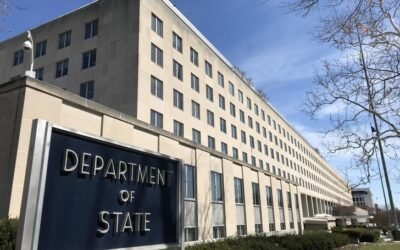
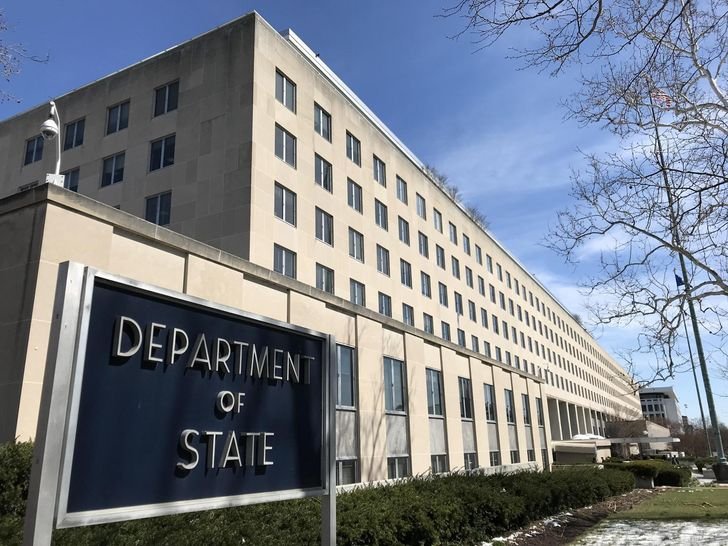
A general view of a U.S. State Department sign outside the U.S. State Department building in Washington D.C. Yonhap
WASHINGTON — The U.S. State Department on Tuesday stressed the importance of close cooperation with South Korea following President Lee Jae Myung’s nomination of new officials to lead the country’s foreign policy, intelligence and inter-Korean affairs.
On Monday, Lee nominated Lim Woong-soon, currently the second deputy national security adviser, as foreign minister; former Justice Minister Kang Kum-sil as director of the National Intelligence Service (NIS); and former lawmaker Hong Ihk-pyo as unification minister.
“The United States values the importance of close cooperation in the U.S.-ROK Alliance,” a State Department spokesman said in response to a query from Yonhap News Agency regarding the nominations of new Cabinet members and a new spy chief.
ROK stands for the Republic of Korea, South Korea’s official name.
“We continue to advance U.S. and mutual interests with our ally the ROK,” the spokesman said.
The spokesman declined to comment directly on the nominations, saying, “We refer you to the ROK regarding decisions on its cabinet.”
The nominees are subject to parliamentary confirmation hearings before their formal appointments.
The nominations came amid concerns over friction in bilateral intelligence cooperation following Unification Minister Chung Dong-young’s disclosure in March of North Korea’s Kusong region as one of the sites housing a uranium enrichment facility.
The disclosure, made during a parliamentary session, reportedly prompted Washington to restrict Seoul’s access to some intelligence on North Korea.
In October, the NIS acknowledged that it had been excluded from a June trilateral meeting with the United States and Japan on North Korean cyber threats.
The agency, however, maintained that intelligence sharing between Seoul and Washington remained active across a wide range of areas and that the overall volume of intelligence provided by the U.S. had not declined.