













Prioritise projects to maximise value for money — ISSER urges govt
 0
 0
The Institute of Statistical, Social and Economic Research (ISSER) has urged the government to prioritise public expenditure and strengthen monitoring to ensure value for money and create jobs.
It said prioritising projects, improving spending efficiency and ensuring transparency in the use of public funds would enable the government to deliver more infrastructure, minimise waste and create decent jobs for Ghanaians.
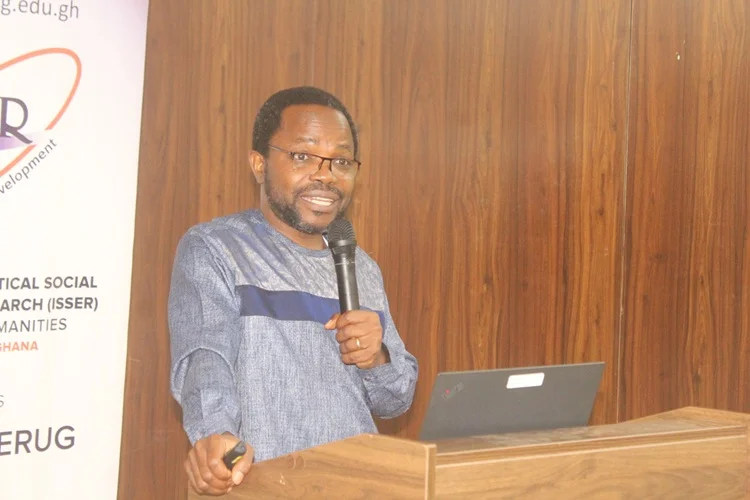
Speaking at the 2027 Budget Review in Accra yesterday, the Head of the Economics Division of ISSER, Professor Fred Dzanku, said the increase in capital expenditure was a positive step towards addressing the country’s infrastructure deficit and unemployment.
He said, however, that the selection of projects must be guided by clear national priorities to ensure that limited public resources were invested in areas with the greatest potential to drive economic growth and create jobs.
Professor Dzanku said capital expenditure had fallen short of targets in seven of the past 14 years, noting that in 2025, the government spent only about 62 per cent of the amount budgeted for capital projects.
He said the situation had improved in 2026, with about 91 per cent of the projected capital expenditure recorded as of October, but stressed the need for further efforts to ensure efficient implementation.
He also called for greater transparency in public procurement and contract management to enable public institutions and citizens to monitor how public funds were spent.
“If one kilometre of road can cost, let’s say, one dollar, and it costs two dollars, it means that you could have built twice the length of road that that money went into building,” he said.
Professor Dzanku said efficient public spending would enable the government to provide more infrastructure, reduce waste and create additional employment opportunities without necessarily increasing borrowing.
He said addressing financial leakages and illicit financial flows could release substantial resources for critical investments, adding that borrowing was not necessarily bad if the funds were used efficiently and secured at competitive interest rates.
On job creation, he said economic growth must translate into decent employment opportunities for Ghanaians, particularly the youth.
He explained that expansion in manufacturing, agriculture and agribusiness had greater potential to generate employment than growth driven largely by the services sector.
Professor Dzanku said government programmes should have built-in mechanisms to track employment outcomes, including the number of people employed, their earnings, pension contributions and the quality of jobs created.
He said reliable employment data was essential for effective planning, warning that inflated job figures could mislead policymakers and undermine efforts to address unemployment.
BY ENOCK KWAME OFORI
SKIP THE QUEUE, TAP THE NEWS

Read the Ghanaian Times and The Spectator newspapers from the comfort of your device via TimesNewsPlus.
Follow our WhatsApp Channel now! https://whatsapp.com/channel/0029VbAjG7g3gvWajUAEX12Q