














There is reason to hope that the Democrats might deliver this time | US Midterm Elections 2026
 0
 0
In the days since the midterm elections in the United States, many commentators have argued that the “blue tsunami” signalled a popular rejection of US President Donald Trump, but not a new love for Democrats. They are right to warn that if the Democratic Party fails to deliver, it will likely face the same kind of anti-incumbent anger in the next election cycle.
I have personally spilled loads of ink arguing that the Democratic old guard’s embrace of neoliberalism is a huge part of what created the crisis conditions that enabled Trump’s rise to power in the first place, and has severely hampered their ability to stop him over the past decade.
But this election cycle was different in remarkable ways. To put it in plain terms, the Democrats started “sucking less” — not all of them, but a lot of them. And this recent demonstration of “sucking less” is what is presently providing me with at least an ounce of hope that the party might actually manage not to blow this historic opportunity.
How did the Democrats “suck less”? First off, there was a proliferation of progressive economic populist candidates who explicitly took on powerful corporations and positioned themselves clearly as fighters for working-class people. The economic populist insurgency within the Democratic Party gained significant ground in this cycle.
Some might wonder, what took so long? For one, it’s easy to forget that the electoral insurgency within the GOP had an eight-year head start on the insurgency within the Democratic Party — and that head start has been enormously consequential.
In the wake of the 2008 financial meltdown, it was, ironically, conservative anti-establishment energy that first captured populist momentum through the Tea Party. With the help of organisations such as FreedomWorks, that energy was quickly channelled into Republican Party primary contests. By 2014, Tea Party activists had unseated GOP House Speaker Eric Cantor and set the stage for Trump.
Nearly three years after the Tea Party kicked off, Occupy Wall Street was the left’s opening salvo in the populist era. By framing a popular class conflict (the 99% vs the 1%) and naming popular villains (Wall Street and big banks), Occupy dramatically changed the national “common sense” about the evils of runaway inequality.
But the grassroots movement was allergic to the electoral realm. Senator Bernie Sanders’ 2016 presidential run brought Occupy’s core message onto electoral terrain, but it wasn’t until the 2018 midterms — with the election of Representative Alexandria Ocasio-Cortez (AOC) and “the Squad” — that the left’s capacity for electoral insurgency caught up with where the right already was in 2009.
Since then, independent progressive organisations such as Justice Democrats, the Working Families Party, Democratic Socialists of America, the Sunrise Movement, and countless local and statewide organisations (for example, PA Stands Up and PA United in my home state of Pennsylvania) have been developing their capacity for recruiting and supporting working-class champions to run for office.
This has been a profound development. Over the course of a decade now, in fits and starts, this groundswell of independent grassroots organising has broken the Democratic Party establishment’s virtual monopoly on candidate recruitment. The 2026 midterms demonstrated a significant increase in capacity to run working-class champions for Congress.
And without diminishing the importance of this long-term organisational investment, it is clear that 2026 also saw an organic proliferation of candidates who ran as champions of the working class. This organic proliferation didn’t happen by chance: It was the result of a profound shift in common-sense notions of what constitutes a winning message.
Over the past decade, a growing chorus of voices in Congress and on the campaign trail has taken up the message Bernie originally popularised, arguing for the same reforms and overhauls, from passing Medicare for All and making housing and childcare affordable, to reining in artificial intelligence (AI) and taxing the rich.
But it took a confluence of events to finally start to break into the mainstream of the Democratic Party in the 2026 cycle.
One key event, unfortunately, was Trump winning a second term. An important casualty of Trump’s second victory was the median Democratic voter’s faith in party leadership. The arc of results and consequences from 2016 to 2024 suddenly cleared the fog, exposing a damning narrative about the party leadership’s negligent qualifications when it came to winning elections.
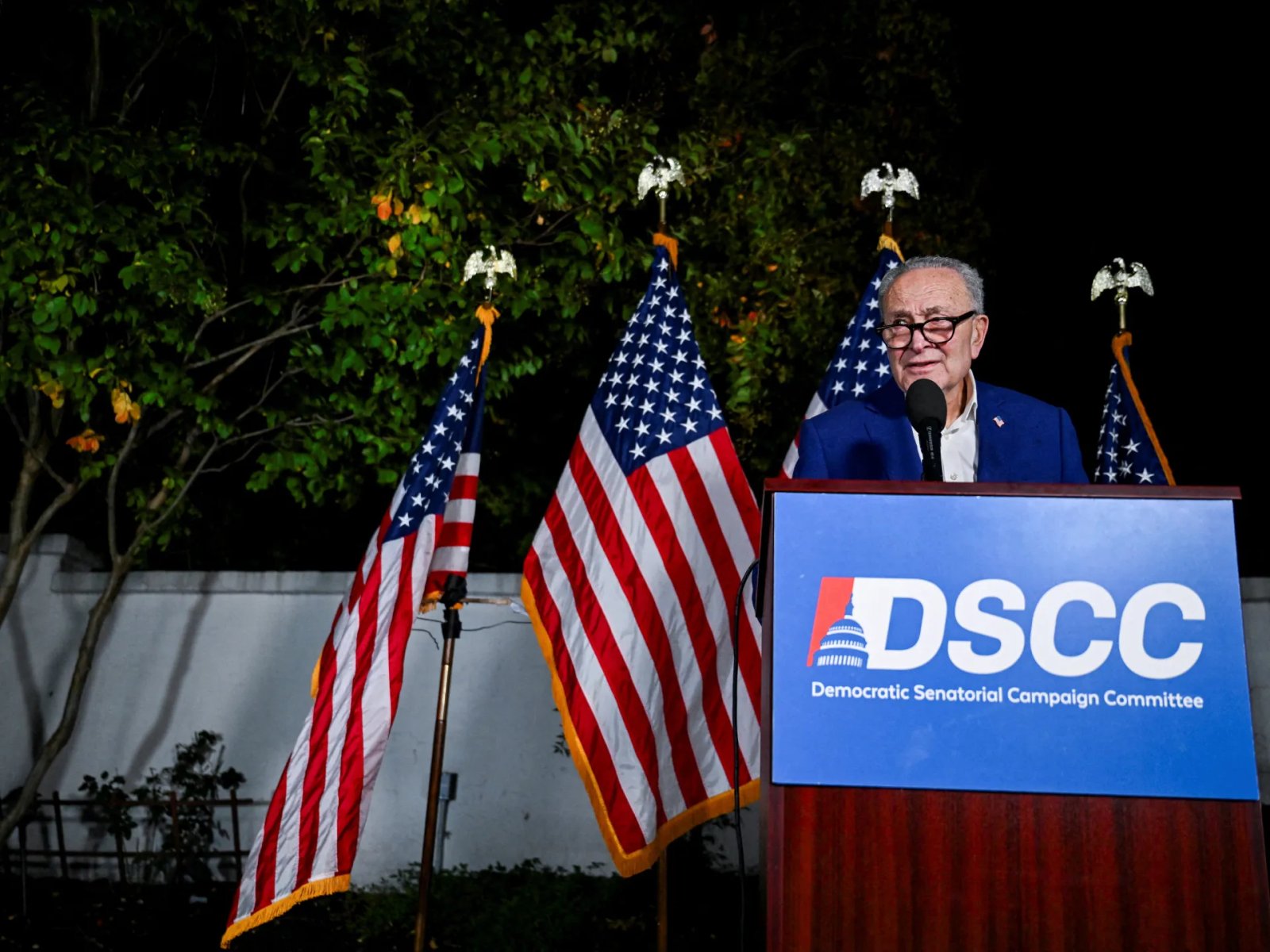
All that stuff they told us about Bernie being “too far left”, all their wisdom about “electability” was nonsense. The acceleration of the party’s already severe bleed of working-class voters in 2024 and its alarming spread to Black and Latino voters exposed the utter bankruptcy of Democratic leader Chuck Schumer’s lauded affluent suburban swing voter strategy.
The next key event was more uplifting, thankfully. In 2025, in a moment when progressive hopes were at their lowest ebb, suddenly Democratic Socialist Zohran Mamdani showed up out of nowhere with one of the most captivating and inspiring mayoral campaigns in US history, winning the Democratic nomination for mayor of New York City, and then the election.
Mamdani’s incredible message discipline centred around one word: affordability. With a discredited party leadership, mostly missing in action, Mamdani effectively filled a leadership and vision vacuum. Meanwhile, Bernie and AOC were crisscrossing the country, filling stadiums and energising the base with their “Fighting Oligarchy” tour.
On the eve of the 2026 midterm season, economic populism had become the only thing on offer, the only thing that seemed to credibly have a chance. Suddenly, a whole lot of Democratic candidates and officeholders were talking about affordability and the working class.
One of the few things party leadership did right in 2026 was not derailing this growing populist message and momentum. So while Schumer and House Minority Leader Hakeem Jeffries remain unpopular, a movement among the rank-and-file and a new crop of economic populist candidates managed to land a coherent and compelling narrative.
An orthodox Marxist might argue that the explanation for the Democratic Party’s failure over the past decade to connect to working-class voters is straightforward: It doesn’t want to bite the hand that feeds it, in other words, billionaires and powerful corporations that provide millions in campaign contributions.
While big money undoubtedly provides significant incentives, I take a perspective more like sociologist Max Weber’s, where the political class has an important degree of “relative autonomy”. Most political operatives genuinely want to win elections, but their ideas about how to do so are constrained and distorted by the elite cultural milieu in which they are embedded.
It’s taken a full 10 years since Trump’s first victory for economic populism to finally break into the elite bubble of the liberal consultant class, or at least to bypass it and finally approach a critical mass of candidates and officeholders in the Democratic Party who grasp how the world has changed, what hardship and precarity most Americans are experiencing, and how to win working-class voters back.
In his 2016 run for president, Bernie was not “ahead of his time”. He was reading the times perfectly. What he was ahead of was an out-of-touch Democratic Party establishment, whose misreading of the times enabled a dangerous authoritarian pseudo-populist to ascend to power and set America’s downward spiralling course for a decade now.
Tuesday’s historic “blue tsunami” was not only the result of Trump’s failures. The 2026 midterm election cycle also saw the start of the remaking of the Democratic Party to be a party that — as Bernie steadfastly exhorts us — fights for the working class.
Yes, sure, Bernie probably would have won the general election back in 2016 and 2020. But more to the point today: Bernie is winning. That is to say, by finally moving towards an economic populist agenda and a commitment to America’s working class, the Democratic Party might just be starting to find its popular voice.
Tuesday’s results do not mean US voters have sworn loyalty to the Democratic Party. But they have given it another chance. A chance to deliver and improve people’s lives. It would be wise and electorally prudent to deliver… bigly.
The views expressed in this article are the author’s own and do not necessarily reflect Al Jazeera’s editorial stance.