












Global greenhouse gas levels hit new heights in 2025: report
 0
 0

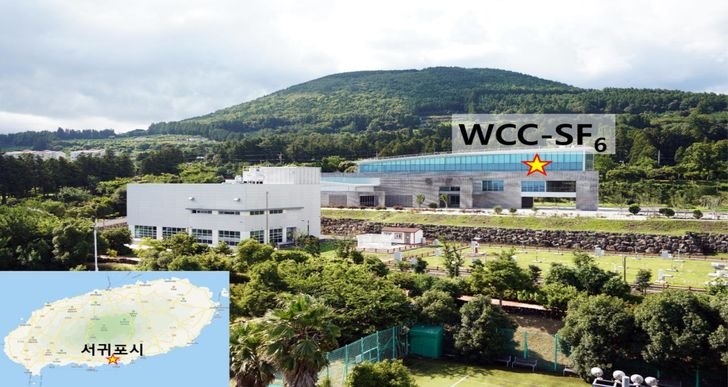
The World Calibration Centre for Sulfur Hexafluoride operated by the Korea Meteorological Administration in Seogwipo, Jeju Island / Courtesy of Korea Meteorological Administration
Global atmospheric concentrations of heat-trapping greenhouse gases reached unprecedented highs in 2025, according to a report released by the World Meteorological Organization (WMO), driven by continued fossil fuel combustion and industrial activity.
Carbon dioxide (CO₂) levels in the atmosphere hit a record high of 426.8 parts per million (ppm) — meaning there are now 1.5 times as much CO₂ in the air as there was before the Industrial Revolution in 1750. Two other powerful heat-trapping gases, methane and nitrous oxide, also reached record highs.
But the report offered a slight silver lining regarding carbon dioxide.
The annual concentration increase slowed to 2.8 parts per million in 2025, down from 3.5 parts per million the previous year. Climatologists attributed the temporary moderation to the recovery of terrestrial carbon sinks and a decline in wildfire activity following the strong El Niño phenomenon of 2023 and 2024.
Regional monitoring data from Korea reflected an even starker trajectory.
Findings published by the Korea Meteorological Administration showed background concentrations at local monitoring stations — including Anmyeon Island, Jeju Gosan and Ulleungdo — outpaced the global average across all major gases. Korea recorded carbon dioxide levels at 432.7 parts per million, methane at 2,023 parts per billion, and nitrous oxide at 340.6 parts per billion. Over the past decade, Korea’s annual rate of increase for carbon dioxide averaged 2.7 parts per million, consistently exceeding global growth rates.
The WMO report also highlighted emerging threats associated with the ongoing global transition toward renewable energy, explicitly flagging sulfur hexafluoride and hydrogen. Sulfur hexafluoride, a synthetic gas heavily utilized as an electrical insulator in power grids, possesses a global warming potential 24,300 times greater than carbon dioxide over a 100-year span and persists in the atmosphere for over a millennium. Atmospheric concentrations of the gas experienced their largest annual jump on record in 2025. Experts warned that leaks of such gases risk offsetting the climate benefits gained from shifting away from fossil fuels.
Korea has played a central role in tracking these synthetic pollutants. The country’s weather agency has continuously monitored sulfur hexafluoride since 2007 and, since 2012, has operated the WMO World Calibration Centre for SF₆. The facility provides calibration, training, and standard assessments for observation stations worldwide under the Global Atmosphere Watch program.
“Long-term observations provide the essential scientific groundwork for understanding climate change,” said Lee Mi-seon, administrator of the Korea Meteorological Administration. She emphasized that Korea’s monitoring stations and calibration center will continue supporting global climate tracking and national net-zero strategies.
This article was published with the assistance of generative AI and edited by The Korea Times.