












Korea, US kick off combined air drills this week
 0
 0

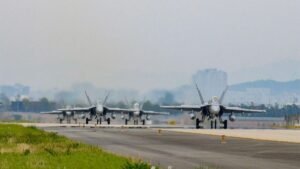
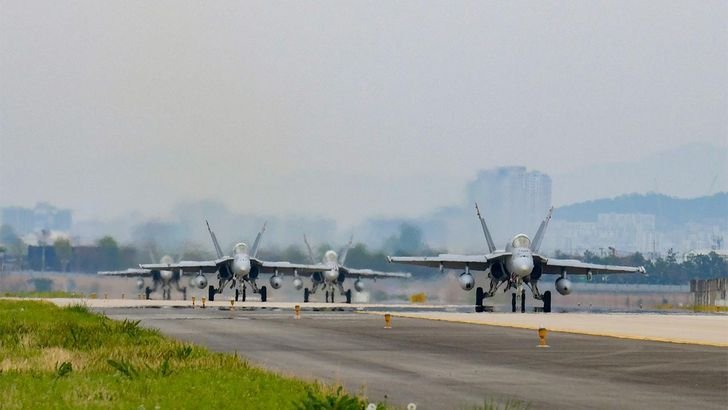
U.S. Marine Corps F/A-18 Hornet combat aircraft of the U.S. Marine Corps prepare for takeoff during the Freedom Flag combined air exercise with the Korean Air Force, at an air base in the southwestern city of Gwangju, about 270 kilometers south of Seoul, April 23. Courtesy of the Korean Air Force
Korea and the United States kicked off their combined air drills this week, focusing on counter-air and air interdiction missions aimed at enhancing wartime joint operations, the Air Force said Monday.
The Freedom Flag exercise began Monday for a two-week run at Kunsan Air Base in Gunsan, about 180 kilometers southwest of Seoul, involving the allies’ key aerial assets, including the Korean Air Force’s F-15K, KF-16 and F-35A fighter jets, the armed force said in a release.
The KC-330 transport aircraft and E-737 Peace Eye early warning and control aircraft will also be deployed for the exercise.
The U.S. Air Force’s F-16 Fighting Falcon jet, RC-135 reconnaissance plane and its Navy’s MH-60S Seahawk helicopter, as well as the F-35B stealth fighter jet and the MQ-9 Reaper unmanned surveillance aircraft of the U.S. Marines Corps will also participate in the drills.
The air forces will operate day and nighttime “mission planning cells” to exchange tactics and expertise, while refining wartime operational and mission execution procedures, the Air Force said.
The missions are designed to enhance interoperability and build wartime combined operational capabilities, such as defensive counter-air and air interdiction, it said.
Reflecting the changing modern warfare environment, the drills will also evaluate the planning and execution of Korea-led combined exercises in line with the ongoing efforts for Seoul’s retaking of wartime operational control (OPCON) from Washington, the Air Force noted.
Korea seeks to retake wartime OPCON from the U.S. by 2030 or at an earlier date by verifying its capabilities to lead the combined forces.
The semiannual Freedom Flag drills were launched in 2024 to replace regular large-scale air exercises between the allies — the Korea Flying Training in the first half of the year and Vigilant Defense in the second half.