









Reviving Korea’s traditional dress in heart of Seoul
 0
0  0
0 
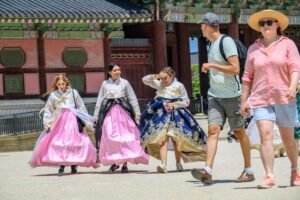
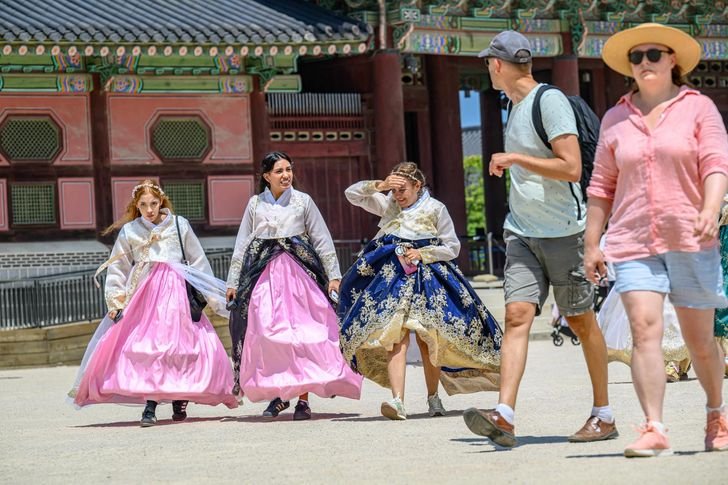
Tourists wearing hanbok walk through Gyeongbok Palace in central Seoul, as cultural authorities launch a campaign to promote traditional Korean attire. Korea Times photo by Shim Hyun-chul
On any given afternoon near Gyeongbok Palace, the open courtyards resemble a historical pageant. Swirling skirts and embroidered coats flap against centuries-old timber pillars as thousands of visitors step out in “hanbok” — the traditional dress of Korea.
Refined over more than a millennium and rooted in the Joseon Dynasty (1392 to 1910), the classic attire features fluid silhouettes: a “jeogori” (jacket) paired with a sweeping “chima” (skirt) for women or “baji” (trousers) for men. While historically tailored from hemp, ramie or silk to reflect social standing and seasonal shifts, the garments are celebrated today for their understated elegance and harmony.
Driven by global interest in period dramas and modern pop culture, renting hanbok has transformed from a niche cultural activity into a highlight for domestic and international travelers exploring Seoul’s historic core. However, as costumed crowds have expanded, concerns have grown over cheap synthetic knockoffs and historical inaccuracies that obscure the authentic craft behind the garment.
To counter that shift, cultural authorities are stepping in.
Korea’s Ministry of Culture, Sports and Tourism, together with the National Heritage Service and the Korea Craft & Design Foundation, will kick off an educational drive at Gyeongbok Palace in central Seoul, Monday, to promote traditional standards. The effort coincides with the start of Hanbok Culture Week, which runs from Monday to Oct. 25.
Vice Minister of Culture Kim Young-soo will join representatives from 24 rental shops and 17 social media creators near Gyeonghoeru pavilion to mark the launch. Participating shops around the palace grounds will distribute multilingual guidebooks and QR code guides detailing the history, components and proper fit of authentic garments, ensuring renters understand what they are wearing.
“With rental shops increasingly expanding their selection of high-quality, authentic garments, we expect this collaborative campaign to cultivate a genuine culture of wearing hanbok correctly around Gyeongbok Palace,” Kim said.
Interactive booths near Gyeonghoeru will feature educational quizzes and pop-up exhibitions showcasing royal court garments and iconic attire featured in hit films and dramas. To encourage participation, visitors who wear traditional hanbok correctly will receive a “norigae” — a decorative ornament —that serves as a special pass. The keepsake unlocks 10 to 20 percent discounts at 27 partner venues through the end of the year, including National Museum of Korea gift shops, nearby cafes and retail shops adjacent to the palace.
This article was published with the assistance of generative AI and edited by The Korea Times.