










Korea eyes new dome stadiums for sports, K-pop concerts
 0
0  0
0 
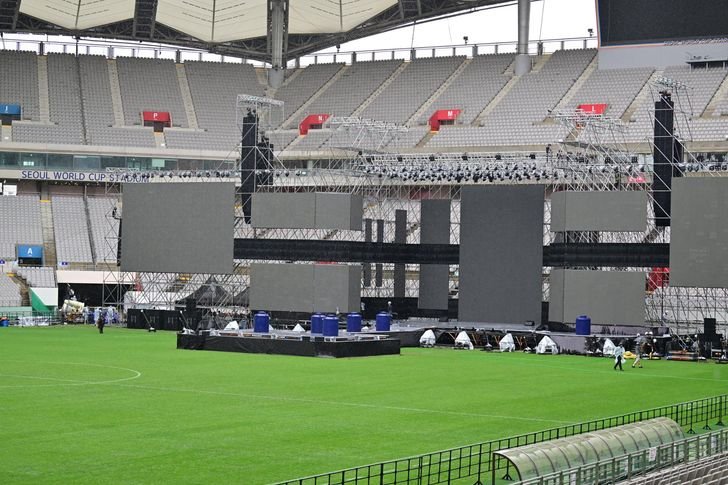
Stage crew members set up a concert stage in the rain at Seoul World Cup Stadium, as Typhoon Khanun tracks north over the Korean Peninsula, Aug. 10, 2023. Yonhap
Korea has launched an ambitious national search for candidate sites to construct next-generation multipurpose indoor stadiums, aiming to address a chronic shortage of premier venues capable of hosting international sporting events and global K-pop concerts year-round.
The Ministry of Culture, Sports and Tourism said Wednesday that it will accept bids from regional local governments and public institutions through Dec. 8. The government plans to select two candidate sites by the end of December — one for a large-scale dome capable of seating at least 40,000 spectators and accommodating over 50,000 people for concerts, and another for a medium-scale venue designed for 20,000 to 40,000 seats.
The multibillion-won initiative, targeted for completion in 2034, reflects the government’s broader policy agenda to expand public access to sports and culture while establishing iconic, world-class landmarks to draw international tourists and stimulate regional economies.
The drive comes as Korea’s cultural and entertainment industries grapple with an acute lack of covered, mega-capacity arenas.
Although top-tier K-pop acts regularly pack stadium-sized venues worldwide, major concerts at home have long been forced to rely on aging outdoor facilities like the Seoul Olympic Stadium or professional baseball parks. These venues pose severe weather risks, operate under strict nighttime noise regulations and create seasonal scheduling friction with domestic sports leagues.
Under the ministry’s guidelines, the large-scale dome must feature a minimum total floor area of 130,000 square meters, while the medium-scale facility requires at least 80,000 square meters. The government also mandates that applicants incorporate cutting-edge smart technologies, including artificial intelligence and 6G network infrastructure, to create immersive and interactive environments for spectators.
“We expect these hybrid sports and performance domes to serve as global stages showcasing the attraction of Korean sports and K-culture to the world,” Culture Minister Chae Hwi-young said, emphasizing that the selection process will prioritize site accessibility, financial feasibility and long-term regional economic impact.
Participating local governments and public agencies must submit a formal letter of intent by 6 p.m. on Oct. 28, followed by comprehensive business proposals in December. An independent evaluation committee of external experts will conduct written reviews, site inspections and presentation evaluations before announcing the winning candidate locations in late December.
Selected sites will undergo preliminary feasibility studies through late 2027 before moving into formal architectural design, environmental assessments and local licensing procedures, paving the way for construction of the country’s new flagship cultural complexes, the ministry said.
This article was published with the assistance of generative AI and edited by The Korea Times.