








 0
0  0
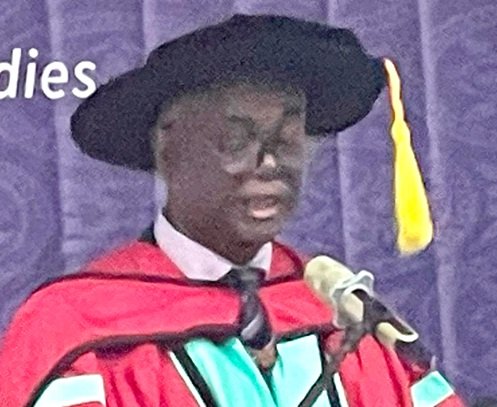
0 A Professor of Applied English Linguistics at the University of Cape Coast (UCC), Prof. Joseph Benjamin Archibald Afful, has called for urgent reforms in academic writing instruction across Ghanaian universities, warning that current systems are limiting students’ ability to compete in global research and publishing spaces.
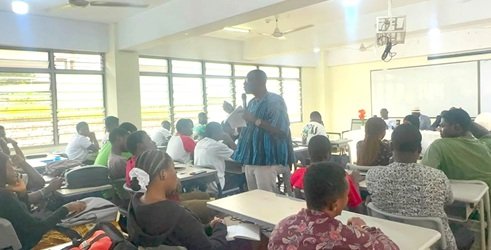
Delivering his inaugural lecture on the theme: “A Tale of Two Cities: The Case of an Applied English Linguist”, he stressed that academic writing training should move beyond basic language correction to specialised, discipline-driven instruction that equipped postgraduate students for international scholarship.
He noted that many graduate students in Ghana continued to face difficulties in critical analysis, synthesis of ideas, referencing and academic expression, challenges he said weaken their chances of publishing in reputable international journals.
Observation
The Professor of Applied English Linguistics observed that although English served as the official language of instruction in Ghana, students operated within complex linguistic environments that influenced how they write and communicate academically, particularly at higher levels of study.
Drawing on over two decades of research in applied linguistics and sociolinguistics, he explained that his scholarly work had focused on academic writing practices, research article structures and language used in both academic and social settings.
He emphasised that issues such as research article titles, abstracts and thesis writing continued to expose significant gaps in postgraduate academic literacy, calling for universities to prioritise structured writing support for graduate students.
Prof. Afful further urged a review of existing academic writing courses in institutions such as UCC, noting that some programs have remained largely unchanged for years despite evolving global academic demands.
Recommendadtions
He recommended the introduction of specialised English for Academic Purposes (EAP) and academic publishing courses across all public universities in Ghana to improve research quality and international visibility.
Beyond academic writing, the professor also explored sociolinguistic dimensions of communication, particularly naming and address practices in Ghana, which he said reflect identity, power relations, and cultural values in everyday interaction.
He explained that forms of address used in universities, homes, and workplaces were not merely linguistic choices but social tools that shaped relationships and reflected underlying cultural dynamics.
Prof. Afful further called for stronger policy attention to indigenous communication practices, urging institutions and government agencies to integrate local naming systems and address conventions into formal communication frameworks.
He also appealed for increased investment in language and communication research, especially in understudied areas of Ghanaian sociolinguistics, to strengthen curriculum development and policy formulation.
Mentorship
He emphasised the need for mentorship and capacity-building for young researchers, stressing that strengthening academic writing and publishing literacy was key to positioning Ghanaian scholarship on the global stage.
The acting Vice-Chancellor of UCC, Prof. Dennis Worlanyo Aheto, commended Prof. Afful for what he described as a rich and thought-provoking inaugural lecture that highlighted the university’s growing contribution to global scholarship in applied linguistics and academic literacy.
He noted that the presentation reflected the university’s commitment to research excellence and its role in addressing contemporary challenges in higher education, particularly in strengthening academic writing and research capacity among postgraduate students.