








US prison term counts toward Korean military exemption, court rules
 0
0  0
0 
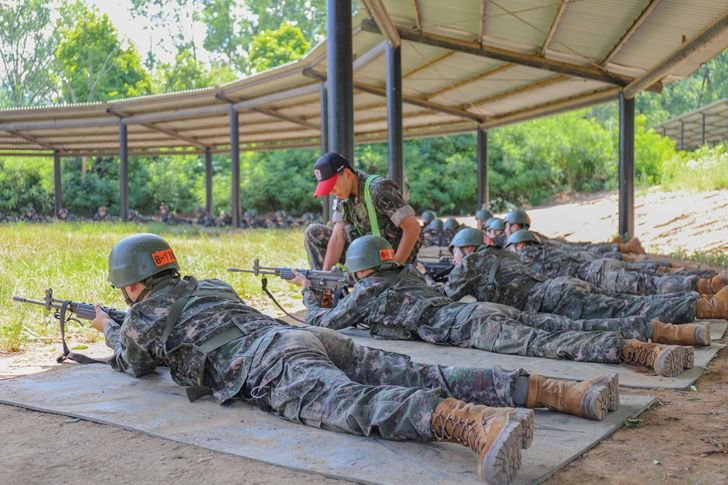
Recruits undergo firearms training at the Army Training Center in Nonsan, South Chungcheong Province in this undated photo. Courtesy of Republic of Korea Army
A Korean-born man who spent 14 years in a U.S. prison for armed robbery does not have to serve in the Korean military, a Seoul court has ruled, extending an exemption for convicted inmates to those who have served their jail sentences overseas.
The ruling rejects the Military Manpower Administration’s position that only inmates transferred to Korea to complete their sentences qualify for exemption. The court did, however, attach a condition meant to keep the exemption from becoming a loophole for draft evasion.
Under the Military Service Act, anyone sentenced to 18 months or more in prison is placed in wartime labor service, a category that exempts a person from peacetime duty and calls him up only for labor support in the event of war.
The man, whose name was withheld, moved to the U.S. with his family and later became a permanent resident there. He was convicted of robbery and aggravated assault in 2010 and was deported to Korea after completing his sentence last year.
A physical examination classified him as eligible for alternative service as a social service agent, but he sought assignment to wartime labor service instead. The Seoul Regional Military Manpower Administration rejected his request, prompting him to sue the agency.
The Seoul Administrative Court ruled in his favor, saying the law does not require a prison sentence to be imposed in Korea. It added that the rationale for excluding inmates from active duty — protecting military discipline and maintaining the quality of the armed forces — applies regardless of where they served their sentences.
The court also found no meaningful difference between an inmate who was transferred to Korea to finish a sentence handed down by a foreign court and one who served the full term abroad.
It cautioned, however, that recognizing foreign prison sentences without limits could allow people to avoid military service. It therefore ruled that a foreign sentence counts only if the underlying offense would also constitute a crime under Korean law.
In the man’s case, the court found that robbing a victim while armed and using violence and threats would constitute aggravated robbery under Korean law.