











Will Taiwan vote to revive nuclear power – and why does that matter for AI? | Nuclear Energy News
 0
 0
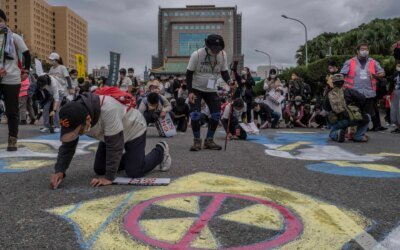
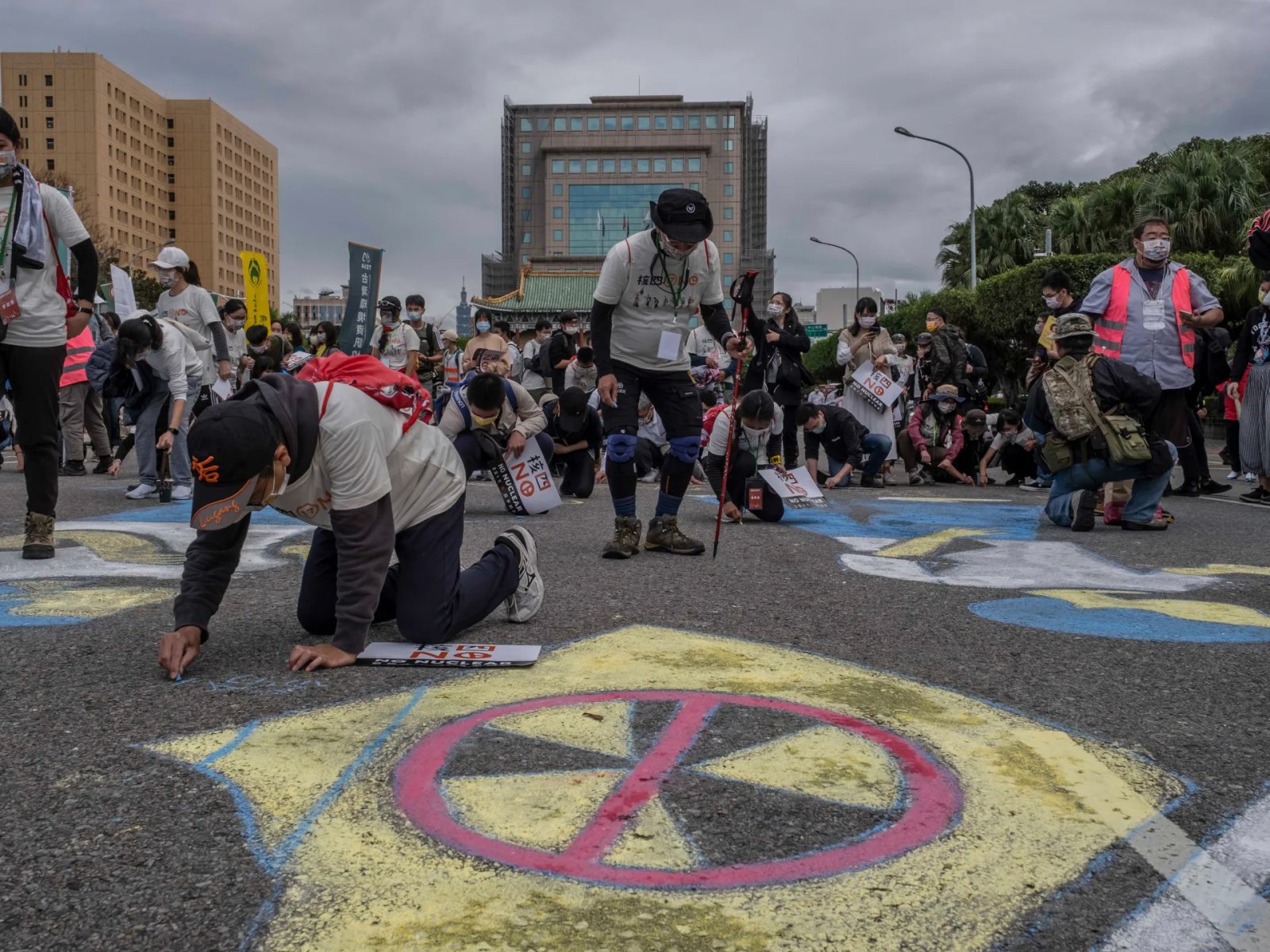
Voters in Taiwan are set to decide whether to bring back nuclear power – 18 months after its last operational reactor was shut down.
A referendum on the issue is being held alongside local elections on Saturday. It is the island’s fourth vote on nuclear power in just eight years.
Recommended Stories
list of 3 itemsend of list
It comes as demand for electricity to fuel the country’s burgeoning computer chip industry soars and concern grows about how Taiwan would keep its lights on if China, which claims the island as its own territory, cut it off amid escalating tensions.
Here is what we know.
What is the referendum about?
Voters are being asked whether the government should return to using nuclear power to boost the economy. That would mean abolishing the country’s longstanding “nuclear-free homeland” policy.
The opposition Kuomintang (KMT) proposed the referendum and the Taiwan People’s Party (TPP) is also backing it. The legislature approved the referendum in August and the Central Election Commission signed it off on August 28.
To pass, ‘yes’ votes must outnumber ‘no’ votes and exceed a quarter of all eligible voters.
The ruling Democratic Progressive Party (DPP), which has long had a policy of no nuclear power in its mandate, is urging ‘no’. DPP legislator Chen Pei-yu called the referendum unnecessary, saying lawmakers could change the policy by amending existing laws instead.
Why did Taiwan give up nuclear power?
Taiwan once relied heavily on nuclear power. In 1985, its three plants produced 52 percent of the nation’s electricity.
Nuclear power then became one of the most partisan issues in Taiwanese politics. Lev Nachman, an assistant professor at the Graduate Institute of National Development at National Taiwan University, said the divide goes back to the DPP’s founding.
“There was a major group of environmentalists that were part of the party that were very anti-nuclear,” Nachman told Al Jazeera. The nuclear industry, by contrast, was built and run under the KMT.
Polarisation turned that into “a very green-versus-blue issue”, Nachman said, referring to the colours of the DPP and the KMT.
Safety fears run deep. Nachman said Taiwan watched the 2011 Fukushima nuclear plant meltdown in neighbouring Japan very closely.
“There is this sort of fear of any sort of nuclear reaction that would ever happen in Taiwan would just devastate the entire island,” he said. Active geological fault lines run across Taiwan and the question of how to dispose of nuclear waste remains unresolved.
The DPP has governed since 2016, partly on a pledge to phase out nuclear power. In May last year, Taiwan shut down its last reactor at Maanshan in Pingtung County.
Why is nuclear power back on the agenda?
Public opinion has been mixed in three previous referendums. In 2018, voters opted to scrap a legal deadline for phasing out nuclear power. But in 2021, they rejected restarting construction on an unfinished fourth nuclear plant. In August last year, a majority vote to restart the Maanshan plant was voided due to low turnout.
Now, nuclear power is back on the agenda because surging electricity demand from Taiwan’s semiconductor and AI industries, along with growing fears about energy security and over-reliance on imported fuel, have renewed the debate over how the island keeps the lights on in an emergency.
According to the Ministry of Economic Affairs, Taiwan imports more than 97 percent of its energy. Natural gas generates about 43 percent of its electricity and coal about 35 percent. Both arrive by ship.
Taiwan only has about 11 days of liquefied natural gas (LNG) in reserve. Japan and South Korea hold between 14 and 20 days.
“There’s two sides to it,” Nachman said. The first is energy security: “If China actually blockades Taiwan and cuts off access to the outside world, then Taiwan only has so much energy it can rely on.”
The second is the chip industry, which requires huge amounts of power and “that’s only going to increase over time”, he said.
The war with Iran this year has added to the pressure by disrupting LNG shipments from the Middle East.
Will the ruling party change its stance?
The DPP has already started to shift. In March, President William Lai Ching-te said the government would begin the process of restarting the Maanshan and Kuosheng plants. He cited AI-driven demand and conflicts abroad causing disruption to energy supplies.
On September 24, the Nuclear Safety Commission approved state-owned Taipower’s restart plan for Maanshan. Further safety assessments are still needed before it can operate again.
Nachman said Lai has tried to push his party to rethink its “very dogmatic anti-nuclear stance”. The question is whether DPP voters have come around.
Nuclear power is not Taiwan’s first choice for filling the gap, however. “Investment in LNG – that’s still Taiwan’s kind of number one goal,” Nachman said.
How important is Taiwan’s microchip industry?
Taiwan is the most important link in the global AI supply chain.
It makes more than 90 percent of the world’s most advanced semiconductors, nearly all of them at Taiwan Semiconductor Manufacturing Company (TSMC). TSMC has more than 60 percent of the global contract chipmaking market.
Its customers include Nvidia – the world’s most valuable semiconductor company – AMD and Apple. TSMC makes Nvidia’s Blackwell and Rubin AI processors, and Taiwanese firms such as Foxconn and Quanta build most of the world’s AI servers.
That uses huge amounts of electricity and water. In September, Taiwan’s semiconductor industry used more than 4.5 billion kilowatt-hours of electricity for the first time. That was up 11.55 percent from a year earlier, driven by AI demand.
S&P Global estimated that TSMC alone used about 8 percent of Taiwan’s electricity in 2023. That share could rise to almost 24 percent by 2030, it added.
Nachman cautioned against seeing the referendum only through the demand for microchips and semiconductors. “In today’s media, Taiwan has become a single issue, just about semiconductors,” he said. “For a lot of people in Taiwan, the semiconductors aren’t even the priority. It really is the security side.”
Will China object to Taiwan having nuclear power?
Probably not. Beijing does not appear to have commented on the referendum itself.
“The nuclear issue is a completely separate issue from anything related to China,” Nachman said. “It’s much more a matter of domestic politics.”
China has, however, used Taiwan’s energy weakness in its messaging. In March, Chen Binhua, a spokesman for China’s Taiwan Affairs Office, said closer integration with China could help solve Taiwan’s energy problems. He pointed to the island’s reliance on oil and gas from the Middle East.
Taipei rejects unification with Beijing. Analysts writing in The Diplomat called the offer an exercise in optics.
However, it remains a top priority for China. During a speech in Beijing on November 12, President Xi Jinping once again stated that Taiwan and China must be reunified.
The referendum is about civilian power reactors, not weapons. Asked whether Taiwan might seek a nuclear weapon, Nachman said: “No, of course not. This is just about nuclear power.”
Taiwan did secretly pursue nuclear weapons in the 1970s and 1980s. The programme was shut down in 1988 under US pressure, after a senior nuclear scientist, Chang Hsien-yi, defected to the United States.
Since then, Taiwan’s leaders have consistently stated that they will not seek nuclear weapons. Its nuclear facilities are inspected under an arrangement between Taiwan, the US and the International Atomic Energy Agency (IAEA).
The bigger worry is a blockade by China if it seeks to press reunification in the future. Nachman said large military drills and naval patrols China has held around Taiwan since US House Speaker Nancy Pelosi’s visit in 2022 have all rehearsed one.
Will the referendum pass and what happens next?
Nachman said he is sceptical. “We keep doing it over and over again and it still doesn’t usually pass,” he said. “So my expectations are actually fairly low.”
The outcome will depend on DPP supporters. “It’s really more a matter of whether or not green voters have come around to it,” Nachman said.
If the referendum does pass, he said Lai and the DPP “would probably be largely okay with it”.
The restart process is already under way either way. Supporters say reactors could be running again within 18 months to three years. Opponents say a restart could take five to 10 years and cost several hundred billion New Taiwan dollars.
Results are expected on Saturday night.