












Feed Ghana Programme lacks climate resilience alignment — CSIR
 0
 0
THE country’s Feed Ghana Programme has recorded a major policy gap in climate resilience, raising concerns about its readiness to address the growing impact of climate change on agricultural production.
An assessment by the Council for Scientific and Industrial Research (CSIR) has found no alignment between the programme and the climate resilience pillar of the Comprehensive Africa Agriculture Development Programme (CAADP) Kampala Strategy.
The finding has prompted calls for climate resilience to receive stronger attention in the ongoing revision of the country’s Food and Agriculture Sector Development Policy.
The assessment was conducted by the CSIR Science and Technology Policy Research Institute (CSIR-STEPRI) as part of efforts to strengthen the use of research evidence in government decisions.
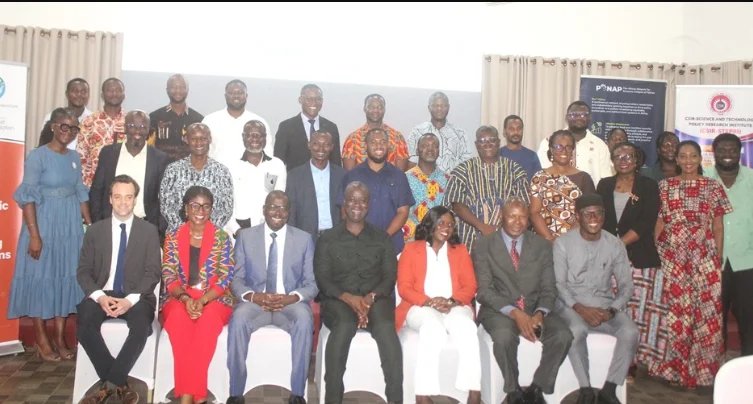
Presenting the findings at a Research-to-Policy Co-Lab in Accra yesterday, a researcher at CSIR-STEPRI, Dr Justina Onumah, said the exercise identified both strong areas and significant gaps in the alignment of the Feed Ghana Programme with continental agricultural targets.
She said although the programme had set ambitious production targets, its climate resilience component needed urgent attention.
Dr Onumah explained that the assessment was intended to provide government with practical policy options rather than merely identify weaknesses in the existing programme.
She said the research team had proposed four options to address the gaps.
The first was to revise the Food and Agriculture Sector Development Policy to align it with CAADP while allowing the Feed Ghana Programme to continue.
The second was to align the Feed Ghana Programme directly with the continental framework without revising the sector policy.
The third was to undertake both revisions simultaneously, while the fourth was to maintain the existing arrangements without immediate changes.
She said the options were assessed based on policy coherence, feasibility and timing, continuity of the programme and cost.
Dr Onumah said the findings were particularly important because the existing agricultural sector policy, introduced in 2008, was currently undergoing revision.
She disclosed that CSIR-STEPRI had been included in the technical committee working on the new policy and was expected to contribute evidence to the process.
The Research-to-Policy Co-Lab was organised to improve cooperation between research institutions and government agencies and ensure that research findings were available when policymakers needed them.
The Chairman of Parliament’s Select Committee on Food, Agriculture and Cocoa Affairs, Dr Godfred Seidu Jasaw, said the initiative offered an opportunity to close the longstanding gap between researchers and policymakers.
The Wa East MP said research must move beyond academic publications and provide practical solutions to problems confronting the country.
BY ENOCH NTIAMOAH SIAW
SKIP THE QUEUE, TAP THE NEWS

Read the Ghanaian Times and The Spectator newspapers from the comfort of your device via TimesNewsPlus.
Follow our WhatsApp Channel now! https://whatsapp.com/channel/0029VbAjG7g3gvWajUAEX12Q