










Int’l legal body urges extreme caution over push to impeach Korea’s chief justice
 0
 0

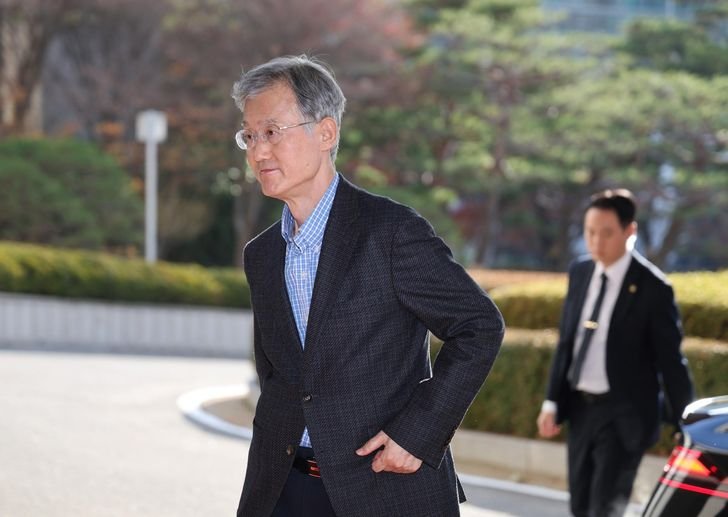
Supreme Court Chief Justice Cho Hee-dae arrives for work at the Supreme Court in Seoul, Tuesday. Yonhap
An international legal association voiced concern over the ruling party’s push to impeach the chief justice, urging extreme caution to safeguard judicial independence.
In a statement released Thursday, the Law Association for Asia and the Pacific (LAWASIA), acknowledged the constitutional legitimacy of impeachment but stressed the need to uphold fundamental democratic principles.
“LAWASIA acknowledges that impeachment is a remedy recognized by the Constitution of the Republic of Korea, and that no person or institution is above the law,” the statement read. “LAWASIA emphasises, however, that any action taken by government against the courts must be exercised with extreme caution.”
LAWASIA represents legal professionals and leading legal associations across some 40 jurisdictions in the Asia-Pacific region.
The ruling Democratic Party of Korea (DPK) plans to seek the impeachment of Supreme Court Chief Justice Cho Hee-dae as early as next week.
The grounds cited for impeachment include the court’s handling of President Lee Jae Myung’s election law case, its response to the December 2024 martial law crisis, disputes over judicial appointments and Cho’s refusal to testify before the National Assembly.
The grounds for impeachment have been disputed, with some critics describing the move as an attempt to silence the judiciary.
Any impeachment proceedings must “respect and observe fundamental democratic principles, including the separation of powers and judicial independence,” according to the statement.
The statement also warned of the potential erosion of public trust in the legal system.
“LAWASIA hopes that tensions between the government and the courts can be resolved through constructive dialogue rather than action which risks undermining public confidence in the legal system.”
LAWASIA adopted the Beijing Principles of the Independence of the Judiciary in 1997, a set of guidelines signed by chief justices from 32 Asia-Pacific countries to safeguard judicial independence.
Under Principle 22, judges should be removed from office only on established grounds, such as incapacity, criminal conviction or conduct that makes them unfit to serve.
In addition, principle 23 acknowledges that some legal systems allow judges to be removed through parliamentary proceedings but warns that such procedures risk being misused unless reserved for the most serious cases.