












UNESCO spotlights Korea’s cultural heritage in new global video series
 0
 0

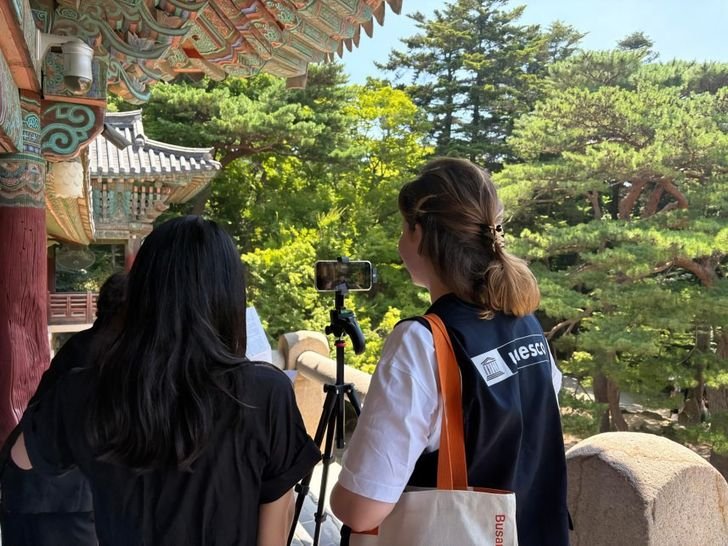
A UNESCO production team films Bulguk Temple in Gyeongju, North Gyeongsang Province, for the Korea edition of the UNESCO World Heritage Series. Courtesy of Korea Heritage Service
A new UNESCO video series is bringing Korea’s cultural heritage to a global audience, showcasing ancient temples, historic villages and living traditions in a campaign that has already begun attracting attention through the international organization’s digital platforms.
The fourth season of the UNESCO World Heritage Series, titled “Korea: A journey through time,” is being released in installments on UNESCO’s official Instagram, YouTube and other social media channels through Dec. 22, the Korea Heritage Service said Wednesday.
The series, supported by the Korea Heritage Service and the World Heritage Interpretation and Presentation Centre (WHIPIC), features six World Heritage sites and three elements of Korea’s intangible cultural heritage.
Launched in 2024, the short-form video initiative aims to highlight the outstanding universal value of World Heritage sites and the importance of preserving them, according to UNESCO.
Previous editions have featured the Seine riverbanks in France, India’s Golden Triangle and the architecture of Antoni Gaudi in Barcelona.
The series has accumulated more than 300 million views worldwide and generated more than 1.5 million interactions, including likes, shares and comments, the Korea Heritage Service said.
The Korea installment was produced following the 48th session of the World Heritage Committee, held at BEXCO in Busan from July 19–29, marking the first time the meeting was hosted in Korea.
UNESCO’s production team traveled across the country from July 28 to Aug. 2, filming six heritage sites: the Petroglyphs along the Bangucheon Stream, Seokguram Grotto and Bulguk Temple, Haein Temple’s Janggyeong Panjeon, Historic Villages of Korea, Beopju Temple and Changdeok Palace.
The production also documents three intangible cultural heritage traditions: Korean mask dance, “kimjang,” the tradition of making and sharing kimchi, and the culture of making “jang,” or traditional fermented sauces.
Filming locations included Hahoe Village in Andong, Woodang Old House in Boeun and Museum Kimchikan in Seoul.
The first episode, featuring the Petroglyphs along the Bangucheon Stream in Ulsan, was released Nov. 17, with additional videos scheduled for release weekly through Dec. 22.
WHIPIC also plans to release a behind-the-scenes video during the final week of November, documenting the production from the center’s perspective.
The Korea Heritage Service said it hopes the campaign will help international audiences discover the diversity of Korean heritage and understand the importance of preserving traditions and passing them on to future generations.
This article was published with the assistance of generative AI and edited by The Korea Times.