









AI-generated song’s chart success draws mixed reactions
 0
 0

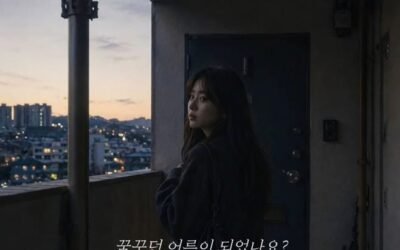
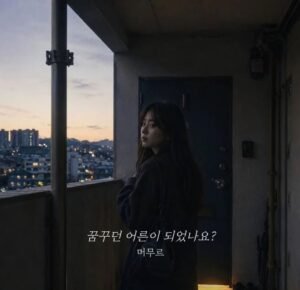
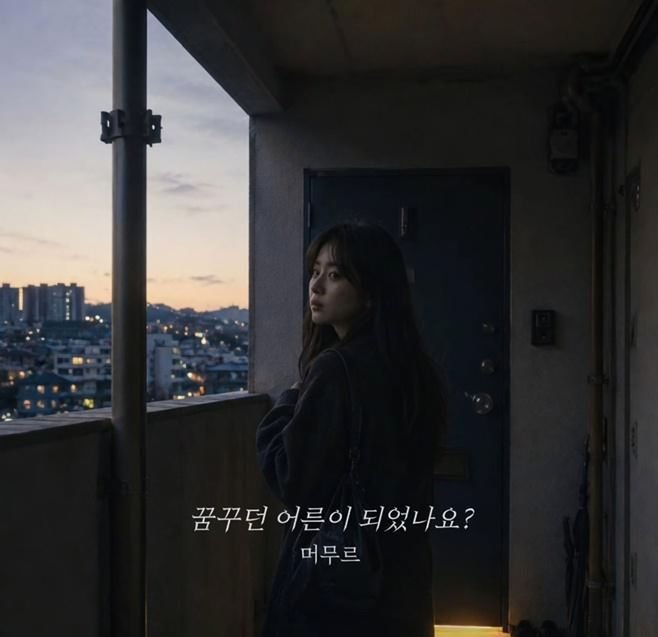
Artificial intelligence music project MEOMURU’s “The Adult I Dreamed Of” held the No. 1 spot on Melon’s Top 100 chart for more than a week, extending its success. Courtesy of MEOMURU
There may be no real person behind the voice singing the song, but the music itself remains. A song created using artificial intelligence (AI) has reached the top of Korea’s largest music streaming platform. As AI-generated music wins over listeners and climbs to No. 1 on the charts, it is once again drawing attention to broader debates about the future of the music industry.
“The Adult I Dreamed Of” by MEOMURU reached No. 1 on Melon’s Top 100 chart on the afternoon of Nov. 13. It was the first AI-generated track to top the chart and maintained its position for more than a week, as of the afternoon of Nov. 20.
Released in June, the song began gaining traction on music charts after spreading through social media as background music for short-form videos. Its success attracted even greater attention because it topped a chart featuring other recent hits, including A2O LITE’s “Neon,” RESCENE’s “With” and ILLIT’s “You’re Under Arrest.”
MEOMURU is an AI music project created by Glorywave, a production team consisting of composers and producers Lee Yong-seok, also known as Martin East, and Choi Seong-hyeok, known as Beatjaru. Both have previously worked on songs for artists including Hwang Chi-yeul and Gilgu Bonggu.
The duo use the AI music generation tool Suno to create vocals. However, their process goes beyond simply entering prompts and generating finished tracks. Human involvement extends to planning, songwriting and editing.
The song’s relatable lyrics, written by humans, have also contributed to its popularity. “The Adult I Dreamed Of” explores the gap between the image of adulthood people imagined as children and the reality they face after growing up. Its lyrics have resonated particularly with listeners in their 30s and 40s, while its soothing vocals and rock-ballad sensibility have helped it gain traction beyond short-form videos and establish a presence on the music charts.
However, the song’s chart success does not necessarily reflect unanimous public approval. While some see AI technology as opening up new possibilities for music creation, others remain concerned that it could replace human creators. Questions have also been raised over whether platforms should disclose the use of AI in music production.
Music critic Park Hee-a said the significance of an AI-generated song reaching No. 1 lies in the fact that “the public can no longer distinguish AI-generated music from music made directly by humans.”
This reflects the extent to which AI technology has advanced, she said, while also suggesting that conventional composers are increasingly likely to use AI as a creative tool.
Public wariness toward AI music stems from the same development. Park attributed the conflicting reactions to “the fear that AI-generated songs have become difficult to distinguish from music created by humans.”
She also argued that excluding AI from music production alone would be difficult to justify, given that most people already use AI to improve work efficiency in other fields.
This makes more specific institutional standards for identifying AI-generated music necessary, she said.
“Detection is inevitably difficult because the technology is becoming increasingly sophisticated. We need more specialized AI music detection technology, and at the very least, efforts must be made to research such technology,” Park emphasized.
Disclosure standards, copyright issues remain unresolved
As the use of AI as a creative tool becomes more widespread, the trend could develop into a lasting feature of the music industry rather than a passing phenomenon. This has also brought disclosure standards for AI platforms into focus.
MEOMURU, for example, disclosed in its album description that it had used AI-generated vocals. However, there are still no clear standards enabling consumers to understand the extent to which AI was involved in the creative process.
Copyright and revenue distribution are other unresolved issues. Despite reaching No. 1 on the charts, “The Adult I Dreamed Of” has not been entrusted to the Korea Music Copyright Association (KOMCA) for copyright management and therefore does not currently receive copyright royalties through the association.
Under the current Copyright Act, only elements involving human creative contributions are eligible for copyright protection. Lyrics written by humans can therefore be recognized as copyrighted works, but determining how much human creative contribution should be recognized in music produced with AI remains a challenge.
In August, KOMCA established criteria for entrusting AI-assisted music that includes human creative contributions. However, it later withdrew the guidelines, citing the need for further public discussion.
With AI-generated music now reaching the top of the charts and reigniting the debate, calls are growing for more concrete standards that can keep pace with technological advances.
This article from the Hankook Ilbo, the sister publication of The Korea Times, is translated by a generative AI system and edited by The Korea Times.