




Rafael Grossi wants to be UN chief. Will Trump’s support nuke his chances? | United Nations News
 0
 0
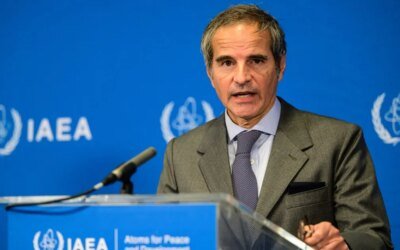
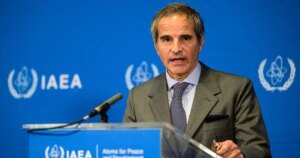
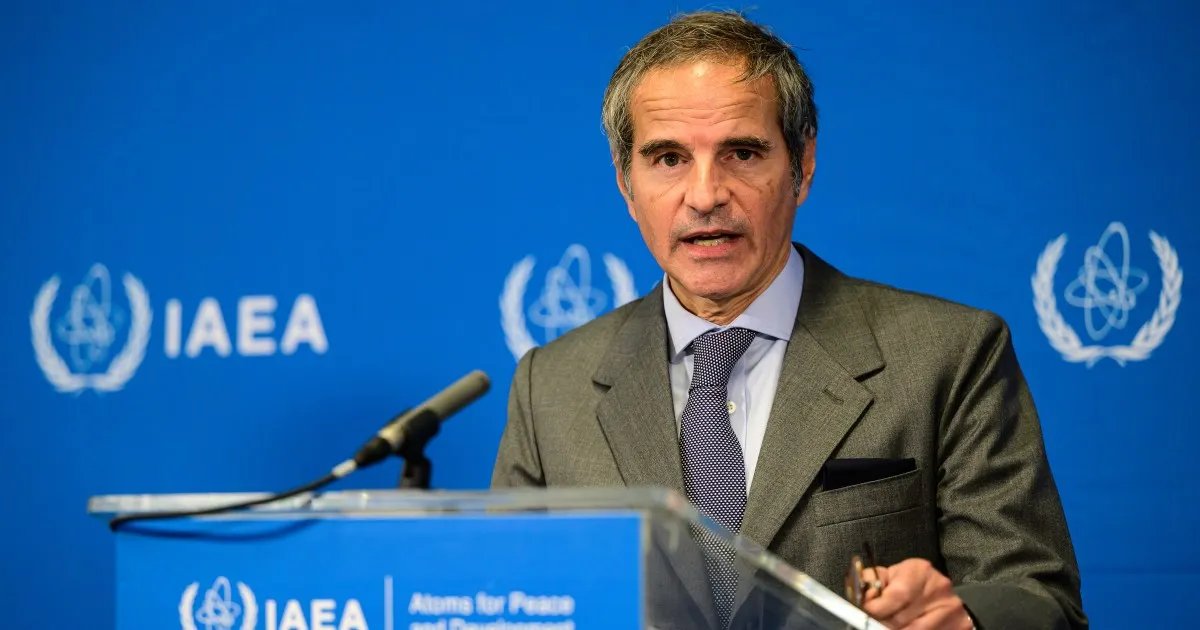
International Atomic Energy Agency (IAEA) chief Rafael Grossi is eyeing the position of United Nations secretary-general amid a tense race to replace Antonio Guterres.
The Argentinian nominee has finished second in the latest UN Security Council straw poll behind Costa Rica’s Rebeca Grynspan with nine “encourage” and four “discourage” votes and a total of eight candidates still in the fray.
Recommended Stories
list of 3 itemsend of list
Grossi, 65, has earned admiration and criticism in equal measure for his IAEA tenure, defined by his hands-on approach to crisis diplomacy in active war zones, but also by accusations of partisanship, levelled against him especially by Iran.
He is running on an agenda to reform the UN seen as favourable to United States President Donald Trump and his political ally, Argentinian President Javier Milei.
But China and Russia – two of the five permanent Security Council members with veto power – are unlikely to back a candidate so closely aligned with Washington, say analysts, and a global civil society campaign is throwing its weight behind the selection of the first woman to lead the UN in its 81-year history.
‘Transforming’ the IAEA
Grossi’s legacy at the IAEA and decades-long career as an Argentinian diplomat have cast him as a pragmatic crisis manager.
Since being appointed IAEA director general in 2019, Grossi has been firmly on the front row in moments of international tension, including personally leading inspection teams to Ukraine’s Zaporizhzhia and Chernobyl nuclear power plants after Russia’s full-scale invasion of Ukraine in 2022.
Jan Wouters, professor of international law and international organisations at KU Leuven in Belgium, said Grossi has “transformed the technical watchdog into a highly visible, proactive diplomatic actor”.
“[He] significantly elevated the agency’s global profile through constant shuttle diplomacy and direct engagement with world leaders,” Wouters told Al Jazeera.
In Ukraine, by “focusing on technical safety rather than territorial sovereignty, he successfully brokered eight localised ceasefires between Russia and Ukraine to allow critical plant repairs” during the war, he added.
However, Ezequiel Jimenez Martinez, adjunct professor at the Pompeu Fabra Law Faculty in Barcelona, Spain, said his very active role has “angered” veto-wielding Russia, which sees him as having overstepped his position as agency head.
To be elected to lead the UN, a candidate needs at least nine votes in favour from the 15-member Security Council while avoiding any vetoes from its five permanent members (P5) – the US, UK, France, Russia and China. The 193-member UN General Assembly then ultimately has to sign off on the final choice.
The race is coming down to the wire as Guterres must leave his post on December 31.
While none of the P5 has publicly announced its preference, the South China Morning Post reported that Beijing has ruled out Grossi for being too close to Washington and would instead back Grynspan.
While Iran is not a member of the Security Council, it also has been vocal in its opposition to Grossi as UN secretary-general. Its Ministry of Foreign Affairs spokesman Esmaeil Baghaei accused the IAEA this month of being overly influenced by the US and European countries in its “one-sided and biased reporting about Iran’s peaceful nuclear programme”.
The IAEA has estimated that Iran was holding 440.9kg (972lb) of uranium enriched to up to 60 percent before the June 2025 Israeli-US attacks on its nuclear facilities. While uranium must be 90 percent enriched to become weapons-grade, the process becomes a quick one at 60 percent. This amount would be enough, if enriched further, to build 10 nuclear weapons, according to the agency.
Jimenez Martinez said Grossi is likely to be able to withstand such criticism, however, “because the majority of governors of the agency agree with his approach on Iran”.
“In the context of the UN, probably [this will lead to] a bit of fireworks, but I don’t think it will change many votes,” he said.
Trump’s and Milei’s frontman?
His technical ability to lead the UN alone is unlikely to put Grossi much ahead in the race, observers said. Candidates for the post of secretary-general must also be seen as defenders of the UN Charter and the UN’s international law and human rights instruments.
For this reason, the Argentinian president’s support is seen as Grossi’s main liability. Milei has framed international institutions as threats to national sovereignty and individual liberty, describing the UN itself as “useless” and its diplomats as “fatally arrogant parasites”.
Since being elected in 2023, Milei has reignited a longstanding dispute with the United Kingdom over sovereignty of the Falkland Islands, which Argentina calls the Malvinas, and has told UN delegates that the principle of self-determination should not apply to the population there.
The Trump administration has also been a fierce critic of the UN, withdrawing Washington from key agencies, slashing its funding and bypassing the body when it came to launching the war on Iran in February.
Jimenez Martinez said Grossi is seen as someone who is close to both Milei and Trump and who could bring forward a UN agenda that is aligned to their foreign policies.
“This will mean in practice a shrinking of the UN structure,” Jimenez Martinez said, including merging agencies and reorienting the body around security and peace rather than development.
Grossi has called on world leaders to have the “courage to reform” the institution and lead it into a new era. According to Jimenez Martinez, his insistence on cutting red tape while failing to elaborate on safeguards is unlikely to land him a green light from the General Assembly.
Alvina Hoffmann, senior lecturer in diplomatic studies at SOAS University of London, said Grossi is widely seen as a candidate whose “emphasis is on improving the system and cutting overlapping mandates, rather than addressing the structural drivers of inequality”.
He is also seen as someone who focuses on personal leadership, confidential negotiations and preventive diplomacy “rather than issuing public declarations or condemnations”, which “might come at the expense of being able to call out violations of international law at a time in which international law is increasingly under attack”, Hoffmann said.
Time for female leadership?
According to the tradition of geographical rotation, the post should next go to a Latin American. Five women are running in the race to become the next UN secretary-general, and public and civil society pressure is at an all-time high to elect the first woman to the post.
Grynspan ticks both boxes.
Ben Donaldson, adviser to the 1 for 8 Billion campaign, a civil society movement advocating for the appointment of the first female secretary-general, said that while the appointment must be on merit, this criterion “is not inconsistent with gender considerations”.
“[General Assembly] resolutions and international standards affirm that due regard should be given to achieving gender balance in senior UN leadership,” Donaldson told Al Jazeera.
“In applying these principles, member states should assess candidates not only on their individual competencies and experience but also on how their personal characteristics and professional trajectories contribute to a leadership that reflects the diversity of the international community.”
“The United Nations has existed for 80 years without ever appointing a woman as secretary-general,” he added. “This persistent imbalance stands in contrast to the organisation’s own commitments to equality, parity and nondiscrimination.”