












[K-LIT REVIEW] Life lessons from Min Jin Lee’s ‘American Hagwon’
 0
 0

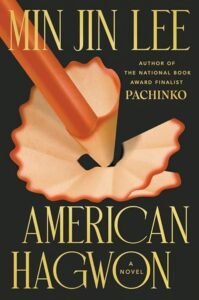
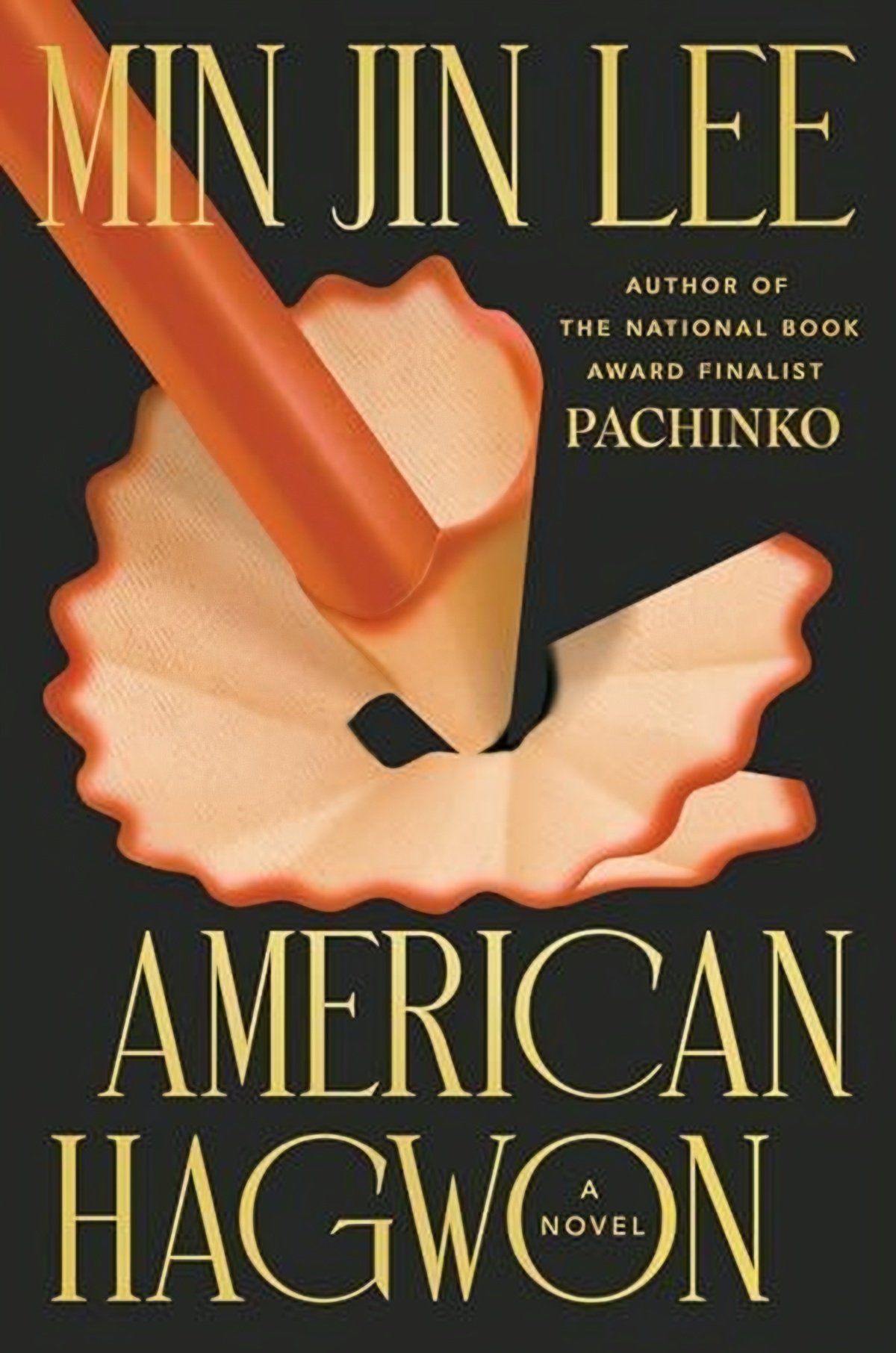
The cover of “American Hagwon” by Min Jin Lee / Courtesy of Cardinal
Is “American Hagwon” an engrossing story wrapped in a cultural lesson, or is it the other way around? And does it matter, when the story is this good and when one can learn so much from it?
Readers who enjoyed Korean American author Min Jin Lee’s “Pachinko” will be pleased to find some of the same narrative structure applied to her latest story. Yes, it could be called a soap opera, but when a soap opera is great, it holds attention.
Focusing on the Koh family, the story spans a generation and three countries. The family oscillates between Korea, the United States and Australia, often living apart as they pursue educational opportunities, job postings and economic security. The parents, Helen and John, are living a familiar life pattern of working as hard as they can to do all they can for their children, Bo, DH and Mido. Other family members such as Helen’s sister feature prominently, as do some of the children’s friends and those friends’ families. Though the spotlight tends to shine on the Koh family, when the focus passes onto other characters, the reader can expect a thorough and expansive background check, each time offering more enriching details to explain the Korean experience.
Lee is a gifted storyteller. Her main characters are more than substantial — they are whole. Their arcs are compelling, creating a genuine empathy in the reader. One is drawn beyond rooting for heroes and against villains. The characters remain consistent in their motivations without becoming predictable. Their actions often acquire new meaning as Lee reveals more of their histories or shows what happens when they achieve their goals. The character consistency makes twists seem like consequences, rather than surprises, and grounds the family’s experiences in a dramatic realism. One of the most poignant arcs concerns Mido, a quiet and somewhat socially withdrawn child, and her first friendship, which results from an unpleasant school encounter with an abusive teacher. We see the lifelong change that results from a timely act of kindness, and the unequaled importance of true friendship.
From the title, two of the novel’s central themes are made clear: the immigrant experience for Koreans and the role of education. Lee explores both the practical value of education and the importance Koreans attach to it, whether at home or abroad. “Remember that we are very strong people and we are good learners. I wasn’t the best at school, but life is also a school, isn’t it? Living can sharpen us.” Nari, the mother of Mido’s best friend, imparts this wisdom as she greets Helen in America, helping Helen settle in and face their newest shared adversities. This is another major theme: the role of community support in the success of Koreans wherever they may be.
At odds with this spirit of cooperation at times is the competition for top spots in the best universities, with parents of children attending the novel’s various hagwons (private academies) refusing to see the value of their children building relationships with their peers, when they are playing a zero-sum game. Hagwons of many different types are a major component of the story, both attended and run by the Koh family children. Many troublesome facets of the Korean education system, both past and present, are shown: corporal punishment in the public education system, teachers asking for extra tutoring money from parents and struggles with the dreaded College Scholastic Ability Test. What are perhaps surprising to see are examples of hagwons being run with more than profit in mind, by educators who seem more interested in the happiness of their students than the academic and career success demanded by some parents.
The feedback loops that created the hagwon-dependent, test-filled gauntlet of the Korean education system are explained and criticized, but with an overarching sympathy for the desire for success that helped create the system. Whether to escape poverty or to stay ahead, the goal was to be able to support one’s family as the previous generation had offered support before. It is not so much a matter of pulling back the curtain as placing the system under the microscope, and it is refreshing to see the hagwon system explored, warts and all, without a specific policy objective or cultural criticism in mind. The importance of education seems to be accepted by all, but the differing reasons create familiar issues. Readers will certainly feel the frustration of Mido as she is repeatedly hounded by various Korean characters to finish her education, or is judged for not completing it, despite any successes she has already achieved. Is education an end, a means or both in Korean society? Is self-actualization even a consideration?
Many of the novel’s most compelling passages reveal the cultural assumptions and internal reasoning behind the characters’ judgments of others. For outsiders, the inner workings of Korean cultural expectations can be inscrutable. Lee reveals these nuances through detailed descriptions of the viewpoints of Korean characters as they appraise others. This often leads to misunderstanding, particularly between ethnic Koreans who have been raised entirely or almost entirely outside of Korea, and Koreans who grew up within Korean society. Perhaps in an attempt to put them at ease, an Australian Korean speaks to his girlfriend’s family with a familiarity that they immediately bristle at. They interpret his behavior as rude and arrogant. He may indeed be overly familiar, but their judgment is shaped by cultural expectations he does not necessarily share. For some characters, time abroad leads to difficulties in returning to Korean society, as a system that once seemed ordered and comforting becomes rigid and stifling.

Author Min Jin Lee / Yonhap
At the same time, the Koreans going abroad struggle to be accepted in their adoptive cultures, particularly when encountering the ceilings built above them. A promising musician is told that there are no rock bands with Asian members in the West. An aspiring lawyer can see the goalposts being moved in front of him by the firm’s partners, who exploit his willingness to work long hours while also being unwilling to consider him for promotion. Working as an actor is dismissed out of hand as being an unrealistic dream for an Asian in America. When struggling to enter Ivy League schools, the Korean Americans lament the ease with which Caucasians from upper-class families are able to ascend the ladder. Their academic achievements are all the more impressive against these obstacles. For Korean Americans, education is not merely a cultural priority; it can also appear to be one of the few remaining paths to success when discrimination closes other doors.
It would be unfair to potential readers to offer more story details. One of the charms of the book is that we don’t know what is coming for the characters. While the reader is aware of approaching economic shake-ups such as the Asian financial crisis of the late 1990s or the American subprime mortgage crisis of the late 2000s, they can’t be sure how the Koh family and those in their orbit are going to adapt and overcome the resulting hardships. Plans and goals change frequently, but the tools to deal with adversity remain the same. Life is a school, and “American Hagwon” has much to teach us.
“American Hagwon” is available at dbbooks.co.kr.
Arlo Matisz is an economics professor at Chosun University in Jeonnam-Gwangju Special Metropolitan City.