







‘The Remarried Empress’ paradox: Viral success also met with mockery, criticisms
 0
 0

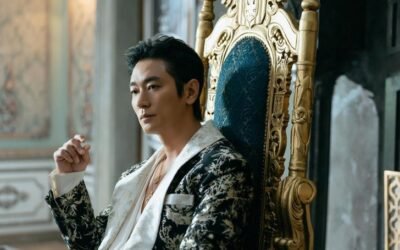
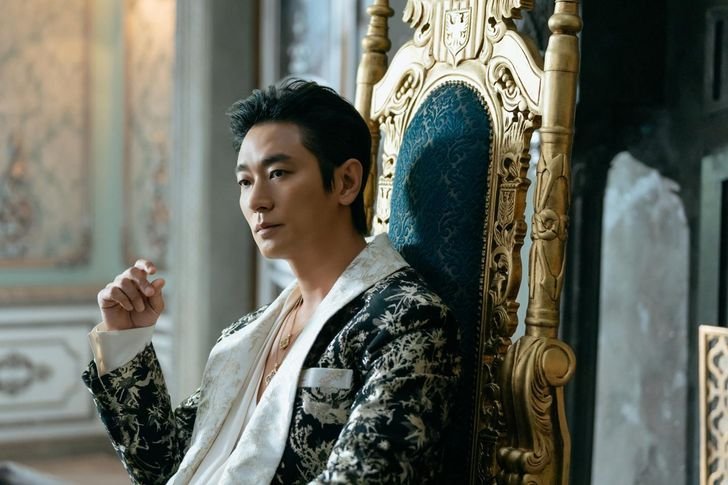
A scene from “The Remarried Empress” / Courtesy of The Walt Disney Company Korea
“I challenge you to a duel for insulting the honor of my woman.” A line straight out of a fantasy novel is delivered by an actor and brought to life on screen.
In another scene, a prince from a neighboring kingdom transforms into a bird, nestles in the empress’ arms and then turns back into a human. Far removed from anything resembling reality, the series invites viewers into an entirely new fictional universe. This is the world of Disney+ original series “The Remarried Empress.”
The series has emerged as a hit, generating considerable buzz. Released on Nov. 3, it became the most-watched Disney+ local original production worldwide based on viewing figures for its first three days, setting a record among the platform’s local original titles. It also ranked No. 1 among Korean titles released in more than 50 markets, including the United States, Britain, France, Spain, Germany, Mexico and Canada. Adding to its momentum, the series topped the TV and streaming platform drama buzz rankings for the first week of November, compiled by Good Data Corporation’s Fundex, demonstrating its strong appeal among viewers.
The fantasy romance epic follows Navier (Shin Min-a), the seemingly perfect empress of the fictional Eastern Empire, who is informed by Emperor Sovieshu (Ju Ji-hoon) that he wants a divorce after falling for Rashta (Lee Se-young), a runaway slave. Rather than simply accepting the divorce, Navier demands approval to remarry Prince Heinrey (Lee Jong-suk) of the Western Kingdom. Set in an imaginary empire and infused with the sensibilities of Korean romance dramas, the series features the four actors in central roles, offering a fresh take on the original story.
Before its release, the series faced considerable skepticism over its unfamiliar premise and concept, which some feared could come across as childish. During its first week, questions were raised about the quality of the characters’ costumes, while some viewers even speculated that accessories worn by the cast were inexpensive items costing around 2,000 won (about $1.40) sold on online shopping malls. Some viewers also felt that the casting of Korean actors did not match the story set in a royal court.
Despite the criticism, the series has generated an enthusiastic response. Scenes and lines from the show are being turned into parodies and circulating rapidly across social media. Short clips featuring the characters’ expressions, dialogue and dramatic situations have been repackaged as memes, with viewers creating their own variations and helping sustain interest in the series. Its distinctive atmosphere appears to have encouraged audiences to engage with the show creatively, further amplifying its buzz.
However, the attention surrounding “The Remarried Empress” has not necessarily translated into unqualified affection for the series. Memes can lower the barrier to entry and attract new viewers, but they can also reduce an entire production to a source of ridicule. The context of a scene and the emotions of its characters can disappear, leaving only moments considered funny. Actors’ performances and the direction can also become targets of mockery. What begins as one way of enjoying a series can ultimately turn into an exercise in making the production itself the joke. Generating buzz and successfully conveying the emotional tone and narrative a work intends to deliver are two separate matters.
Of course, the fact that viewers repeatedly revisit scenes and create new content based on them also demonstrates that the series has captured the public’s attention. Viewers may find themselves drawn into a premise they initially dismissed as childish, while those who first encounter the show through memes may go on to watch the actual series. In this respect, “The Remarried Empress” is already achieving positive results. Comments posted under the trailer for seventh and eighth episodes, uploaded to Disney+’s official YouTube channel on Friday, include reactions such as “I wasn’t expecting much, but now I’m completely hooked,” “I’ll stop making fun of it, so please make it a multi-season series,” “There should be dramas this easy and enjoyable to binge-watch,” and “I’ve been Remarried Empress-ed” — a playful expression suggesting viewers have become hooked on the show.
With six of its 10 episodes released, the series is heading into its second half. As public interest continues to grow, it will be equally important for the series to convincingly convey the strength of its story and characters. The question now is whether it can win recognition for its artistic merits beyond the viral buzz.
This article from the Hankook Ilbo, the sister publication of The Korea Times, is translated by a generative AI system and edited by The Korea Times.