










Cheonghae Unit to take local tactical orders in int’l operations
 0
 0

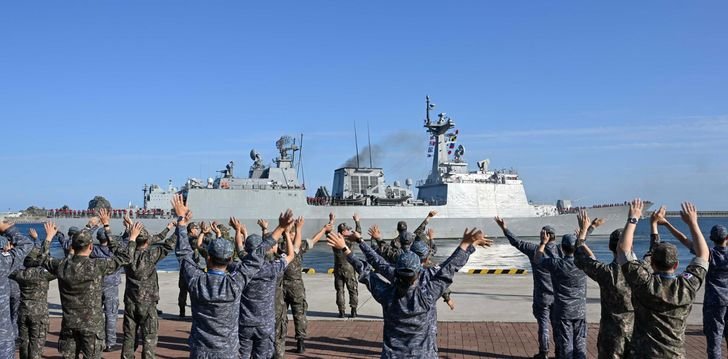
The destroyer Wang Geon, part of the 49th rotation of the Cheonghae anti-piracy unit, departs from Busan, Oct. 2. A revised motion submitted to the National Assembly, Tuesday, would expand the unit’s operational area to waters south of Oman, with an on-site commander exercising tactical control during international maritime security operations. Yonhap
Korea’s anti-piracy Cheonghae Unit would take tactical orders from an on-site commander rather than Seoul’s military leadership when it joins international maritime security operations near the Strait of Hormuz, according to a motion on its deployment disclosed Wednesday.
The provision came to light a day after the Cabinet approved the motion and submitted it to the National Assembly to expand the unit’s operational area from the Gulf of Aden to waters south of Oman.
The planned expansion comes amid U.S. pressure on allies to help secure the Strait of Hormuz, a focal point of the months-long war with Iran.
Tehran has warned that Korea could be portrayed as an accomplice in U.S. military aggression, despite Seoul’s assurances that the mission would remain outside the conflict.
According to the mission, Korea would retain command authority, with the Joint Chiefs of Staff chairman directing missions escorting Korean vessels.
However, an on-site commander would exercise tactical control during international operations involving the Combined Maritime Forces or the European Union.
The revised proposal adds a duty to join international efforts to restore safe shipping routes and freedom of navigation, raising questions about possible involvement in operations related to the Strait of Hormuz.
The motion also allows the unit to operate in other designated waters when necessary to protect Korean nationals in an emergency, leaving room for further expansion beyond the Gulf of Aden and waters south of Oman.
The Ministry of National Defense stressed that the unit nevertheless would stay out of war and combat and operate independently under the command of Korea’s JCS chairman.
A defense ministry official said the provision on tactical control by an on-site commander was not new and had been included in previous deployment motions. He said it applies only when the unit conducts coordinated operations with other countries, such as joint anti-piracy patrols, and that it does not mean a foreign commander can issue orders unilaterally.
“The unit operates independently under the JCS chairman’s direction. This provision simply reflects the standard practice when cooperating with other nations,” the official said.
The proposal would extend the deployment through Dec. 31, 2027, and add a maritime patrol aircraft and unmanned mine-clearing equipment.