











Oil prices hit 2-month lows as US downplays further Iran strikes
 0
 0

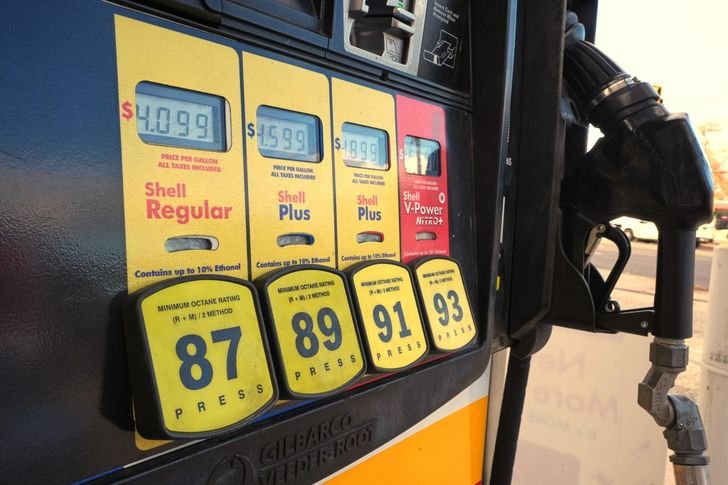
Gas prices are are displayed at a filling station in Willow Grove, Pa., Monday. AP-Yonhap
NEW YORK — Oil prices slid about 2 percent to fresh two-month lows on Tuesday after U.S. officials downplayed the need for additional military action against Iran, easing fears of additional Middle East supply disruptions.
Brent futures fell $1.93, or 2.1 percent, to $90.64 a barrel at 10:28 a.m. ET (1528 GMT), while U.S. West Texas Intermediate (WTI) crude fell $1.44, or 1.7 percent, to $85.41.
That put both crude benchmarks on track for their lowest closes since August 28. On Monday, both contracts closed at their lowest since August 31.
U.S. Secretary of State Marco Rubio said on Tuesday that he told Group of Seven allies that the U.S. economic sanctions and naval blockade are working so well that U.S. President Donald Trump does not need to conduct major combat operations in Iran.
Rubio made the comments during a meeting in Paris of foreign ministers from the G7, which comprises Britain, Canada, France, Germany, Italy, Japan and the United States, as well as the European Union.
On Monday, Trump said he plans to hold off on new military strikes against Iran for the time being after appeals from countries in the region, including from Qatar’s prime minister in White House talks.
“The market continues to prioritize President Trump’s more conciliatory tone toward Iran since the midterms,” said Tim Waterer, chief market analyst at KCM Trade.
In last week’s U.S. midterm elections, voters focused on the rising cost of living, which was fueled by Republican Trump’s trade tariffs and higher energy costs from the war with Iran, and handed solid majorities in both houses of Congress to the Democratic Party.
Trump, in a Reuters interview and a later appearance in the White House press briefing room, said he plans to keep up a naval blockade in the Strait of Hormuz for now. Before the U.S. and Israel started attacking Iran in February, about 20 percent of the world’s oil supplies passed through the Strait of Hormuz.
More than eight months into the conflict, Trump has played down the likelihood of major warfare restarting soon but remains unwilling to accept an existing Iranian truce plan. Senior U.S. and Gulf officials have cast doubt on the chances of an imminent deal.
Mutual attacks continue, with the U.S. striking Iran’s Qeshm island overnight, according to Iranian state media, and Iran attacking tankers in the Gulf and Strait of Hormuz this month while its Yemeni Houthi allies have hit Saudi Arabia.
Russia and Ukraine
Russian and Ukrainian officials met in Abu Dhabi on Tuesday for their first peace talks since February as Trump’s envoys launched a new push to end the war in Ukraine.
The U.S.-brokered meeting followed U.S. contacts with both sides in recent weeks, which Trump’s representative Jared Kushner said had narrowed the gaps between their positions.
Rubio described the meeting as very productive, without giving details.
Despite U.S. optimism, the warring sides remain far apart on terms for a possible settlement, more than 4-1/2 years after Russia’s full-scale invasion of Ukraine. Russia controls about a fifth of its neighbor’s territory.
Russia was the world’s third-biggest crude oil producer behind the U.S. and Saudi Arabia in 2025, U.S. energy data showed. Sanctions designed to keep Russian energy out of global markets after Moscow’s invasion of Ukraine have helped support oil prices.
Any deal to end Russia’s invasion of Ukraine could allow Russia to export more.
US interest rates
In a move that could reduce future oil demand, investors said the release of data on Tuesday showing U.S. consumer prices increased by more than expected in October made it more likely the U.S. Federal Reserve would raise interest rates half a percentage point at its December meeting.
A strong jobs market, resilient economic growth and inflation stuck above the Fed’s 2 percent target for nearly six years all suggest further tightening is required.
Central banks, like the Fed, use interest rates to control inflation. Higher interest rates raise consumer costs, which can reduce economic growth and demand for oil.