











Busan nears 4 mil. foreign visitor mark after beating 2025 total in 9 months
 0
 0

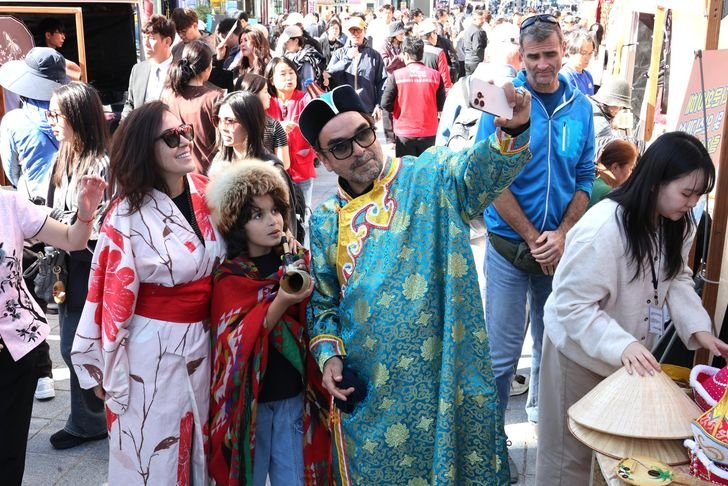
Foreign visitors dressed in traditional costumes take a selfie during the Haeundae World Culture Festival in Busan’s Haeundae District, Oct. 27. Yonhap
Long viewed as a scenic coastal secondary stop for international travelers venturing outside Seoul, Korea’s second-largest city is rapidly transforming into a standalone global destination.
Driven by expanded direct flights, cruise traffic, and a surge in international visitors, Busan welcomed 3.93 million foreign tourists in the first nine months of 2026, the Busan Metropolitan Government said Friday.
The figure easily surpassed the southeastern port city’s total visitor count of 3.64 million for all of 2025 and positions it to clear its annual target of 4 million visitors well ahead of schedule.
The shift marks a crucial milestone in Korea’s broader efforts to disperse tourism beyond the capital. Nationwide, international arrivals rose 21.5 percent over the same period, but Busan saw a 47 percent surge — more than double the national growth rate.
Unlike past years, when foreign tourists typically entered Korea through Incheon International Airport before taking high-speed trains south, travelers are increasingly bypassing Seoul altogether. Nearly 63 percent of foreign visitors to Busan in September arrived directly through Gimhae International Airport or the Port of Busan, up from 50.4 percent in January.
The port saw a record 96,493 direct arrivals in September alone — a nearly 150 percent increase from the previous year — supported by a postpandemic revival in regional cruise itineraries. Meanwhile, direct arrivals through Gimhae International Airport climbed 48.1 percent to 218,049.
The booming headcounts have brought an economic windfall to local businesses. Foreign credit card spending in Busan topped 1.01 trillion won ($750 million) through September, a 51.9 percent increase from a year ago. Outside of Seoul, which logged 8.84 trillion won, Busan is the only metropolitan area in Korea to break the 1 trillion won threshold in international tourism spending, accounting for more than half of all credit card expenditures by international visitors outside of the capital.
Local officials attribute the momentum to market diversification.
While visitor arrivals from traditional East Asian markets dipped slightly at the end of summer, sharp gains in Western markets filled the gap. American travelers to Busan surged 77.2 percent through September to reach 324,816, while French visitor numbers doubled to 43,165. Australian arrivals rose nearly 48 percent.
International visibility has also grown.
Western media outlets and travel platforms have increasingly highlighted the port city’s mix of urban infrastructure and coastal topography. Expedia ranked Busan fifth globally in search growth for upcoming travel destinations, while Airbnb reported a 30 percent year-on-year increase in property searches across the city.
City officials plan to leverage the momentum to expand regional tourism infrastructure across neighboring southern provinces.
“Global travelers are no longer just stopping by Busan — they are flying directly to us as their primary destination,” Mayor Chun Jae-soo said. “We will focus our resources on improving the quality of our tourism infrastructure so these visitors stay longer and return.”
This article was published with the assistance of generative AI and edited by The Korea Times.