














Park Han-byul says changing shampoo helped her hair loss — but does it really work?
 0
 0

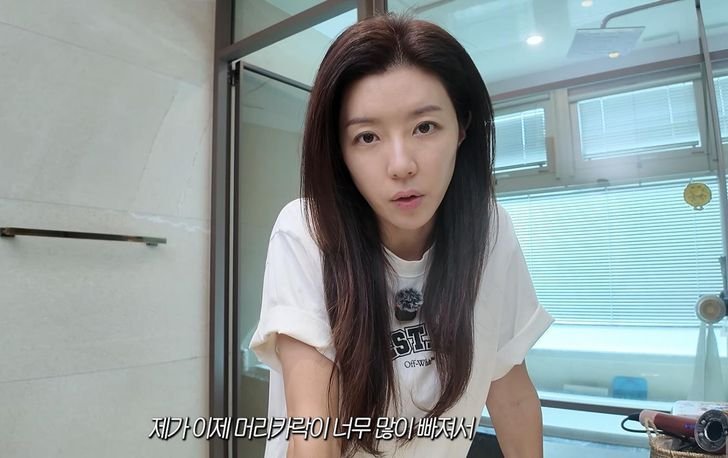
Park Han-byul / Captured from Park’s YouTube channel
Click here for more articles by Kormedi.com.
Actress Park Han-byul, 42, recently shared her concerns about thinning hair, saying that changing her shampoo made a noticeable difference after other remedies failed to deliver results. But can switching shampoos really prevent or reduce hair loss?
In a video posted to her YouTube channel on Wednesday, Park said she had noticed her hair becoming thinner as she got older.
“I used to have incredibly thick hair. I really had so much of it, but as I’ve gotten older, I’ve felt like I’ve been losing quite a bit,” she said. “I tried eating black beans, which are supposed to be good for hair loss, and using hair masks, but I didn’t see much improvement.”
Park said she believes consistent daily care is the key to managing hair and scalp health.
“I’m someone who truly believes that taking care of yourself consistently every day is the answer,” she said. “So I thought, why not try changing the shampoo I use every day? I switched shampoos, and for me, that worked better than anything else.”
Can shampoo really help with hair loss?
Whether shampoo can effectively address hair loss remains a subject of debate.
Some argue that shampoo is simply a cleansing product that gets rinsed away and cannot treat hair loss. Others, like Park, say their hair condition improved after switching products.
The answer largely depends on what is causing the hair loss.
For androgenetic alopecia, commonly known as male- or female-pattern hair loss, changing shampoo alone is unlikely to produce meaningful results.
This form of hair loss is primarily associated with genetic factors and the hormone dihydrotestosterone (DHT), which contributes to the gradual shrinking of hair follicles.
Because the follicles themselves become progressively smaller, shampoo that merely cleanses the scalp cannot reverse the underlying process.
People experiencing signs of hereditary hair loss, including a receding hairline, are generally advised to seek medical treatment rather than relying solely on shampoo. Depending on the condition, treatment options may include medications or hair transplantation.
When changing shampoo may help
Shampoo can, however, make a difference when hair shedding is associated with scalp problems such as dryness or seborrheic dermatitis.
A healthy scalp provides the environment necessary for normal hair growth. When its protective barrier becomes compromised, inflammation and irritation may contribute to increased shedding.
Persistent itching caused by dryness or inflammation can also lead people to scratch or rub their scalps repeatedly without realizing it.
This physical friction can damage or dislodge already weakened hairs, contributing to additional hair loss.
For people with seborrheic dermatitis, medicated shampoos containing antifungal ingredients may help improve scalp health.
These ingredients work by controlling the growth of Malassezia yeast, which is associated with dandruff, itching and scalp inflammation.
By reducing inflammation around hair follicles, such shampoos may help limit shedding associated with scalp irritation, although they do not directly treat hereditary hair loss.
Choosing the right shampoo for dry, itchy scalp
For people whose scalps frequently feel tight, dry or itchy, switching to a gentle, mildly acidic moisturizing shampoo may help.
Shampoos containing strong cleansing agents, including certain sulfate-based surfactants, can sometimes strip away natural moisturizing substances and protective lipids that help maintain the scalp’s moisture barrier.
When the scalp becomes excessively dry, irritation and itching may worsen, potentially contributing to further hair shedding through repeated scratching.
A damaged scalp barrier may also disrupt the balance of oil production and contribute to an environment in which inflammation persists.
Choosing a shampoo suited to one’s scalp condition can therefore help maintain a healthier environment for hair growth.
However, while changing shampoo may ease scalp-related symptoms and reduce associated shedding, it cannot address every cause of hair loss.
Persistent or progressive thinning should be evaluated by a dermatologist to identify the underlying cause and determine whether medical treatment is needed.
This article from Kormedi.com, Korea’s top health care and medical portal, was translated by a generative AI system and edited by The Korea Times.