












Nongshim takes Shin Ramyun food truck to northeastern India
 0
 0

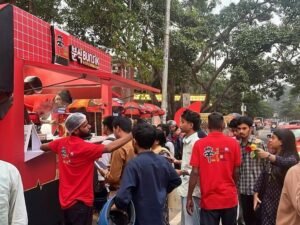
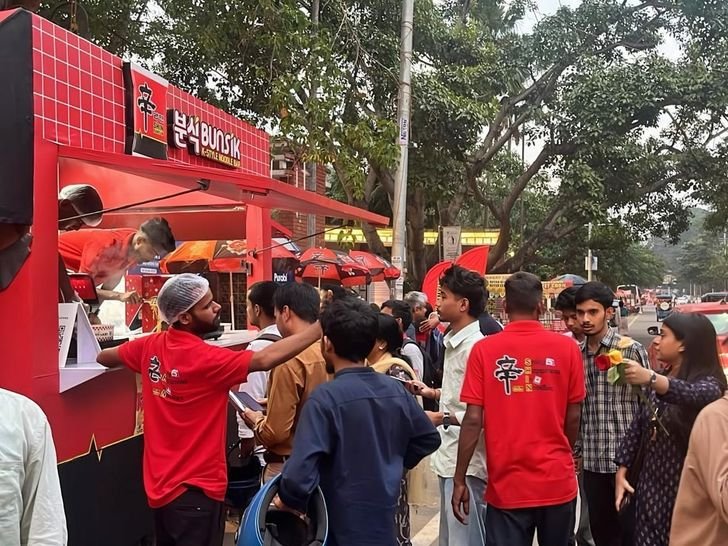
Visitors stand in a queue in front of the Shin Ramyun food truck popup in Guwahati in Assam, India. Courtesy of Nongshim
Korean food company Nongshim is running a Shin Ramyun food truck in northeastern India to build its brand in a market of 1.4 billion people, the company said Friday.
The truck started its tour Oct. 30 and will continue until Nov. 22, making 20 stops in four cities: Guwahati in Assam, Shillong in Meghalaya, Aizawl in Mizoram and Agartala in Tripura. The stops include university campuses and major residential and shopping areas.
Shin Ramyun is Nongshim’s flagship spicy instant noodle brand. “Ramyun” is the Korean word for instant noodles.
Nongshim said Shin Ramyun suits Indian tastes because the monsoon climate has made warm soups and noodle dishes popular there. The company described the northeast, where the truck is touring, as a key region with a clear taste for spicy food, a strong noodle culture and a warm reception for Korean pop culture. The tour comes as Nongshim expands its distribution network in the region.
At the truck, visitors can try the original Shin Ramyun and Shin Ramyun Toomba, a creamy, spicy variant that takes its cue from cream pasta. The noodles are cooked on-site with instant noodle cooking machines. To turn interest from the tastings into purchases, the company is also selling products at the truck and offering discounts at nearby stores.
Visitors who post photos from the truck on social media can take part in a roulette event. The company is also working with local influencers on promotional content.
“We expect this campaign to naturally convey the appeal of Shin Ramyun to Indian consumers, who are familiar with spicy food and have a favorable view of Korean culture,” a Nongshim official said.
“We will continue to steadily expand Shin Ramyun’s presence in the Indian market through marketing tailored to each region’s food culture.”
This article was published with the assistance of generative AI and edited by The Korea Times.