



Ghana-Russia deal: war recruitment ban, defence pact
 0
 0

Russia has agreed to stop Ghanaians fighting in its war in Ukraine, sign a new defence pact and offer more scholarships, Foreign Minister Samuel Okudzeto Ablakwa announced on Saturday, October 31.
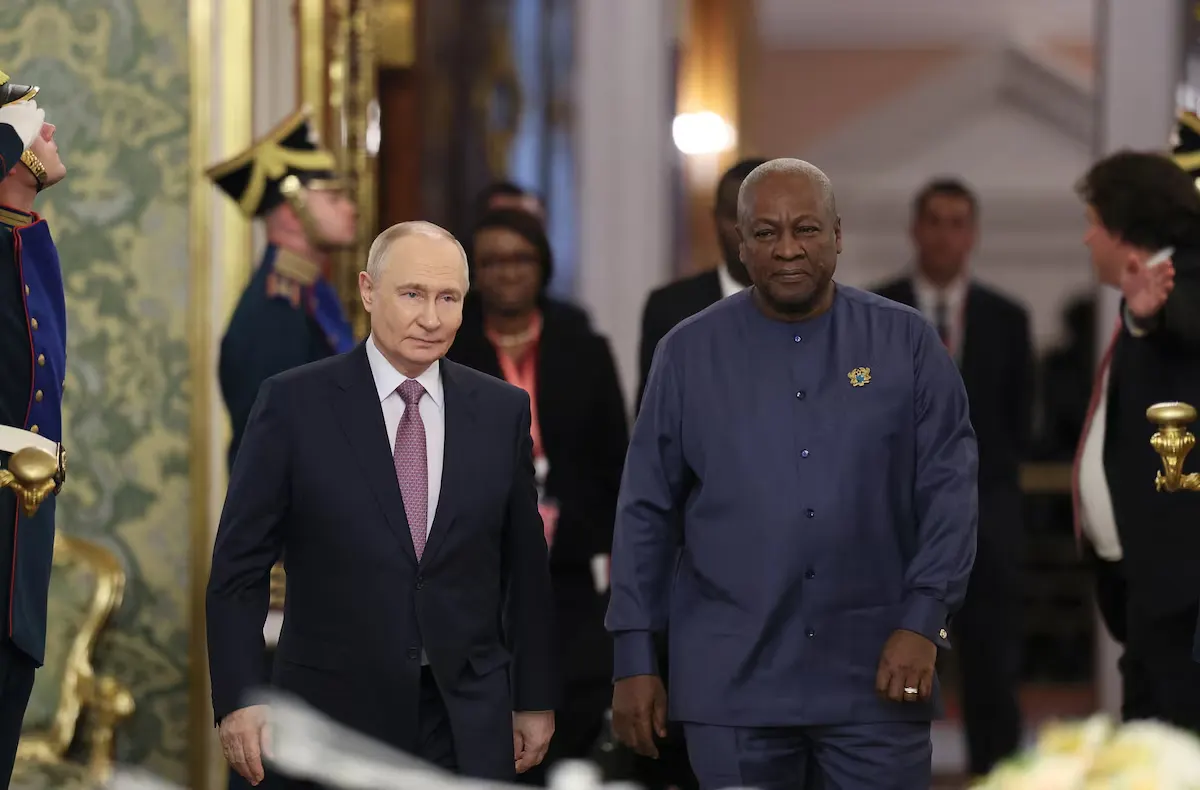
Moscow has not confirmed the recruitment ban. The Kremlin’s published transcript of the opening of President Vladimir Putin’s talks with President John Dramani Mahama on Friday, October 30, makes no reference to recruitment, the war or a defence deal.
Ablakwa listed six commitments in a statement on his Facebook page, saying Mahama secured them in direct talks with Putin after the third Russia-Africa Summit in Moscow.
On the war, he wrote that Putin had declared Ghanaians were no longer allowed to take part. “This policy applies to all circumstances, whether through irregular recruitments or expression of voluntary interests,” the statement said.
The six commitments, as Ablakwa set them out:
- Russia will work with Ghana on a 2,000-megawatt nuclear power plant
- A new defence pact for Ghana to acquire “strategic military assets” for the Ghana Armed Forces
- Closer farming cooperation on grain production and fertiliser supply
- More Russian scholarships for Ghanaian students
- A ban on Ghanaians taking part in the war in Ukraine, whether recruited irregularly or volunteering
- A revived Permanent Joint Commission for Cooperation (PJCC), which Moscow is ready to host “in the next few weeks”
The statement gave no costs, timelines or details of the military equipment involved. It did not say whether any of the commitments had been signed.
Not publicly. The Kremlin website has published nothing on Ghana since its record of the October 30 meeting, which covers only the two leaders’ opening remarks.
In those remarks, Putin said trade between the two countries grew 6 per cent between January and August, and that 649 young Ghanaians are studying in Russia. Mahama pressed for closer economic ties and said the PJCC would meet in 2027.
The Russian side at the talks included Rosatom chief Alexei Likhachev and Igor Kostyukov, head of the Main Directorate of the Russian General Staff, according to the Kremlin’s account of the meeting.
Moscow has long denied recruiting foreigners illegally, saying citizens of other countries can sign up for its armed forces voluntarily.
Russian Foreign Minister Sergey Lavrov made the same case at a joint news conference with Ablakwa in Moscow on Monday, August 17.
He said some foreign recruits had signed contracts out of solidarity with a country that once helped them fight racism, and others for money.
He added that the terms of the contracts were public, that the Defence Ministry kept strict control of such matters, and that a dedicated department there would consider Ghana’s requests.
Ablakwa said at the time that Russia had promised to cooperate with Ghana in ending the illegal enlistment of young Ghanaians. The October 31 statement goes further, covering volunteers as well.
The official toll has risen through the year:
- February 2026: during Ablakwa’s visit to Kyiv, Ukrainian intelligence said 272 Ghanaians had been involved since 2022, with 55 killed and two held as prisoners of war.
- The trend: recruitment of Ghanaians had climbed from 17 in 2023 to 53 in 2024 and 202 in 2025, according to figures released at the time.
- August 17, 2026: in Moscow, Ablakwa said 62 Ghanaians had died and 15 others who went to Russia were missing.
No newer official figure has been published. The October 31 statement did not say what will happen to Ghanaians already serving with Russian forces, or how the 15 missing will be traced.
Under that agreement, the Labour Ministry will coordinate recruitment, verify job offers and give workers orientation before they travel.
Ablakwa said Moscow was ready to host the revived joint commission within weeks, while Mahama told Putin it would meet next year.
Neither government has published the text of the defence pact or a written Russian commitment on recruitment.