


APEC China’s role to revitalize Asia-Pacific economy
 0
 0

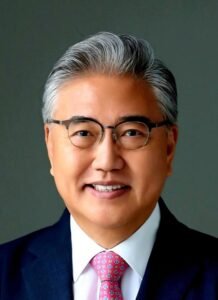
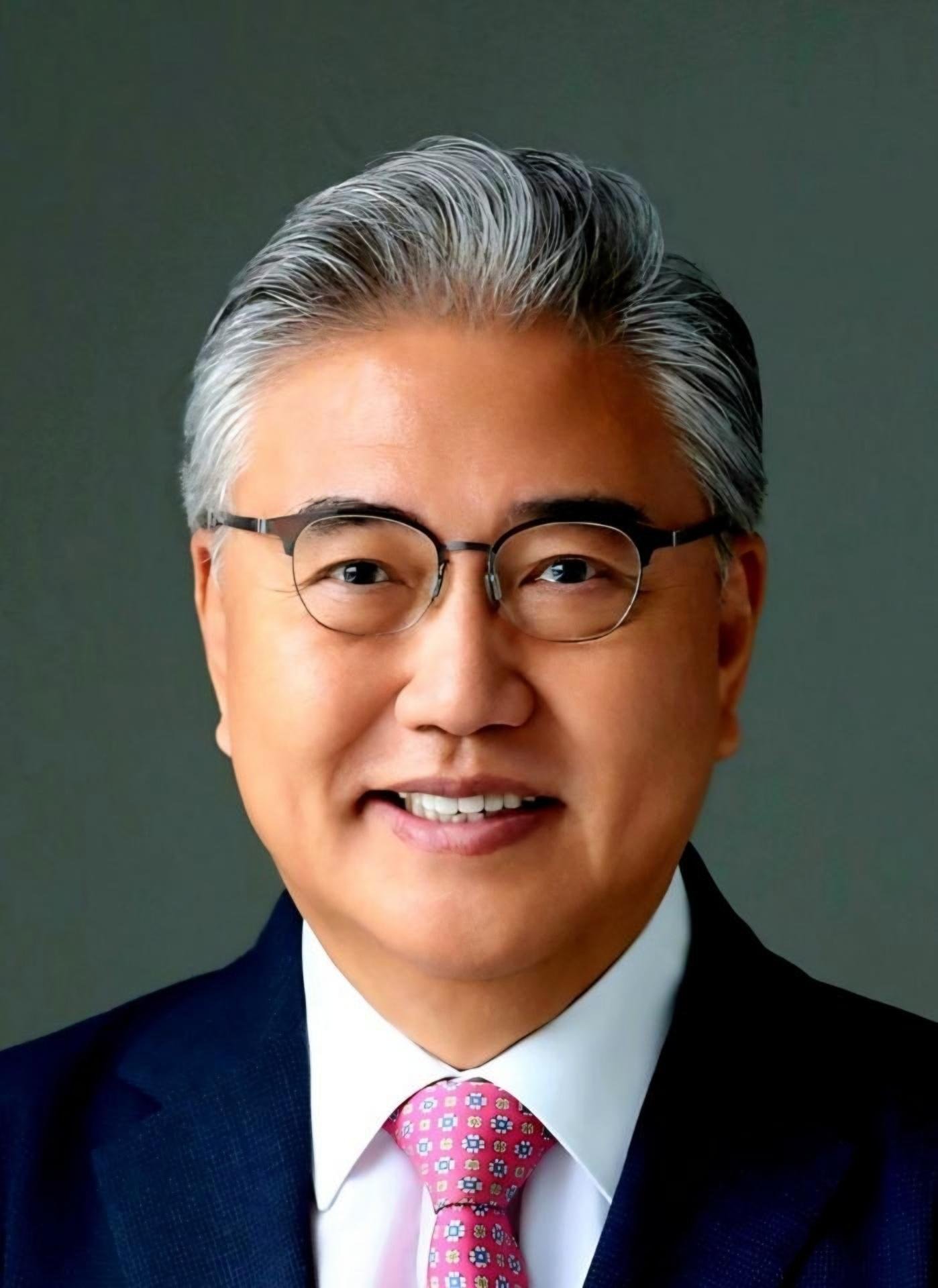
Park Jin
The Asia-Pacific Economic Cooperation (APEC) summit in Shenzhen, China, scheduled for Nov. 18-19, should serve as an event to revive the Asia-Pacific’s economic dynamism and unlock the region’s enormous potential. In the artificial intelligence (AI) era, regional economic security and supply-chain resilience will help determine global prosperity. High tariffs and technological rivalry make cooperation urgent. Korea should carry APEC Gyeongju’s achievements forward to Vietnam’s 2027 chairmanship.
In 2024, APEC’s 21 economies accounted for approximately 61 percent of global gross domestic products, 46 percent of trade in goods and commercial services and 37 percent of the world’s population — nearly 3 billion people. Their strengths span technology, finance, manufacturing, consumer markets and natural resources. AI, robotics, clean energy and digital services offer growth opportunities that depend on resilient supplies of semiconductors, computing power, minerals and electricity. Diversified sourcing and predictable policies can strengthen resilience and expand market access for smaller enterprises.
I had the privilege of attending the first APEC leaders’ meeting in Seattle in November 1993 as press secretary to President Kim Young Sam. APEC, founded in 1989, sought to turn post-Cold War interdependence and diversity into common prosperity. On Blake Island, leaders called for a “spirit of openness and partnership,” freer trade and investment, higher living and educational standards, environmental protection and an open multilateral trading system.
The 1994 Bogor Goals set deadlines for free and open trade and investment: 2010 for industrialized economies and 2020 for developing economies. The 2005 Busan Roadmap, adopted under Korea’s chairmanship, promoted the multilateral trading system, collective and individual action, high-quality trade agreements, business facilitation and capacity building. Its pathfinder approach let willing economies advance initiatives first while encouraging others to join.
The 2010 Yokohama Summit advanced regional integration, outlined pathways toward a Free Trade Area of the Asia-Pacific (FTAAP), adopted the APEC Leaders’ Growth Strategy and reinforced commitments to open markets and stronger supply chains.
The 2014 Beijing Roadmap advanced FTAAP through research and capacity building. APEC would lay the groundwork, while the agreement itself would be negotiated outside its framework.
The Putrajaya Vision 2040, adopted in 2020, emphasized trade and investment, innovation and digitalization, and strong, balanced, secure, sustainable and inclusive growth. The 2023 San Francisco Principles integrated inclusion and sustainability into trade and investment policy, emphasizing transparency, the participation of underserved groups and opportunities for smaller businesses. Implementation remains essential.
The above efforts have had tangible effects. APEC’s achievements include lower trading costs and easier business mobility. Average tariffs fell from 17 percent in 1989 to 5.3 percent in 2021, reflecting World Trade Organization commitments, domestic reforms and trade agreements. Electronic customs, single-window systems and the APEC Business Travel Card reduced obstacles. APEC’s 2007-2010 Trade Facilitation Action Plan cut trade transaction costs by 5 percent, saving businesses an estimated $58.7 billion.
Yet agricultural protection, nontariff barriers and restrictions on services and investment persist. FTAAP remains aspirational. Voluntary commitments and consensus decision-making accommodate diversity but limit enforcement. Strategic disputes and the annual rotation of hosts weaken follow-through, making cooperation between summits essential.
Since the second Donald Trump administration took office in 2025, higher U.S. tariffs have raised trading costs, reshaped global supply chains and redirected trade flows. They have also increased costs for American manufacturers that rely on imported inputs and pushed up consumer prices.
UN Trade and Development (UNCTAD) warns that policy uncertainty discourages investment, especially among smaller firms. APEC reports that regional foreign direct investment has remained broadly stable and that technology-related activity is strong. These regional trends can coexist with pressure on individual businesses, which reinforces the need for predictable policies.
The Gyeongju summit of Oct. 31-Nov. 1, 2025, offered practical responses. Its AI Initiative for 2026-2030 links productivity with workforce preparation, accessible technology, trustworthy adoption and resilient infrastructure. APEC should also build stronger consensus on AI safety and governance, with shared commitments to transparency, accountability and human oversight. The Asia-Pacific AI Center, which Korea will fund and operate independently, will support capacity building and information sharing.
Gyeongju’s Collaborative Framework for Demographic Changes addresses declining birthrates, aging workforces and urbanization through lifelong learning, broader labor-force participation, healthy aging and technology-supported care. China and Vietnam should carry these commitments forward through adaptable policies.
Shenzhen will put China’s priorities of “Openness, Innovation, Cooperation” to the test. Under the theme “Building an Asia-Pacific Community to Prosper Together,” China’s proposed agenda covers FTAAP, connectivity, AI and the digital economy. Members should advance trade predictability, paperless commerce, infrastructure and skills where consensus allows.
Ministerial cooperation on digital skills, trusted technology, energy security and infrastructure financing provides a foundation. Shenzhen should address AI’s electricity, investment and workforce needs together. The first five-year review of the Aotearoa Plan of Action, APEC’s roadmap for implementing the Putrajaya Vision 2040, can help turn shared goals into practical results.
Looking toward 2027, sectoral gains appear more achievable than sweeping liberalization. SME adoption of AI, digital education, electronic customs, energy efficiency, disaster preparedness and food security offer promising ground. Tariff elimination, subsidy disciplines, export controls on advanced technology and common data rules remain harder. APEC’s slowing growth forecast — 3.2 percent in 2026 and 3.0 percent in 2027 — adds urgency.
Cooperation among the major powers would widen opportunities.
Success requires designated lead institutions, timelines, financing and measurable targets, such as customs clearance times, AI adoption rates, energy savings and access to training. Public reporting can sustain momentum between summits.
Korea should turn Gyeongju’s agenda into durable programs by clarifying the AI Center’s resources and operations and by developing training and pilot projects with interested economies. Universities and companies can support AI applications in manufacturing, logistics and public services. Science diplomacy and joint assessments of AI reliability, cybersecurity and human oversight can build confidence.
Korea should also share its customs expertise and strengthen the resilience of semiconductor and critical-mineral supply chains through voluntary early-warning alerts, diversification and business dialogue.
Energy cooperation should cover grids, storage, efficiency and low-carbon sources, including nuclear power and small modular reactors for interested economies. Demographic initiatives should expand retraining and the participation of women and older workers. The APEC Climate Center in Busan can support disaster and agricultural preparedness.
Korea, China and Vietnam should secure institutions and financing for pilot projects in 2027. Businesses and the APEC Business Advisory Council can assess commercial feasibility. Reporting results and expanding effective projects would give the Gyeongju and Shenzhen summits lasting value. Shenzhen’s leaders should renew confidence in cooperation and mobilize the region’s immense potential for economic vitality and shared growth.
Park Jin is South Korea’s former foreign minister. He is a distinguished invited professor at the Korea Advanced Institute of Science and Technology.