










El Niño and Ghana: heat, food prices and the 2028 power risk
 0
 0
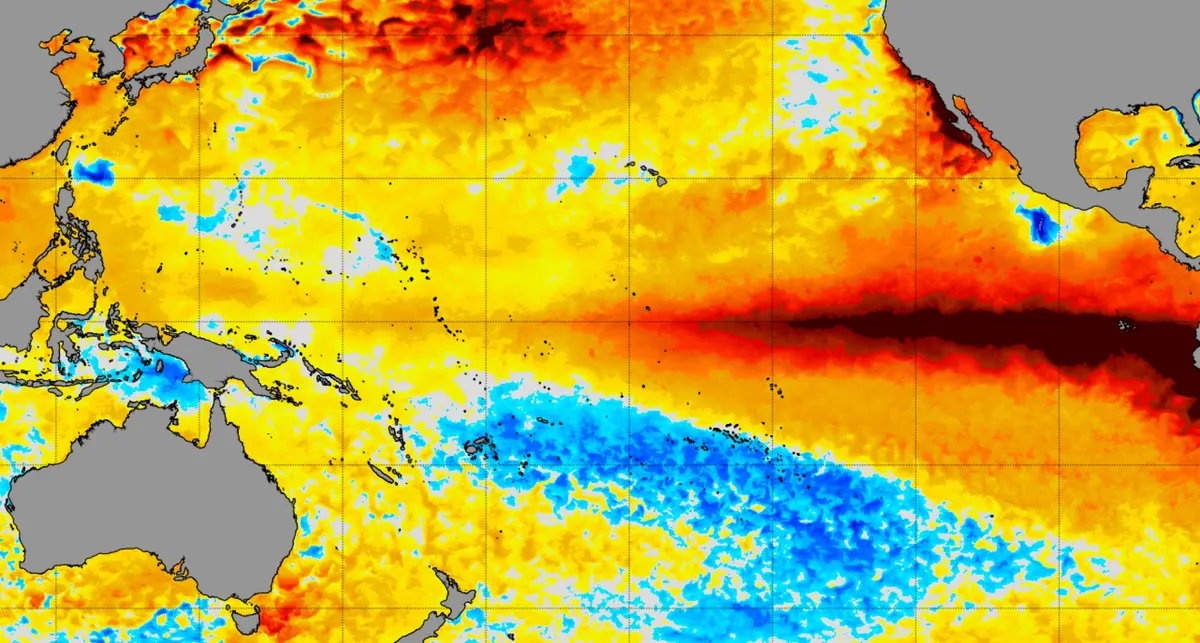
A very strong El Niño is building in the Pacific, and Ghana will feel it in stages: a hotter, drier dry season from late November, the most dangerous heat of the year between February and April, a 2027 rainy season that could disappoint or overflow, and a test for hydropower that arrives only in 2028.
That is the picture in a 31-page advisory the Ghana Meteorological Agency (GMet) published on 30 October, revised after a scientific review by its Governing Board.
GMet presents its findings as “probabilistic assessments of climate risk rather than deterministic predictions”, and it is careful about what it does not know. This is what it does say.
96%chance this El Niño reaches “very strong” by November–January, according to NOAA
+1.7°CNOAA’s official reading for July–September, and still rising
Feb–Aprwhen heat stress is expected to peak, especially in the north
2028the year El Niño’s risk to hydropower lands

A fever in the Pacific
How strong this El Niño is, and how long it will last
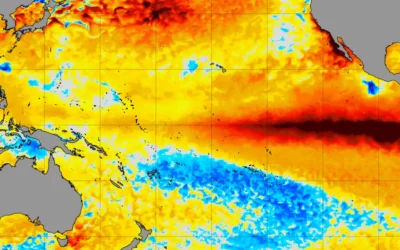
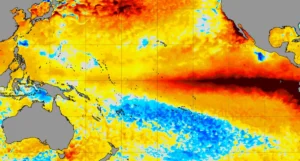
El Niño is the warm phase of a natural cycle in the central and eastern equatorial Pacific. When the ocean there warms well above normal, it shifts thunderstorms, winds and rainfall across the tropics, and the effects reach West Africa.
NOAA’s Climate Prediction Center declared El Niño conditions in June.
On its official index the event reached +1.7°C above normal in July–September, up from +1.4°C a season earlier, and weekly readings had climbed to about +3.4°C by the week of 21 October.
NOAA gives a 96 per cent chance that the event reaches very strong intensity, +2.0°C or more, in November–January, and a 70 per cent chance of +2.5°C or more. On current readings, GMet says, it is among the strongest on record, though a formal ranking will wait for a full season of data.
The agency adds a caution from NOAA: the strength of an event does not necessarily match the strength of its impacts.
The event is expected to peak between now and January and to weaken through the first half of 2027.
NOAA puts the chance of El Niño persisting at about 85 per cent for March–May 2027, falling to 45 per cent for April–June, after which a shift to neutral or La Niña conditions becomes increasingly likely. That timing matters most for Ghana’s 2027 rains.
El Niño increases the likelihood of certain climate anomalies but does not produce uniform conditions across Ghana.
The reason is the Atlantic. Ghana’s rainfall is governed by the tropical Atlantic as much as by the Pacific, because sea temperatures in the Gulf of Guinea control how much moisture reaches the coast and when the rains begin.
El Niño tends to warm the tropical North Atlantic a few months after it peaks, and a North Atlantic that is warm relative to the south tends to pull the rain belt northwards, favouring the Sahel over the coast.
Whether an El Niño year turns out wet or dry in West Africa depends on what the other oceans are doing.

What past El Niños did
Droughts, power cuts, floods and a cocoa shock
Ghana has lived through four very strong El Niño events since 1980, and the record is uneven.
Some of the most damaging climate shocks the country has suffered came in years without an El Niño, and several disasters that coincided with one, including the June 2015 Accra flood and fire that killed more than 150 people, have never been attributed to it.
What the past does show is that the impacts arrive together, straining food crops, food prices, hydropower and public health at the same time.
- 1981–83Drought, fire and rationing
Severe drought, worst in 1983, brought bushfires, crop losses and food shortages. Lake Volta fell and power rationing began in late 1983. GMet notes the drought began before El Niño took hold and sat within a longer Sahel drought.
- 1997/98The 1998 power crisis
Reduced rainfall and inflows into Lake Volta contributed to the 1998 electricity crisis, with restrictions on Akosombo and Kpong generation and widespread rationing.
- 2015/16Late rains, a low lake
Late onset and long dry spells hit maize in Techiman, Wenchi and Ejura. Lake Volta fell below its minimum operating level in June 2015, before that El Niño matured, reflecting poor inflows in earlier years.
- 2023/24A cocoa shock and a spillage
Heavy rain from April to June 2023 and a harsh dry spell from November to February cut cocoa output by an estimated 20 per cent. In October 2023, Akosombo and Kpong spillage displaced an estimated 35,857 people. GMet has not linked the spillage directly to El Niño.
- 2026Floods first
Deadly floods in June, then long dry spells in parts of the north. GMet does not attribute either to El Niño.
5,180 GWhGhana’s national electricity supply in 1981
1,670 GWhin 1984, after Lake Volta fell during the 1981–83 drought
−68%the fall in supply in three years, with rationing from late 1983

The next 12 months
A month-by-month map of the risks
GMet’s advisory sets out what to expect, period by period, from now until the Volta basin’s inflow season ends in October 2027. The calendar below turns that timeline into a single view.
Tap a month to see what GMet says to watch.
The first window is the dry season. GMet’s October–December outlook forecasts below-normal rain across much of Ghana and warmer-than-average temperatures in most places, with a hotter, drier dry season from late November, starting in the north.
Some inland parts of Greater Accra and the Central Region, south-western Volta and Eastern, parts of Bono and Savannah, and north-western Upper West are still expected to see above-normal rain, and localised heavy downpours remain possible in the south.
Drying vegetation raises the risk of bushfires, water stress and dust through the harmattan, which typically runs from late November to March. GMet says a direct El Niño influence on the harmattan’s intensity is weakly established; the concern is the dry ground and vegetation going into it.

Heat
February to April 2027
February to April is always the hottest stretch of the year in northern Ghana, and tropical temperatures tend to peak a few months after an El Niño does, so early 2027 is likely to be unusually hot.
GMet is precise in to point that background warming from climate change is the main driver of recent West African heat; the agency says: El Niño added only about 0.2°C to the March–April 2024 Sahel heatwave, according to the World Weather Attribution group, while humid heat in southern West Africa that year was about 4°C hotter because of climate change.
The heat risk for February to April 2027 is therefore high, with El Niño a modest added factor.
GMet and the Ghana Health Service plan heat advisories against agreed temperature thresholds, aimed at older people, young children, outdoor workers, people with chronic illness and crowded urban households.
In northern towns the advisories will include night-time temperatures, because hot nights stop the body recovering from the day.
The dry season also brings the north’s usual meningitis risk.
GMet says heat and dryness may add to it but warns against calling it an El Niño effect: the north was vaccinated in 2012 against the strain behind the 1996–97 epidemic, the 2015–16 outbreak was caused by different organisms, and laboratory confirmation remains essential to target vaccines.

Food and cocoa
Rain-fed farms, and a crop exposed both ways
Agriculture is the most exposed sector because it is overwhelmingly rain-fed. In the north, which has a single rainy season from May to October, maize, millet, sorghum, rice and groundnuts depend on the rains arriving on time and holding steady. GMet’s 2026 forecast for the north had warned of dry spells of 10 to 18 days in parts of the Upper East, Upper West and the transition zone.
Timing matters as much as totals. GMet’s review of past events found that crop losses were not explained by low seasonal rainfall alone: late onsets, long dry spells and poorly distributed rain did much of the damage, which is why it wants planting guided by its onset forecasts rather than the calendar.

Cocoa is exposed in both directions. Heavy rain during flowering and early pod development, together with dry-season drought, explains most of the year-to-year variation in Ghana’s yields, according to research GMet cites, and El Niño tends to lower the first risk while raising the second.
In 2023/24, heavy rain from April to June followed by a harsh dry spell from November to February cut Ghana’s output by an estimated 20 per cent, in losses that also reflected swollen shoot disease, ageing trees and illegal mining on cocoa land.
The International Cocoa Organization reported a global decline of about 11 per cent that season, which drove prices to record highs.
−20%estimated fall in Ghana’s cocoa output in 2023/24
−11%global cocoa output that season, which sent prices to record highs (ICCO)
928,000farmers whose livelihoods the 2024 northern dry spell threatened, according to the Finance Ministry

The lake and 2028
Why El Niño’s power risk arrives a year late
Hydropower supplied 32.4 per cent of Ghana’s electricity in 2025, about 8,752 gigawatt-hours from Akosombo, Kpong and Bui.
Lake Volta stores several years of inflow, most of which arrives between August and October from the basin’s northern reaches in Burkina Faso and northern Ghana.
What the dams can generate this dry season is therefore set mainly by water already in the lake, and this year’s above-normal rain in Burkina Faso and the controlled spillage of the Bagré Dam from 28 August point to good inflows. GMet does not expect El Niño to constrain hydropower through this dry season unless lake levels are already low.
32.4%of Ghana’s electricity came from hydropower in 2025
1,584MWcombined capacity of Akosombo, Kpong and Bui
Aug–Oct 2027the inflow season that decides hydropower generation in 2028
The El Niño-sensitive period is the 2027 inflow season. A late or weak 2027 rainy season would lower inflows and limit generation in 2028, and GMet wants the Volta River Authority, GRIDCo and the Energy Commission to plan for greater reliance on thermal power in that case, with the fuel and foreign-exchange costs that would bring.
The opposite risk is just as live. If La Niña develops by mid-2027, heavy inflows could force spillage again, as in October 2023, when opening the Akosombo and Kpong spillways displaced an estimated 35,857 people in North, Central and South Tongu and Asuogyaman.
GMet says both should be treated as live risks, “not as mutually exclusive scenarios”.

Where the risk is highest
GMet’s exposure map, region by region

What happens next
Two scenarios, and what GMet wants government to do
- Open
Lower severity
Significant but manageable stress on rain-fed farming, water and health services, met largely through existing institutions.
- Open
Higher severity
A late or failed 2027 rainy season combines with dry-season heat and food-price pressure, requiring sustained cross-government coordination, especially in health and food security.
Present evidence does not allow GMet to say which is more likely.
GMet’s central recommendation is a National El Niño and Dry-Season Preparedness Task Force, bringing together the ministries responsible for food and agriculture, health, energy, water resources, local government and finance with the Volta River Authority, and reporting to Cabinet monthly through the peak risk period from November to April.
It wants the National Development Planning Commission and NADMO to produce a district-level hazard map, and every action tied to a trigger that can be monitored.
The advisory also calls for drought-tolerant and early-maturing seed to be pre-positioned, irrigation and water harvesting expanded in the most exposed districts, national food and seed reserves strengthened, meningitis vaccines and heat-health plans readied, NADMO’s relief stocks replenished, and warnings issued in the Common Alerting Protocol format so broadcasters, mobile networks and district assemblies relay them consistently.
It wants the National Disaster Management Fund assessed against both scenarios before the peak risk period.
GMet says it will update its forecasts and scenarios with each seasonal outlook, starting with new forecasts for the 2027 rainy seasons early in the year.