




Foreign arrivals at regional airports surge 37.4 percent
 0
 0

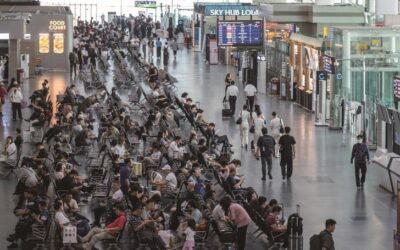
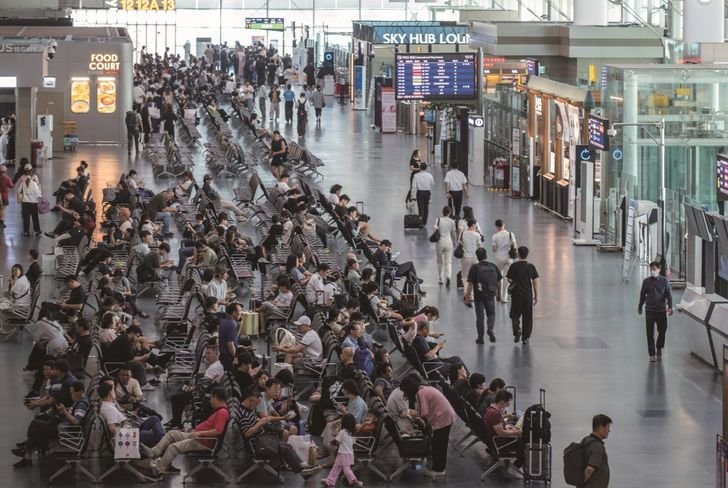
Gimhae International Airport / Courtesy of the Korea Airports Corporation
The number of foreign nationals entering Korea through regional airports rose by more than 37 percent in the first nine months of this year, with arrivals from Taiwan surging by 60.4 percent, according to data released by the Korea Airports Corporation (KAC).
An analysis of airport-by-airport arrival figures for January through September, released by KAC on Thursday, showed that 3.24 million foreign nationals entered the country through Gimhae, Jeju, Cheongju and Daegu airports, up 37.4 percent from the same period last year.
By airport, arrivals increased 59.5 percent at Cheongju International Airport, 47.9 percent at Gimhae International Airport, 27.9 percent at Jeju International Airport and 0.8 percent at Daegu International Airport.
By comparison, the number of foreign arrivals through Incheon and Gimpo international airports in the Seoul metropolitan area rose by just 17.2 percent over the same period.
The Korea Airports Corporation attributed the trend to a growing number of foreign tourists entering Korea directly through regional airports, bypassing the capital region.
Among foreign visitors arriving through regional airports, Taiwanese nationals accounted for 960,000, up 60.4 percent from a year earlier.
At Gimhae International Airport alone, arrivals from Taiwan reached 650,000, marking a 76.7 percent increase year-on-year.
Arrivals from Japan also climbed 43.5 percent to 450,000, driven in part by the expansion of routes connecting Gimhae and Cheongju airports with regional cities in Japan.
The number of Chinese arrivals rose 29.4 percent to 1.3 million, supported by an increase in flights operated by Chinese airlines to regional airports.
“We have worked to create more opportunities for foreign tourists to enter South Korea directly through regional airports by expanding air routes and conducting joint overseas marketing campaigns,” said Kim Won-joon, president of the Korea Airports Corporation.
“Going forward, we will pursue strategies to boost international routes tailored to the characteristics of each airport, in coordination with the Ministry of Culture, Sports and Tourism’s policy to develop five major tourism zones, with Gimhae, Daegu, Cheongju, Yangyang and Muan airports serving as gateways connecting visitors to surrounding cities,” he added.
This article from the Hankook Ilbo, the sister publication of The Korea Times, is translated by a generative AI system and edited by The Korea Times.