





Her grandfather said no. Now he tells her, “You can do it.”
 0
 0
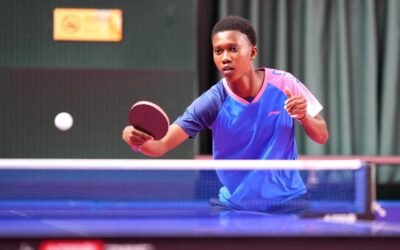
Joanita Borteye was nine when she began following children in her neighbourhood in Nungua to watch them play table tennis. They started on a small board before moving to a full-sized table. She followed, curious about the game and what happened when the board got bigger.
A coach noticed her interest and asked if she wanted to join them.
She wanted to. But she had a reservation.
“No, I don’t want to join because it’s for boys,” she recalled telling him.
The coach told her that girls could play too. He offered to speak to her parents, and in 2021, Borteye began training.
Her grandmother supported the decision. Her grandfather did not want her to play.
For a nine-year-old, his objection mattered. She was discovering something she liked, but someone whose approval she valued did not share her enthusiasm. Still, she went ahead.
Three months later, she entered a national youth competition in Ghana, competing in the under-12 category. She won gold.
What followed at home remains one of her happiest memories.
“My family was very happy that they even popped champagne. They were pouring powder on me and other stuff,” she said.
The celebration marked her first medal, but it also changed her grandfather’s view of the sport. The man who had told her not to play was now proud of her.
“He’s proud of me,” she added as a smile blossomed on her lips.
Today, whenever she prepares for a competition, he encourages her.
“He has always been encouraging me like, you can do it. You can do it.”
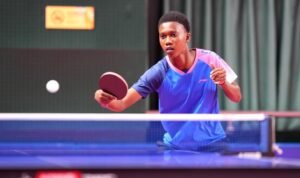
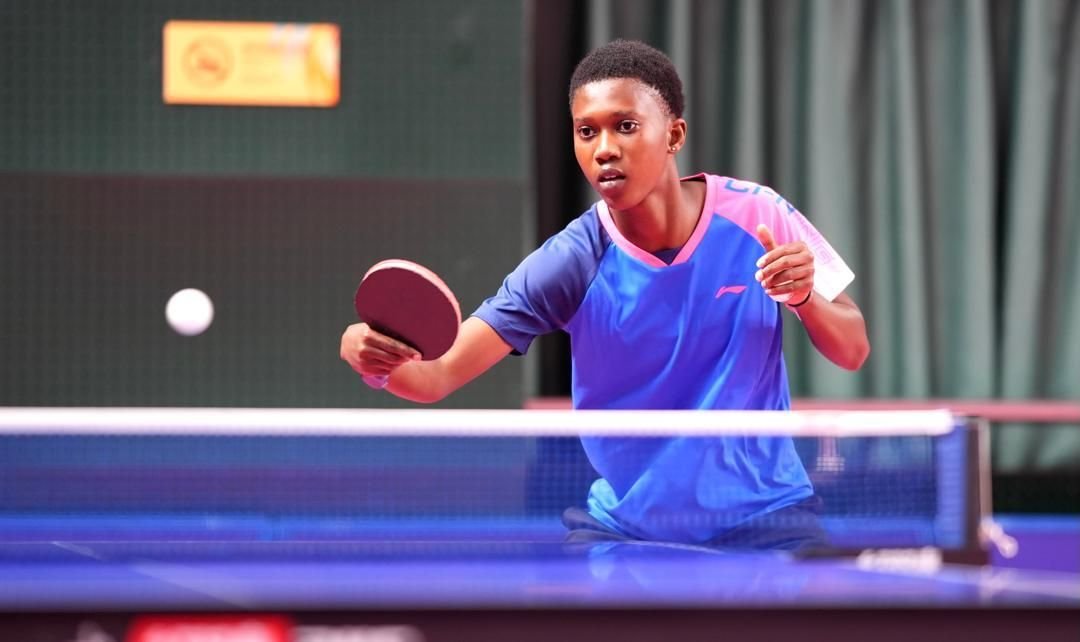
At 14, Borteye is preparing to represent Ghana in women’s singles table tennis at the 2026 Youth Olympic Games in Dakar, Senegal. The journey from a neighbourhood table in Nungua to an international competition has brought national titles, continental gold and training in China.
But the change in her grandfather is a part of the journey that belongs to her alone. She remembers his refusal. She also remembers the celebrations that followed her first gold medal, and the encouragement she receives from him now.
The child who once thought the game was not for girls has given her grandfather a reason to believe in her.

Borteye’s rise has required her to manage the demands of sport alongside school.
At Tema Senior High School, travelling for competitions meant missing lessons and returning with work to recover. The Ghana Table Tennis Association provided letters for her to present to the headmistress, while her classmates helped her catch up.
“Combining the school and the game was really, really difficult,” she said.
“When I come back, my friends will teach me like the things they have already learned. That’s how I was able to catch up with them.”
It was not always easy to keep both responsibilities moving. She had to prepare for competitions without losing sight of her education, then return to the classroom after the excitement of travel and competition.

Her coach, Cynthia Kwabi, has watched that commitment develop over the years.
“She is a hard-working girl. She is well-disciplined. She is always available, ready to learn,” Kwabi said.
She also sees a natural ability in the teenager, particularly in the way she responds to coaching.
“Anything that you teach her, she’s able to adapt and she’s able to exhibit it and even do her own research.”
For Kwabi, that willingness to learn, combined with discipline in training, distinguishes Borteye as a young player.
“She is always ready to train harder,” she said. “When you train harder, it strikes you forward.”

At the 2026 Sheroes GTTA Championship, Borteye finished joint third in the senior women’s event. At the Otumfuo Smash II Table Tennis Tournament in Kumasi, she won the under-19 girls’ title, beating Emmanuella Yaa Kyere 3-0 in the final. She also reached the senior women’s semi-finals, losing 2-3 to eventual champion Augustina Baidoo.
Then, in July, she partnered Israel Aklie to win under-15 mixed doubles gold at the ITTF-Africa Youth Championships in Accra. The Ghanaian pair defeated Tunisia’s Amine Amori and Ela Saidi 3-0, ending Ghana’s 39-year wait for gold at a major African table tennis event.
For a 14-year-old, these results have brought her into competition with older and more experienced players. They have also helped prepare her for the next challenge.

In December 2025, Borteye travelled to Chengdu, China, for the International Table Tennis Federation’s Global Youth Training Camp. She joined the ITTF High Performance Programme for Young Talents, training alongside promising international players and learning from leading coaches.
She returned convinced that she had improved.
“I’ve improved very much after I came back from China.”
The experience exposed her to a different standard of training and a level of expertise she wants to emulate.
“Because they are now like leading the world in terms of table tennis. And them too, they are experts. So when they teach you something, you need to learn it and practise it always. So that you can also be like them.”
Kwabi has also noticed the difference.
The camp brought together qualified, internationally active players from different continents and gave them access to leading coaches from China and Sweden.
“Coming back, Joanita has improved a lot,” Kwabi noted, pointing to the teenager’s subsequent performances and qualification for the Youth Olympic Games as signs of progress.
For the coach, Dakar is an opportunity for Borteye to put that development to the test.
Kwabi knows the demands of competition from her own experience as an active player. She said she tries to put herself in her young athlete’s position, offering technical guidance while helping her remain focused on her goals.
She is also conscious of the responsibility of guiding a young girl through international sport.
“I try to guide her professionally, and safeguard her as a girl, and impart more focus into her to really concentrate on where she is and what she wants to achieve in the future,” she said.

Borteye prefers singles because, in her words, “it’s only you.”
In doubles, she explained, a partner’s reaction after a lost point can affect the atmosphere between the pair. In singles, the responsibility rests entirely with the player.
She knows what it feels like to lose a match she expected to win.
During Olympic qualification in Rwanda in 2024, she faced Uganda’s Judith, whom she had previously beaten 4-1 at the African Cup. This time, Judith won 4-1.
Borteye remembers it as her toughest game.
The defeat remains part of her experience as she prepares to face another international field in Dakar. She will encounter players with their own strengths, training histories and ambitions. Some matches may go her way; others may test her patience and confidence.
Her coach believes she has the determination to keep fighting.
“She doesn’t give up,” Kwabi said. “She always strives to achieve something for our nation, Ghana.”
She wants Ghanaians to expect the best from the young player, while promising that the team will do everything possible to prepare her properly.
Borteye has another ambition. She wants to work in the media.
“I want to also be a media person,” she said.
At 14, she has time to explore what that future might look like. For now, she is balancing school with a sport that has taken her to China, brought her continental success and earned her a place at the Youth Olympic Games.
She has not had to give up the possibility of another career to pursue table tennis. Both ambitions remain part of the future she imagines for herself.

The Youth Olympic Games will run from October 31, to November 13, 2026 in Dakar, the first Olympic event hosted on African soil. Borteye is among 13 athletes selected to represent Ghana across eight sports and has been appointed the assistant captain of team Ghana.
She will compete in women’s singles, carrying the experience of international training, national competition and a continental title.
“I’m very ready and I’m going to make Ghanaians proud,” she said.
No one can promise her a medal. What lies ahead will depend on the matches she plays and how she handles the pressure of competing against the world’s best young players.
But Borteye has already travelled a considerable distance from the child who followed other children to a table in Nungua.
She was nine when she thought the sport was for boys. Her grandfather did not want her to play, while her grandmother supported her. A coach encouraged her to try, and three months later, a gold medal brought a celebration at home that helped change her grandfather’s mind.
When she stands alone at the table in Dakar, she will have to find her own answers. Her grandfather cannot play a point for her, and neither his pride nor her family’s support can determine the result.
But she knows what his encouragement means. She remembers the beginning, when he did not believe table tennis was the right path for her. She knows what changed.
Five years later, she is preparing to represent Ghana on one of sport’s biggest stages for young athletes.
The girl who once thought she did not belong at the table has earned her place there. And the grandfather who once said no is now telling her to keep going.