 0
0
 0
0 The Ghana Atomic Energy Commission (GAEC) on Tuesday broke ground on a 48-unit residential apartment complex for its staff, the first significant expansion of staff housing since the Commission’s predecessor, the Ghana Nuclear Reactor Project (GNRP), built its original residential facilities in the early 1960s.
The sod-cutting ceremony, held at the project site behind the GAEC Junior Staff Quarters, was attended by government officials, GAEC management, project partners, and contractors. Prof. Abdulai Baba Salifu, Director-General, GAEC Prof. Samuel B. Dampare, Director General, MEST, Suweibatu Adams, representing the Minister of Environment, Science and Technology (MEST) and Director of Special Operations at the National Security Secretariat, Richard Jakpa, jointly performed the ceremonial cut.
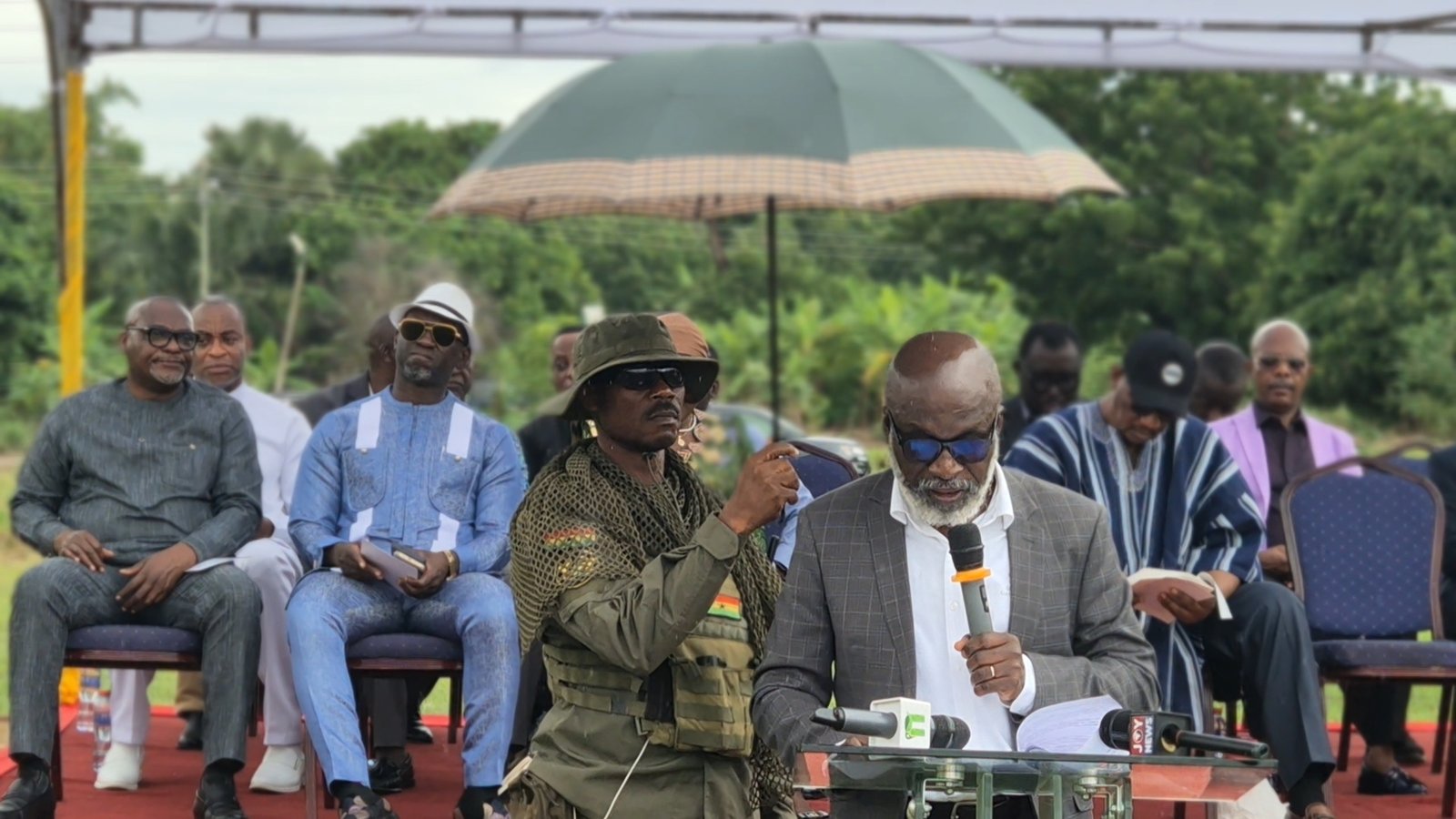
Speaking at the event, GAEC Director General Prof. Samuel B. Dampare drew a direct line between the housing project and the Commission’s broader scientific ambitions which now span nuclear energy, space science, advanced medical applications, and environmental monitoring.
“As the Commission positions itself for the future through investments in nuclear energy, space science, advanced medical applications, and industrial technology systems, it becomes increasingly important to attract, motivate, house, and retain the highly specialized scientific and technical expertise required to sustain these national responsibilities,” Prof. Dampare said.
He also placed the project in historical context, noting that the original facilities were built on a philosophy that still holds today.
“Those facilities were built with foresight and purpose, based on the understanding that scientific excellence requires not only laboratories and equipment, but also stable communities, motivated personnel, and an enabling environment for research and innovation,” he said.
The project is being delivered through a Public-Private Partnership (PPP) between GAEC and Muhassin Company Limited. It falls under the broader GAEC Residential Apartments and Related Facilities initiative, developed in collaboration with the Ministry of Environment, Science and Technology (MEST).
Officials say the development is expected to improve living conditions for staff, address longstanding accommodation challenges, and support retention of technical personnel a persistent challenge for science institutions competing with the private sector.


