 0
0
 0
0 Hundreds of people have been made redundant and dozens of bars have closed after craft beer firm Brewdog went into administration.
US beverage and medical cannabis company Tilray has bought the company’s UK brewing operations, brand and 11 pubs in a £33m deal.
Administrators said the sale had preserved 733 jobs – but that 484 jobs had been lost and 38 bars had closed after they were not included in the rescue deal.
And they said no equity holders – including those who invested in the brewer’s Equity for Punks scheme – would get any return from the deal.
Aberdeenshire-based Brewdog announced last month that consultants AlixPartners had been brought in after the firm failed to make a profit in recent years. On Monday, they were appointed as administrators.
AlixPartners said there had been “significant interest” in the company but that it had not received any offer which would have preserved Brewdog in its entirety.
“Regrettably, a total of 38 bars in the UK will close with immediate effect, leading to 484 redundancies,” said the administrators.
Tilray will take control of Brewdog facilities including its brewery in Ellon, Aberdeenshire, and The Hop Hub, a national distribution centre in Motherwell, Lanarkshire.
BrewDog’s 18 franchise bars in the UK and internationally will continue to operate.
Tilray, which already owns several US craft beer brands, described the deal as a significant opportunity for growth in the UK and international markets.
The two firms are still negotiating for a deal on Brewdog’s assets in the United States and Australia.
Brewdog’s German arm – which includes a brewery and bar in Berlin – was not included in the sale and will be liquidated.
Brewdog, which was founded by friends James Watt and Martin Dickie in 2007, has four breweries and about 100 pubs around the globe.
All its bars were closed on Monday to enable staff to attend staff meetings, and online sales were temporarily suspended.
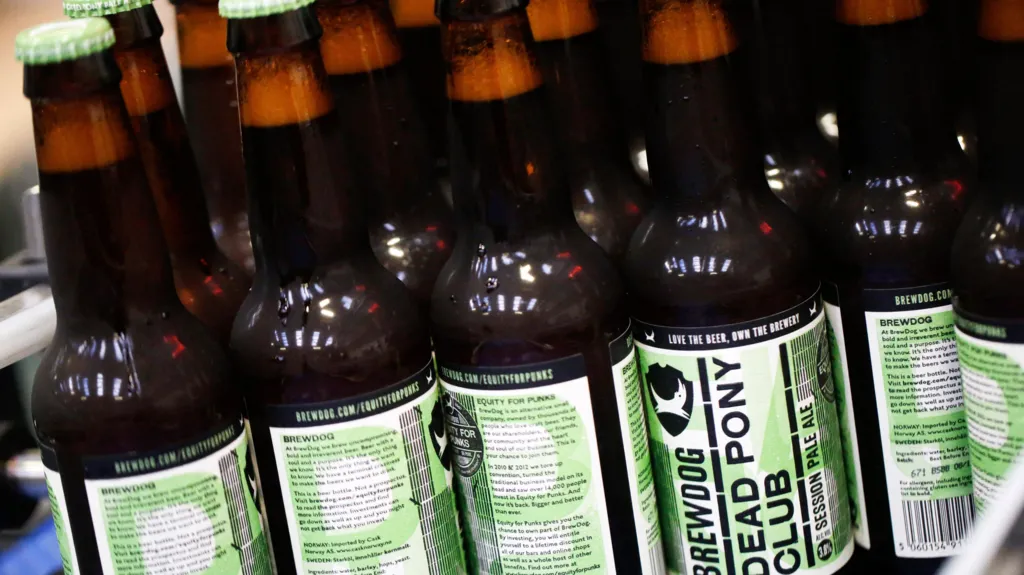
Concerns had been raised in recent weeks about what might happen to the company’s small investors in the event of a sale.
In 2009, the firm launched a fundraising scheme called Equity for Punks.
About 200,000 people put money into the scheme, which offered a stake in the company, discounts and perks.
The investors typically spent about £500 on shares costing £20 to £30 each, although others invested larger sums.
Before it closed to new investors in 2021, Equity for Punks is said to have raised £75m which was used to expand the business into an international brand.
In 2017 a US equity firm TSG Consumer Partners acquired a 22% stake in Brewdog.
But unlike the Equity for Punks’ “ordinary” shareholders, TSG was given “preference shares”.
That meant that if Brewdog was sold, TSG was first in the queue to get back its investment plus any return owed, possibly leaving little or nothing for small investors.
Some of these people correctly predicted their shares would become “worthless”.
Job losses and cut backs
Last month, the company halted production of gin and vodka brands at its distillery in Ellon, Aberdeenshire.
Brewdog had announced job cuts across the business in October last year, after posting a £37m loss.
Earlier in 2025 it announced the closure of 10 bars across the UK, including its flagship pub in Aberdeen.
The company employed around 1,400 people.
When it was founded in Aberdeenshire the firm portrayed itself as a rebellious challenger to a UK brewing industry it regarded as stuffy and corporate.
But in 2024, the firm faced a backlash after revealing it would no longer hire new staff on the real living wage, instead paying the lower legal minimum wage.
A BBC Scotland documentary also highlighted allegations about the behaviour by former chief executive James Watt. That prompted a complaint to the broadcasting regulator Ofcom, but it was subsequently rejected.
Watt later stood down as chief executive officer and moved to a newly-created position of “captain and co-founder”.
Dickie left the company last year, saying that he took the decision for personal reasons.


