







GNI per capita ‘almost certain’ to reach $40,000 in 2026: finance ministry
 0
 0

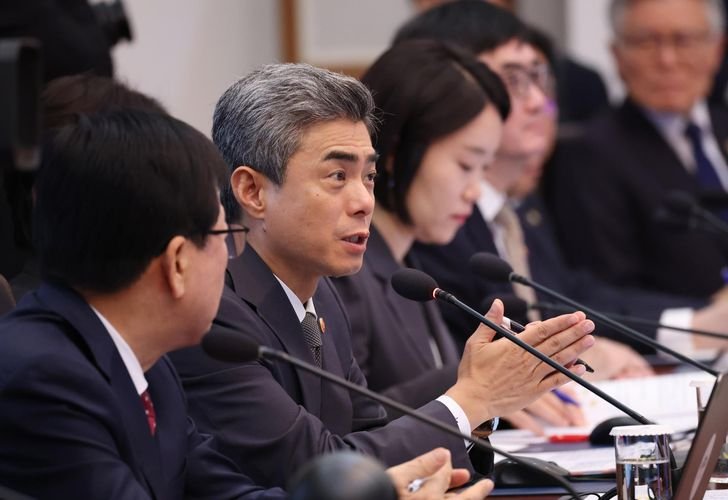
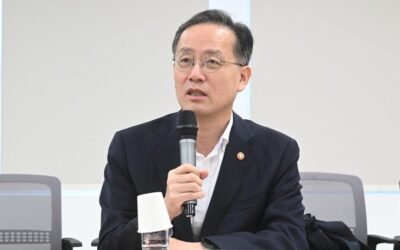
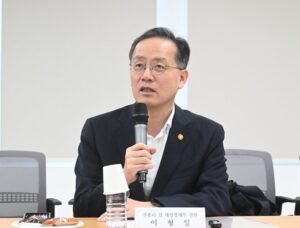
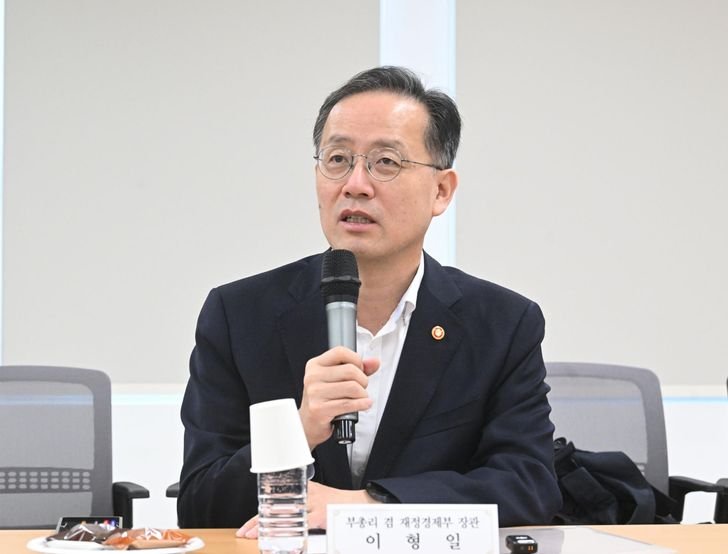
Finance Minister Lee Young-il speaks during a meeting discussing housing stabilization for young adults and the elderly in Seoul, Friday. Courtesy of Ministry of Finance and Economy
Korea is “almost certain” to reach a gross national income (GNI) per capita of $40,000 this year, the finance ministry said Tuesday, as Asia’s No. 4 economy grew 1 percent in the third quarter from the previous three-month period, driven by strong exports and investment.
The Ministry of Finance and Economy made the assessment following the release of advance third-quarter data from the Bank of Korea (BOK), which would mark a new milestone after the country’s per capita GNI, a gauge of the population’s purchasing power, first surpassed the $30,000 mark in 2014.
“Korea maintained solid growth despite a high base effect from the first half, raising the possibility of growth in the mid-3 percent range this year,” the finance ministry said.
Finance Minister Lee Hyoung-il said this month Korea’s economic growth for 2026 could range from 3.4 percent to 3.6 percent.
“The GNI per capita is almost certain to hit $40,000 for the first time ever,” it added.
The International Monetary Fund also recently projected Korea’s per capita GNI would reach the $40,000 level in 2026 and $50,000 in 2028.
The finance ministry, however, noted Korea faces structural challenges despite the strong growth, including mounting livelihood-related challenges and disparities across various areas.
“The government intends to tackle the livelihood issues and ease disparities so the benefits of economic growth can be felt in people’s daily lives,” the finance ministry added.
In a separate social media post on the day, the finance minister said the $40,000 milestone is also “just around the corner.”
“(The economic growth) has been led by robust exports and an increase in facility investment driven by semiconductor equipment,” Lee said.
“Now, we will make efforts to ensure these achievements translate into improvements in people’s lives,” the finance minister said.
“We will pursue growth for all, under which growth leads to more jobs and higher incomes, and supports consumption to spur further growth, establishing a virtuous cycle,” he added.