

First lady’s attendance at adoptees’ gathering offers comfort, visibility, but will it bring real change?
 0
 0
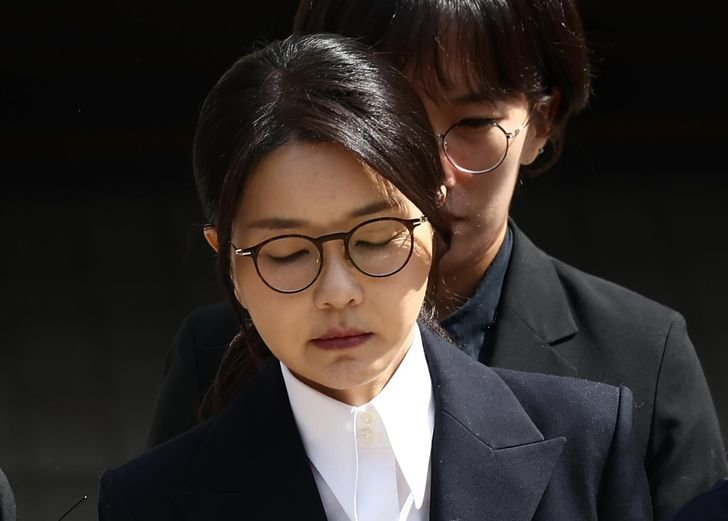
First lady Kim Hea Kyung, front row center in white, sits with Korean adoptees during the opening ceremony of the International Korean Adoptee Associations Gathering at Coex, Seoul, Oct. 19. Yonhap
More than 600 Korean-born adoptees came from countries around the world to visit the nation of their birth, for the International Korean Adoptee Associations (IKAA) Gathering, Oct. 19-24.
The Oct. 19 opening ceremony for this year’s event featured a historic appearance by first lady Kim Hea Kyung, marking the first time a Korean first lady has attended the gathering. Her visit also marked the third occasion that adoption-related issues have been publicly addressed during President Lee Jae Myung’s administration.
For many attendees, the gesture was meaningful, but it was also met with cautious optimism and lingering frustration.
The triennial IKAA Gathering goes far beyond heritage tourism or giving participants opportunities to reconnect with their roots. It serves as a platform for collective advocacy, bringing together grassroots organizers, legal experts, scholars and adoptees to address longstanding systemic issues.
Discussions range from reclaiming citizenship and navigating long-term residency in Korea to birth family searches, DNA testing and calls for greater transparency in adoption practices. The gathering also provides space to examine ongoing legal proceedings and findings from the Truth and Reconciliation Commission (TRC), particularly their implications for adoptees seeking accountability. IKAA emerged not simply from a desire for cultural connection, but from a community’s need for answers to questions that aren’t being met systematically, and that agencies, governments and other institutions had long left unresolved.
For AD Herzel, a Korean adoptee raised in the United States, the gathering offers both personal and collective opportunities for healing and advocacy.
Herzel, who traveled to Korea with her now-adult son, facilitated a workshop focused on art-based healing practices. Beyond sharing these approaches, she values the opportunity to engage with fellow adoptees about recent TRC findings and documentary investigations that have exposed alleged misconduct, inadequate oversight and systemic failures during the height of Korea’s overseas adoption industry and how to further advocate for adoptees after the wake of these findings.
Reflecting on the first lady’s attendance, Herzel acknowledged the significance of the gesture.
“It is important for visibility and to be welcomed,” she said.
Yet, for Herzel and other adoptees, the appearance also represented a missed opportunity.
Despite the warm reception, many attendees and other adoptees who followed news of the visit from overseas were left questioning whether symbolic recognition would lead to meaningful policy changes.
Earlier this year, Lee publicly apologized and pledged to develop stronger measures to address past abuses.
However, adoptees say they have yet to see concrete policy changes, publicly announced reforms or clear evidence of progress from government agencies.
Their skepticism is also rooted in history. Previous administrations have also issued apologies and acknowledged the violation of adoptees’ rights, but advocates argue that these gestures rarely lead to lasting legal protections, institutional accountability or meaningful support.
For many gathered at IKAA, the question is no longer whether the Korean government recognizes their experiences, but whether that recognition will finally lead to action.
Letter calls for concrete measures
While the events of IKAA drew considerable attention, another effort was unfolding away from the cameras.
On Oct. 19, an open letter was sent to the presidential office via an online portal, as well as to the Ministry of Health and Welfare and the National Assembly’s Health and Welfare Committee, calling for concrete measures to address past adoption-related human rights violations that were verified through the TRC.
The letter was signed by a majority of the 56 adoptees whose cases were recognized by the TRC.
Anders Riel Müller, one of the 56 adoptees and who helped draft the letter, noted that the letter being delivered now and the timing of the IKAA event wasn’t originally planned but that it took time to find the other adoptees and collectively draft the letter.
Anders Riel Müller / Courtesy of Anders Riel Müller
Despite the TRC’s findings, official recognition has not necessarily brought adoptees closer to justice or closure, and many have seen few avenues for formal collective redress, leaving them stuck in a legal quagmire with limited recourses to pursue accountability.
This fueled Müller to write the initial draft of the open letter advocating for stronger measures and support for the broader adoptee community. His own case reflects systemic failures that affected not only his life but also that of the birth family he eventually located. Although Müller voluntarily submitted information to the TRC, he remained skeptical from the outset that its findings would lead to substantial reforms.
“I was more ambivalent to see if this will actually lead to anything,” he said. In his view, the commission succeeded in documenting past injustices but fell short of outlining concrete steps toward accountability, legal remedies and institutional reform.
However, he wanted to do it for the sake of documentation and visibility. “There are some good things that has come from it (TRC). Adoptees aren’t seen as a part of Korean history, but now we are. We’re children of authoritarianism and dictatorship and this is to make sure we can be ‘seen’ as part of Korean history,” he said.
Despite the TRC receiving approval to continue its investigations, Müller remains critical of the framework used to examine adoptees’ cases.
Under the commission’s investigative requirements, adoptees must provide a baseline of verifiable information before their cases can proceed. Yet for many adoptees and their Korean birth families in search of answers, obtaining reliable records remains one of their greatest obstacles.
Müller and many advocates argue that the absence of documentation should itself raise questions worthy of investigation, rather than serve as a barrier to accessing it.
He also questions the credibility of adoption records, given that the possibility of false information is greater. Many adoptees’ records state that they were abandoned at police stations, hospitals or other public institutions, particularly during the peak years of overseas adoption. Such accounts, he argues, should be scrutinized independently rather than accepted without further examination. This is vital to him and many others, especially given the scale of overseas adoptions and the documented irregularities in adoption records. It has become so common that the story of an adoptee being left at a doorstep is almost a cliche or an inside joke in adoptee communities.
For Müller, the central contradiction is clear: Adoptees are being asked to provide evidence from a system whose recordkeeping practices have already been called into question by the TRC’s findings.
The open letter seeks to address these systemic barriers through six proposals aimed at restoring adoptees’ rights, strengthening government accountability and providing long-term support.
Among its central demands is full access to adoption and family records, including unredacted documents that could help adoptees establish their identities and trace their origins. The letter also calls for mechanisms to correct falsified or inaccurate records and expanded access to national DNA databases, alongside a government-funded DNA collection campaign to reunite separated families.
Beyond access to information, the signatories are seeking structural reforms to address the challenges many adoptees face when returning to Korea.
These include establishing a government-funded national support agency offering birth family search assistance, translation, Korean language education, legal and housing support, mental health services and cultural reintegration programs.
The letter also calls for the restoration of Korean citizenship without fees or unnecessary administrative obstacles, along with legal pathways for adoptees to reclaim their original identities, family registrations and family ties.
Recognizing that adoptees have historically had limited influence over policies affecting their lives, the letter urges the government to include adoptees and affected Korean families directly in decisions concerning citizenship, family reunification, reparations and other restorative measures.
Its final proposal calls for an independent, publicly funded national research and memorial center to preserve adoption records, document personal testimonies, support historical research and acknowledge the experiences of adoptees and their birth families.
Taken together, the proposals reflect a broader demand for institutional changes that extend beyond official apologies and acknowledgments of past wrongdoing.
Adoptees pose together during a gathering event in Seoul. From left are Amy Stoll, Kim Pike, Jenna Lee Kim, Jillian Garden, Lisa Meyers and Tom Stoll. Courtesy of Jenna Lee Kim
The open letter and strong feelings from adoptees show a sharp contrast with the IKAA Gathering opening ceremony. While the first lady’s attendance offered a public gesture of recognition, the open letter and press conference present specific requests for how that recognition could translate into government action.
For adoptees gathered in Seoul and those following developments from abroad, these reflect an ongoing struggle for recognition, accountability and a meaningful role in shaping the policies that affect their lives. All adoptees agree, however, that real dialogue and real actions are needed so that adoptees can “grow closer to the homeland.”
Antonia Giordano is a freelance photographer and writer based in Seoul. An adoptee, Antonia deeply understands and connects with the issues surrounding adoption and post-adoption. Visit giordanoantonia.myportfolio.com and follow @antonia_creative_services on Instagram.