










Seoul needs more allies, advocates

 0
 0

Lee Jong-eun
This month, Ukraine’s often tumultuous diplomacy experienced a new conflict when U.S. President Donald Trump announced an energy deal with Russia and demanded that Kyiv refrain from attacking Russian oil refineries.
Ukrainian President Volodymyr Zelenskyy’s criticism of Washington’s decision has resulted in Trump threatening retaliation and suggesting Ukraine should replace its leader. Ukraine has since encountered difficulties in using U.S.-provided satellite services for military intelligence, heightening fears of a further reduction in U.S. support for war-beleaguered Ukraine.
Ukraine’s challenge highlights what have become recurrent occurrences: U.S. allies’ vulnerability to their superpower ally’s pressures and threat of abandonment. Ukraine’s vulnerability, however, has partially been offset by the continued support from other U.S. allies. Multiple European countries have increased their aid to Ukraine’s war efforts and have advocated on the Ukrainian government’s behalf to Washington. Ukraine also has advocates within U.S. politics. Bipartisan lawmakers have criticized Trump’s energy deal with Moscow and have urged continued support for Kyiv. These advocacies may not deter the Trump administration’s pressure on Ukraine, but they nonetheless provide opportunities for Kyiv in its negotiations with the Trump presidency.
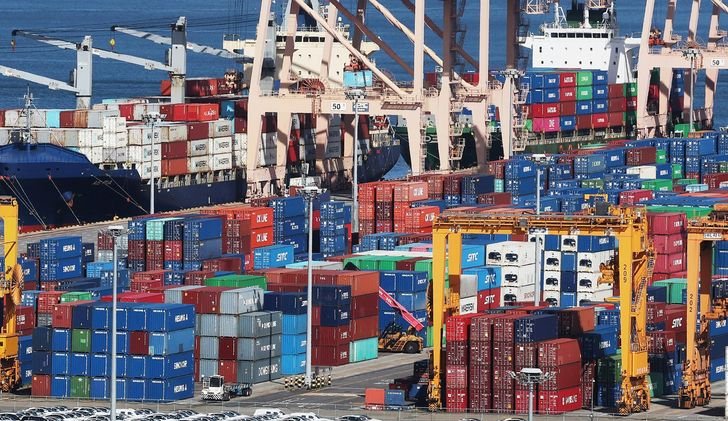
South Korea also currently encounters diplomatic challenges with Washington. As the Lee Jae Myung government negotiates with the Trump administration on issues such as bilateral trade, security deterrence on the Korean Peninsula and participation in the U.S.-Iran conflict, recent news has raised concerns that Washington may impose coercive measures on Seoul. Reduced bilateral trade tariffs may become contingent on South Korea’s expedited investments into U.S. energy and manufacturing sectors. Bilateral military exercises and intelligence sharing may become contingent on Seoul’s military deployment to the Strait of Hormuz.
As the Lee administration strives to balance U.S. demands and South Korea’s national interests, its diplomacy, similar to Ukraine’s, would be bolstered by international partners who advocate on Seoul’s behalf to the Trump administration.
Historically, multilateral collaboration has been weaker among U.S. allies in Asia. Due to the hub-and-spoke alliance system during the Cold War, Asian allies focused more on their bilateral alliances with the United States. The contemporary changes in the U.S.’ Asia-Pacific strategy, accelerated by the Trump administration, however, have increased the necessity for allies like South Korea to facilitate greater cooperation with other U.S. partners. As individual U.S. allies encounter U.S. reassessment of the value of their bilateral alliances, they need to advocate for recognition of how each contributes to the United States’ broader regional and global strategy.
South Korea’s diplomatic objective should be to convince other U.S. allies that Seoul’s economic and military security is in their security interests as well. South Korea’s contributions to advanced technology and defense manufacturing are vital to military rearmament and economic revitalization of other U.S. allies. South Korea’s defense capability serves as a deterrent against military expansion by North Korea and China in the Asia-Pacific Theater. Such perceptions would motivate allies to advocate on behalf of Seoul, reassuring South Korean negotiators that they are not alone.
Some may be skeptical whether multilateral support for Seoul could have a significant impact if Washington’s general perspective toward its alliances has become more transactional. However, multilateral partnerships still provide two relevant benefits. First, it mitigates the risk of the “buck-passing” or “bystander” effect among allies: the incentive to abandon one ally to U.S. pressures in the hope that other allies would be left alone. Unity, in a sense, increases collective bargaining by U.S. allies in negotiations with Washington. Second, multilateral partnership can mitigate the reduction of public good provided by the U.S. leadership, providing alternative means, albeit limited, for allies to pool their resources.
South Korea should also cultivate support for the alliance among U.S. political actors and the broader public. Some may question their effectiveness, given the growing dominance of presidents in U.S. foreign policy. However, domestic politics continue to constrain the presidency, as demonstrated by the Trump administration’s pursuit of a trade truce with China and its restraint on full-scale military operations against Iran. Congressional legislation also provides a legal basis for U.S. courts to block presidential executive orders that explicitly violate existing legal parameters. Thus, support from Congress and the public could mitigate current bilateral tensions and sustain long-term cooperation. In particular, cultivating bipartisan political support for the alliance would help South Korea prepare for an eventual post-Trump administration.
Seeking international allies and advocates on behalf of Seoul is a challenging, time-consuming endeavor. It requires patience and discipline on the part of the South Korean government to convey its strategic value to other U.S. allies and political actors, as well as to satisfy their reciprocal expectations. The old hub-and-spoke bilateral alliance system may have been a simpler framework for alliance negotiations. However, current negotiations on the “modernization” of the U.S.-South Korea alliance are likely to occur within the broader context of the restructuring of the U.S. alliance system in general.
Recently, U.S. Senator David McCormick described the U.S.-South Korea relations as that of a married couple seeking marriage counseling. It is a familiar but somewhat misleading analogy, as the U.S. would then be having multiple marriage counseling sessions with multiple partners. A more accurate analogy may be that South Korea is participating in an organizational development workshop within the U.S. alliance system to explore ways for the alliance to upgrade its structures and strategies.
It is a critical conversation that affects the future security of the U.S. and its allies. South Korea should actively participate in the conversation so that the collective consensus that emerges fosters a new alliance framework that continues to secure the well-being of South Korea, the United States and all other American allies.
Lee Jong-eun (Jong.Lee@ngu.edu) is an assistant professor of political science at North Greenville University. He previously served as a South Korean Airforce intelligence officer.