 0
0
 0
0 Ghana is currently experiencing what can only be described as an epidemic of Japanese Domestic Market (JDM) right-hand-drive vehicles. To be clear, right-hand-drive (RHD) cars are not inherently bad.
In fact, Ghana itself was once an RHD country before authorities switched driving orientation following a nationwide public education campaign, long before my era, but it is well documented.
The debate about whether driving on the left or right is better can be saved for another day. This article is about something far more pressing: the risks associated with vehicles converted from right-hand drive to left-hand drive (LHD) and sold on the Ghanaian market.
On paper, there is nothing wrong with converting a vehicle from RHD to LHD. Many countries drive on either side of the road, and manufacturers themselves build both versions. The real issue is how these conversions are carried out locally and, more importantly, how they are inspected, certified, and approved for road use.
At the moment, Ghana lacks a robust, transparent, and enforceable system to properly supervise RHD-to-LHD conversions. I have checked. Some sellers claim the conversions are done “abroad,” often in Dubai. But if you are aware of how Dubai has increasingly become a hub for salvage and accident vehicles, you will understand why this assurance should not automatically inspire confidence.
The reason converted vehicles have flooded the market is simple: money. It is a lucrative trade. A casual stroll through our ports will confirm just how widespread it has become.
To be fair, converting rare, low-volume, enthusiast vehicles, when done professionally, inspected thoroughly, and certified roadworthy, is not a bad idea at all if you are into those. The problem is that this is not what is happening in the mass market.
So what exactly can go wrong?
Common Problems Found in RHD-to-LHD Converted Vehicles
Electrical system issues
Modern vehicles are wired with precision. Manufacturers use just enough wiring to connect systems efficiently, keeping weight and complexity down. Moving the driver position from right to left often requires relocating control modules, fuse boxes, sensors, and switches, which leads to extensive wire splicing and extensions.
This “alteration” culture introduces long-term reliability issues, intermittent faults, warning lights, sensor failures, and, in some cases, complete system shutdowns.
Dashboard cutting and compromised safety
Modern dashboards are highly engineered structural components, not decorative plastic shells. They are pre-assembled, crash-tested units designed to support airbags, sensors, and mounting points.
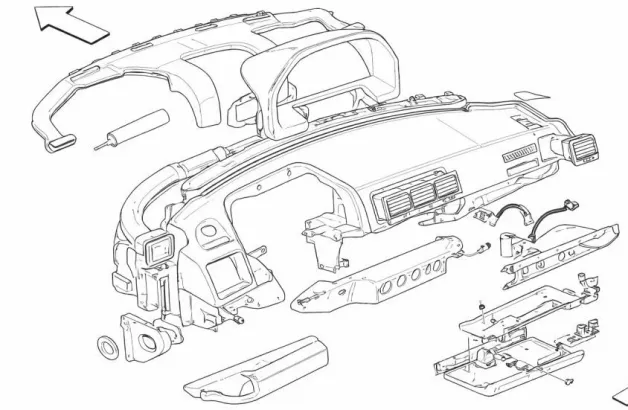
Cutting and reshaping a dashboard removes much of its built-in safety. Airbags may be disabled, relocated incorrectly, or rendered ineffective. Even when airbags remain functional, their deployment angles and timing may no longer be correct, defeating their purpose entirely.
Poorly relocated driver instruments
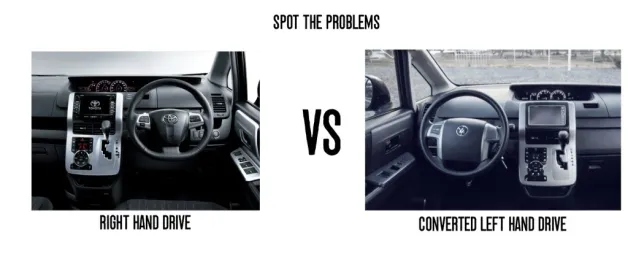
In some conversions, gauges end up on the wrong side, poorly aligned, or rearranged illogically. Warning lights, speedometers, and critical alerts may no longer fall naturally within the driver’s field of vision, increasing reaction time and the likelihood of accidents
Incorrect placement of levers and switches
Gear selectors may retain labels meant for right-hand-drive use, requiring mental adjustment while driving. Steering-column stalks, indicators, wipers, lights, are often reversed. The indicator’s stalk ending up on the right instead of the left may seem minor, but muscle memory matters, especially in emergencies.
Bonnet (hood) release in the wrong place
In many converted vehicles, the bonnet release remains on the right side. In an emergency, smoke, overheating, or fire, the driver may have to reach across or into the passenger footwell, losing precious time.
6. Mismatched side mirrors
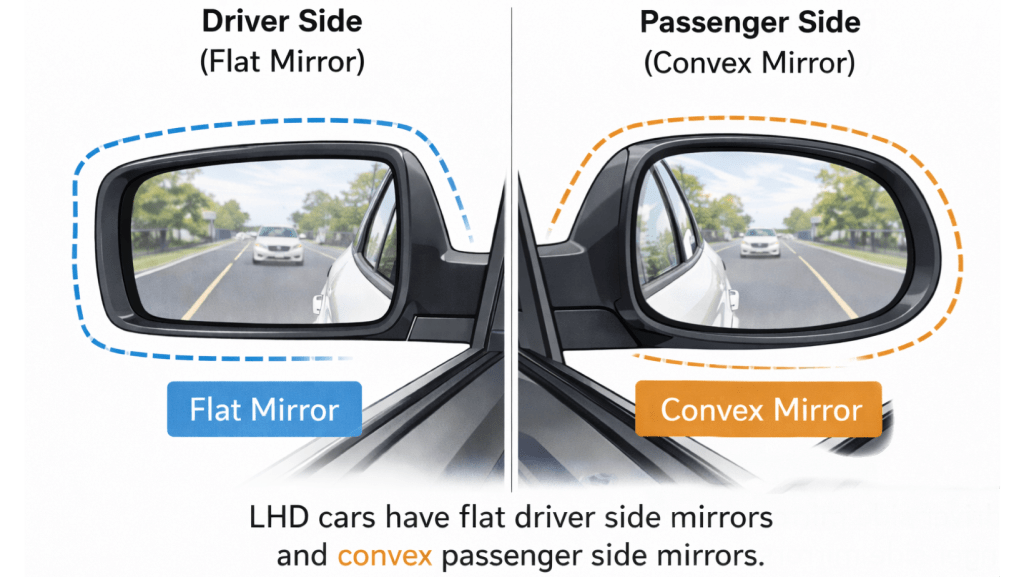
Modern vehicles use asymmetrical mirrors with different viewing angles for the driver and passenger sides. These mirrors are not interchangeable. After conversion, drivers often struggle to achieve proper visibility, increasing blind spots and reducing overall situational awareness.
Ventilation and air-conditioning problems
Dashboards house complex ducting systems for air vents, defrosting, heating, and cooling. Cutting and rejoining these ducts often leads to air leaks, poor airflow, condensation buildup, and possibly rust in vital structural areas.
One of the most dangerous consequences is ineffective windscreen defogging, especially during rainy conditions, a serious safety risk. Heater cores and AC units may also underperform after conversion.
Steering geometry and handling issues
Although RHD and LHD versions of the same model may share a chassis, steering components are not simply mirror images. Steering racks, columns, and linkages are designed specifically for their orientation.
Reusing RHD components in an LHD layout alters alignment, toe-in, toe-out, and overall steering geometry. The result is compromised handling, uneven tyre wear, and unpredictable steering behaviour—especially at speed.
- Cutting into the bulkhead or firewall
The bulkhead (firewall) separates the engine bay from the cabin and is a critical structural and safety component. Conversions require cutting new openings for the steering column and cables.
These cutouts are often left untreated, promoting rust. More importantly, they weaken the vehicle’s structural integrity and reduce its ability to protect occupants in a collision.
- Incorrect headlights for left-hand traffic
Headlights are designed to dip and spread light in a way that avoids blinding oncoming traffic. RHD and LHD headlights are different.
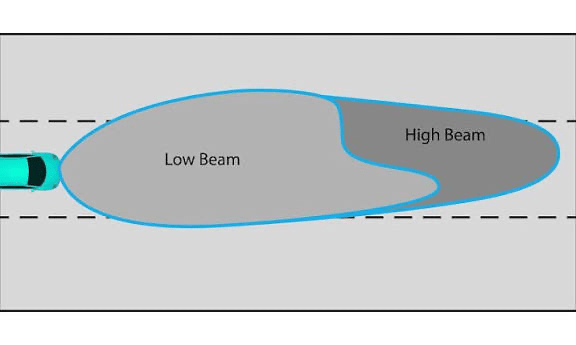
LHD headlight beam pattern
Proper conversion requires sourcing LHD-specific headlights. For many JDM-only models, such headlights simply do not exist. The result is poor night visibility, or worse, dazzling other road users.
Bonus problem: rattles, creaks, and rapid deterioration
All those cuts, joints, and modifications add up. Converted vehicles tend to rattle, creak, and age faster than factory-built LHD cars. Their resale value drops sharply, and long-term ownership becomes frustrating and expensive.
The Bottom Line
This long list of potential problems makes one thing clear: buying a converted RHD vehicle is a gamble with your money, your convenience, and your safety.
Those encouraging you to “invest” in such vehicles are either unaware of the risks or are profiting from them. Don’t let someone else’s greed become your regret.
Be wise. Choose safety. Choose unmolested vehicles.


