













1 in 10 residents of Korea in their 20s, 30s have migrant backgrounds: data
 0
 0
International students hold up their names written in Hangeul during a Korean language quiz contest at Keimyung University in Daegu, Oct. 8, on the eve of Hangeul Day. Yonhap
Nearly one in 10 residents of Korea in their 20s and 30s comes from a migrant background as of last year, government figures showed Monday.
The overall population with migrant backgrounds grew by nearly 100,000, offsetting a decline in Korean nationals without such backgrounds and driving a modest increase in the country’s total population.
People with migrant backgrounds accounted for 10 percent of all residents in their 20s and 9.5 percent of those in their 30s, according to the Ministry of Data and Statistics’ population statistics for 2025.
Migrant-background residents are defined as those who are migrants themselves or have at least one parent with a migrant background. The group encompasses foreign nationals and Korean citizens, including those who gained citizenship through naturalization or legal recognition of parentage, second-generation immigrants, North Korean defectors and their children.
The figures were compiled from 27 types of administrative data held by 13 agencies, including resident registration, foreign national registration and nationality acquisition records. The census covered people with migrant backgrounds who had resided in Korea for at least three months as of Nov. 1 last year.
Residents with migrant backgrounds had a younger age profile than the broader population.
Those in their 30s made up the largest share of the migrant-background population at 23.7 percent, or 667,000 people, followed by those in their 20s at 21.6 percent and their 40s at 15.6 percent. The biggest annual increase came among people in their 20s, whose numbers rose by 36,000, or 6.4 percent.
Working-age people, defined as those aged 15 to 64, represented 81.9 percent of residents with migrant backgrounds, exceeding the corresponding share of the total population, at 69.2 percent. Just 5.8 percent were aged 65 or older, well below the national figure of 20.7 percent. Children under 15 accounted for 12.2 percent.
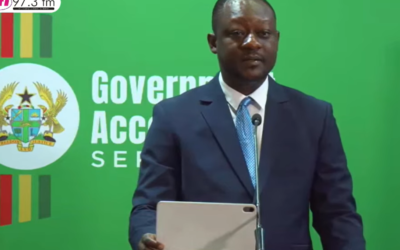
Kyoung Eun-suk, director of the Ministry of Data and Statistics’ population census division, speaks during a media briefing at Government Complex Sejong, Monday. Yonhap
Kyoung Eun-suk, director of the ministry’s population census division, attributed the influx of younger people partly to regional efforts to foster industries and recruit international students.
“Many people in these age groups come to study or receive training,” she said. “Young people arriving on nonprofessional employment visas or through the employment permit system mainly work in manufacturing and construction. People with migrant backgrounds fill many jobs in these industries.”
Overall, the population with migrant backgrounds expanded year-on-year by 95,000, or 3.5 percent, to 2.81 million last year. It represented 5.4 percent of Korea’s 51.82 million residents, up 0.2 percentage points from a year earlier and equivalent to about one in 18.5 people.
Meanwhile, the number of Korean nationals who, along with both parents, held Korean citizenship from birth fell by 83,000, or 0.2 percent. The increase in residents with migrant backgrounds more than offset that decline, lifting the country’s total population by 12,000.