














[K-LIT REVIEW] K-pop dystopian novel explores what it means to be real
 0
 0

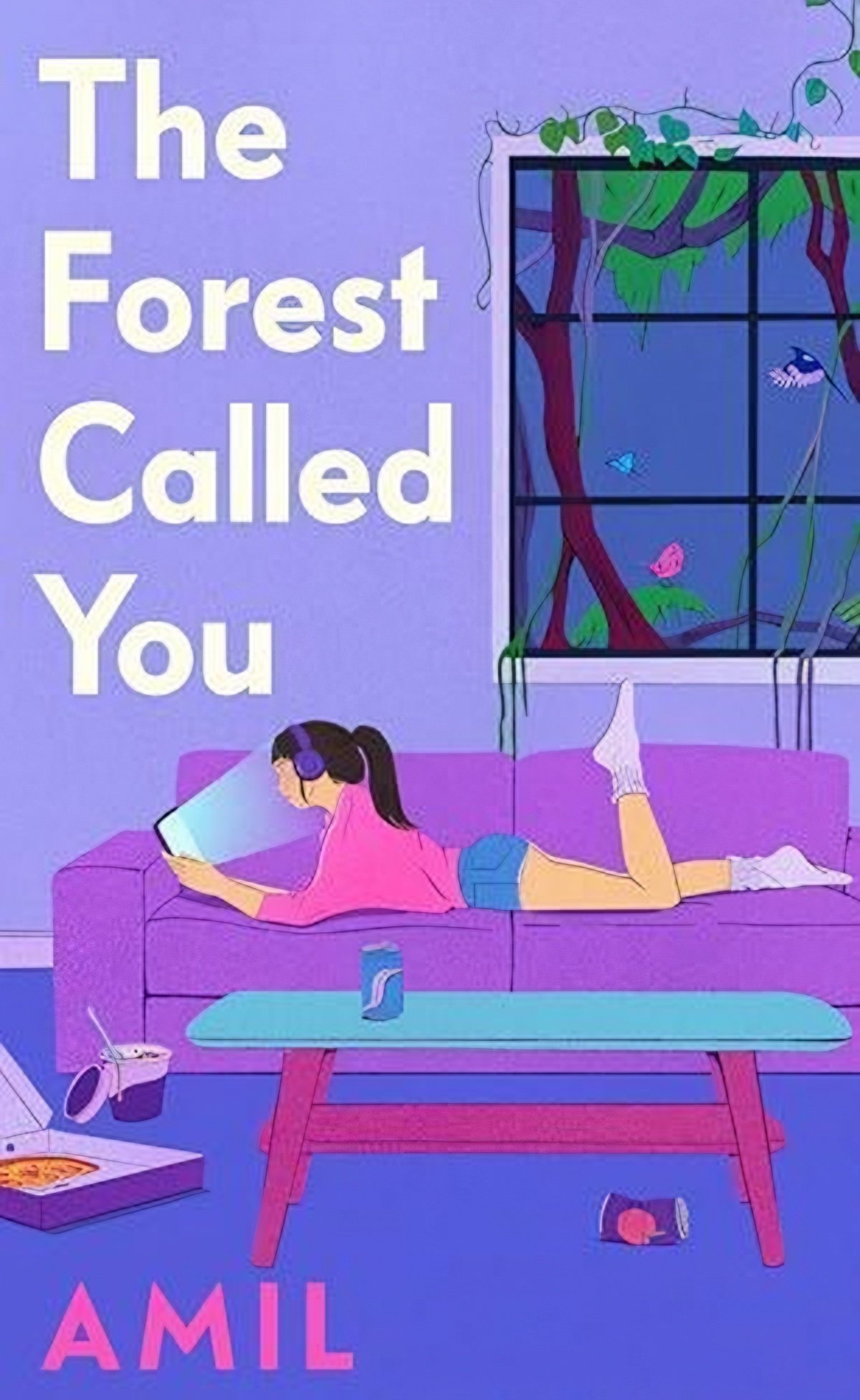
The cover of “The Forest Called You” by AMIL / Courtesy of Vintage Publishing
After the first few pages, I thought I was in for a buttered popcorn, “KPop Demon Hunters” snack of a novel. High in calories, low in nutrition. Well, I was right … and wrong.
AMIL’s “The Forest Called You” is a highly addictive and engaging read about a K-pop idol and a high school outcast that masks an undercurrent of deeper social themes.
The story is set in 23rd-century Korea, where climate change has devastated Earth. There is no more winter, half of Earth’s species are gone and humanity is left surviving in a Dune-like, dystopian environment. There are dust storms, and the specter of the “Akanta virus” (presumably similar to COVID-19) looms large. Seoul has become a cesspool of filthy, destitute and virus-ridden lowlifes, and as a result, a severe class divide has emerged. The wealthy can afford to eat real food and interact almost entirely in a highly immersive virtual world, all within the safety of their disinfected homes. Conversely, the poor subsist on artificial meal substitutes and have no choice but to go out in the dirty and harsh physical world, interacting directly with other humans and their germs. This creates an interesting dynamic where real food, real human contact and all things real are desired and romanticized, but feared at the same time.
Enter virtual entertainment, where real life can be enjoyed vicariously through immersive virtual reality (VR).
Against this backdrop, we’re introduced to Yichae, a K-pop superstar. Yichae is wildly popular because she’s one of the few remaining “real” human idols. She is as beautiful and perfect as the synthetic virtual K-pop idols. Even her background is riveting: She went to a public high school in Seoul before being discovered by an entertainment company. Only four years after her breakout song, younger “real” K-pop idols begin dethroning “the nation’s girlfriend.” She has been gaining weight from bouts of binge eating, and her fingers are calloused from repeatedly forcing herself to throw up. Yichae is falling apart under the immense pressure to be perfect.
The story then segues to Soop, an awkward 18-year-old high school girl. Soop is severely bullied by her classmates and ostracized as a “V-Rej” (short for “VR Rejection” — the Akanta virus can cause a violent allergic sensory reaction to VR). Because her body physically rejects VR tech, she is forever banished to the real world. She keeps to herself, and her only solace is playing songs by her favorite artist, Yichae, on repeat.
In an effort to revive Yichae’s popularity, her management company decides to produce a music video for her new song, “Let’s Meet, Now,” at Yichae’s former high school. Students from the school are to be cast alongside Yichae to lend credibility to the “realness” of the music video. Yichae arrives with dread at her old high school in Seoul, which turns out to be the school Soop attends. The students are abuzz with excitement, and the popular kids, led by Daon (who bullies Soop), are eager to be featured with Yichae. When casting begins, Soop is improbably selected, albeit for a nonsubstantive, background filler role.
As filming begins, the story picks up steam and moves quickly. A gripping drama unfolds as Yichae notices Soop, and Daon notices Yichae noticing Soop. The chance encounter between Yichae and Soop forces a collision between the former’s highly engineered, manufactured world of celebrity stardom and the latter’s raw, unfiltered reality, sparking an authentic, deep-seated connection between them through their shared love of music.
AMIL carefully fleshes out the theme of what is “real,” effortlessly moving between the realms of reality, quasi-reality and virtual reality. There is unexpected depth beneath the storyline’s shiny pop-culture surface. There is beautiful prose too, as captured during a pivotal, intimate turning point between the two leads, when the narrative shifts away from its breezy pacing to deliver a breathtakingly memorable observation: “It was as if Soop had cut the chest of a bird she had never seen before and drawn out its small heart.”
The English translation is skillfully done by Joheun Lee with a thoroughly modern tone. Some odd translation choices seem deliberate, the most notable being that the English version leans more toward the young adult genre. While I haven’t read the Korean version in full, I suspect that the original text may be more complex and “adult” overall.
The title itself is interesting. “The Forest Called You” can be read in two ways: as “the forest was reaching out to you,” or as an accurate translation of the Korean title, literally “A Forest Named You” (note that “Soop” means forest in Korean). The phrasing of the Korean title is contemplative and poignant, the way a K-drama title on Netflix might be. Korean literature is notoriously difficult to translate into English, and the translation does a great job, eschewing a belabored effort to capture the nuances of the Korean language in favor of an accessible and entertaining style befitting the storyline.
“The Forest Called You” deserves praise for striking a fine balance between an entertaining, unexpected love story and an exploration of important societal themes. It deftly takes a wind-swept approach while making its deeper elements seem entirely organic to the story, never trivializing their unique contributions to the plot and broader social commentary.
Notably, towards the latter half of the novel, AMIL introduces a romantic turn in Yichae and Soop’s relationship, handling their LGBTQ+ identity with the same light touch. The narrative does not make them a forced focal point, nor does it dwell on them simply to emphasize their importance as a unit. Instead, by making a queer relationship seem entirely ordinary and natural to the storyline, it achieves something just as significant: it normalizes it. Soop’s own mother seems to merely raise an eyebrow at her daughter’s “kiss confession,” truly embedding normalcy in traditionally frowned upon identities (especially in Korean traditional households).
As a reader, I am brought to appreciate AMIL’s ability to effortlessly transcend rigid societal and cultural expectations by subverting conventional notions of normalcy. By presenting what society deems “unusual” as an unremarkable part of everyday life, AMIL challenges her audience to question who gets to define what is considered normal in the first place.
Overall, “The Forest Called You” is a compelling, richly conceptual read that amalgamates both dystopian speculative fiction with the intimacy of a teen coming-of-age story. I would highly recommend this piece for fans of modern Korean literature in translation, thought-provoking young adult fiction and readers simply searching for a unique, character-driven story about identity and the complexities underlying human connectivity.
While the ending is admittedly a bit abrupt in the way that has you grasping for the next page to no avail, this is not necessarily a shortcoming. Perhaps the abruptness of the ending is itself a testament to the world AMIL has built: one that feels too expansive and alive to be contained within a single novel.
“The Forest Called You” is available at dbbooks.co.kr.
Eleisen Suh is a student at Seoul Foreign School.