









‘No retirement from giving’: Catholic priest returns to school to care for elderly
 0
 0
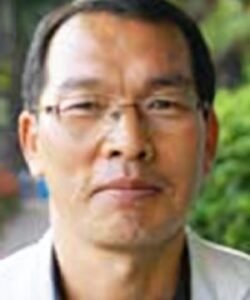
Father Carlo Yoon Haeng-do of Wolyeong Catholic Church in the Diocese of Masan is preparing to continue serving the elderly through social welfare after retirement. Courtesy of Kyungnam University
As the elderly population grows, someone has to work for older people, and older people themselves should also take part in that work.
A Catholic priest in his 60s who has spent his life serving others is embarking on a new educational journey after decades away from the classroom, hoping to continue his service to the elderly after retirement.
Father Carlo Yoon Haeng-do, 65, is head of the Wolyeong Catholic Church in the Diocese of Masan.
Yoon enrolled in a master’s program in social welfare at Kyungnam University in South Gyeongsang Province in March. He returned to his studies after nearly 30 years to prepare for a new chapter of service to the elderly after retirement. Although priests step down from active ministry at 70, Yoon believes that “there is no retirement from serving one’s neighbors.”
“As the elderly population grows, someone has to work for older people, and older people themselves should also take part in that work,” he said with a broad smile.
Yoon begins each day by rising around 3 a.m. and praying for about two hours before cleaning the church and nearby alleyways. He has maintained this routine since taking up his post at Wolyeong Catholic Church in 2024. On Wednesday and Thursday evenings, he heads to university classrooms, balancing his pastoral duties with his studies.
Graduate school has given him a broader perspective on the charitable work he has practiced for years. He has come to recognize the need for a systematic social welfare network involving local communities and welfare institutions, moving beyond charity that depends on the goodwill of individuals.
“Sharing, as I have practiced it for so long, is an act of charity in which one person gives to another. Social welfare is about weaving those helping hands into a network called society,” Yoon explained.
One class that particularly stayed with him examined Japan’s “Restaurant of Mistaken Orders,” where people with dementia take customers’ orders. Yoon said the initiative showed how treating older people as valued members of society, rather than merely as people in need of protection, could help them maintain their self-esteem while teaching society to be more accepting of others’ mistakes.
“The elderly are not people who are fading away, but precious people who have made us who we are today,” he said.
Yoon Haeng-do holds the “Zacchaeus Storehouse” bankbook, which he uses to help people in need, alongside a piggy bank containing offerings. Courtesy of Kyungnam University
His commitment to giving is reflected in a dedicated bank account he has maintained since 2009. Known as the “Zacchaeus Storehouse,” the account pools his lecture fees and donations from parishioners to help people in need. The name refers to Zacchaeus, the chief tax collector in the Bible who gave his wealth to the poor, reflecting Yoon’s commitment to sharing generously whatever comes his way.
He currently provides regular support to three welfare facilities and four individuals. He also collects offerings made by residents of nursing homes — often small sums saved from their personal spending money — and passes them on to child welfare facilities, creating bonds of generosity between generations.
Drawing on the social welfare theories he is learning at Kyungnam University, Yoon hopes to expand his work beyond individual acts of kindness into a more systematic approach to elderly care linked to the wider community.
Still, he describes himself as someone who is continuing to learn. For him, giving begins when a hand that once held on to its grain for itself opens toward others.
“I am now practicing how to open my hands,” he said.
This article from the Hankook Ilbo, the sister publication of The Korea Times, is translated by a generative AI system and edited by The Korea Times.