







US cites evolving ‘threat environment’ amid debate over OPCON transition to S. Korea
 0
 0

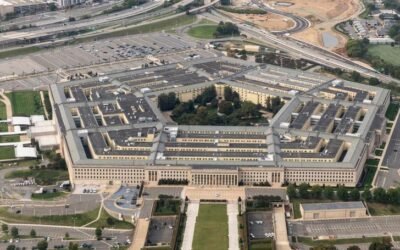
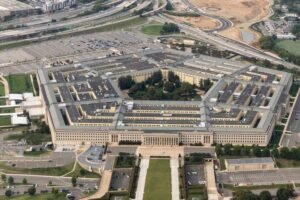
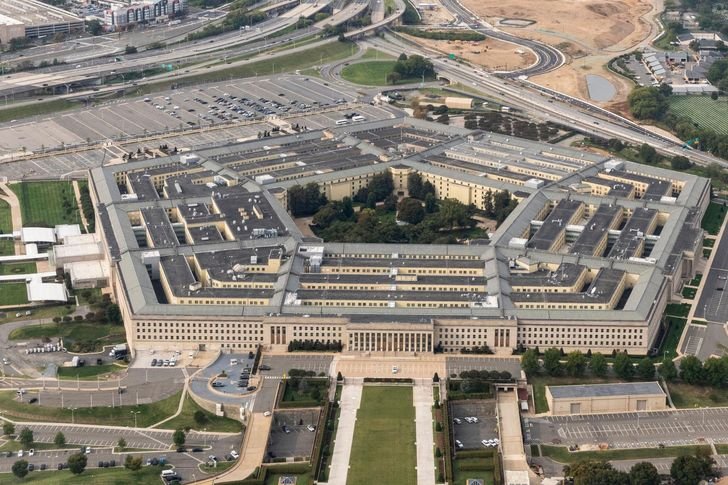
The Pentagon is seen from a flight taking off from Ronald Reagan Washington National Airport, Arlington, Virginia, Oct. 10. Getty Images-AFP-Yonhap
WASHINGTON —
A senior U.S. official said Tuesday the requirements for the transfer of wartime operational control (OPCON) to South Korea remain unchanged but stressed that the threat environment on the Korean Peninsula was evolving faster than ever before.
“The fundamental requirements for OPCON transfer have not changed. But the threat environment is evolving faster now than ever before,” the official told Yonhap News Agency in response to a media inquiry on the state of the bilateral OPCON transition review process.
“Together, we must be prepared to deter and defeat all regional threats to the alliance,” the official, who asked not to be identified, added.
The official appeared to reflect concerns over evolving threats posed by advancements in Pyongyang’s missile and nuclear programs.
Separately, the Pentagon reaffirmed that the transfer of wartime OPCON to South Korea remains a conditions-based process agreed upon by Washington and Seoul, stressing that the necessary requirements must be met before any transition takes place.
“The transition of wartime OPCON remains a conditions-based process mutually agreed upon by the United States and the Republic of Korea,” a Pentagon official told Yonhap News Agency.
“Both nations remain committed to ensuring that the necessary conditions are met before any transition occurs. We will not prejudge decisions or outcomes of this bilateral process,” the official said, while speaking on condition of anonymity.
The U.S. officials’ remarks come after South Korean President Lee Jae Myung reiterated Monday that Seoul should retake wartime OPCON at an early date.
“Speaking frankly, OPCON must be returned at an early date. (We) are sufficiently capable of doing so, and (related) talks between South Korea and the U.S. are basically going well in that direction,” Lee said during a meeting with reporters to mark his 500th day in office.
His remarks came amid a perceived gap between Seoul and Washington over the timing of the OPCON transition, with the Lee administration seeking to retake it before its term ends in 2030, or even earlier.
At an event in Washington last week, U.S. Forces Korea (USFK) Commander Gen. Xavier Brunson said that “conditions have changed,” citing North Korea’s recent missile launches, and indicated that such changes called for new standards for the OPCON transfer.
Seoul’s defense ministry spokesperson later said the goal of the transfer might never be achieved if the goalposts keep moving.
South Korea handed over OPCON to the U.S.-led U.N. Command during the 1950-53 Korean War. It was then transferred to the South Korea-U.S. Combined Forces Command, headed by the USFK chief, when the command was launched in 1978. Seoul retook peacetime OPCON in 1994, but wartime OPCON remains in U.S. hands.