0
0  0
0 Educators and traditional leaders have called for a stronger connection between humanities education and practical skills training, arguing that sustainable development depends on producing graduates who can think critically and respond to society’s challenges.
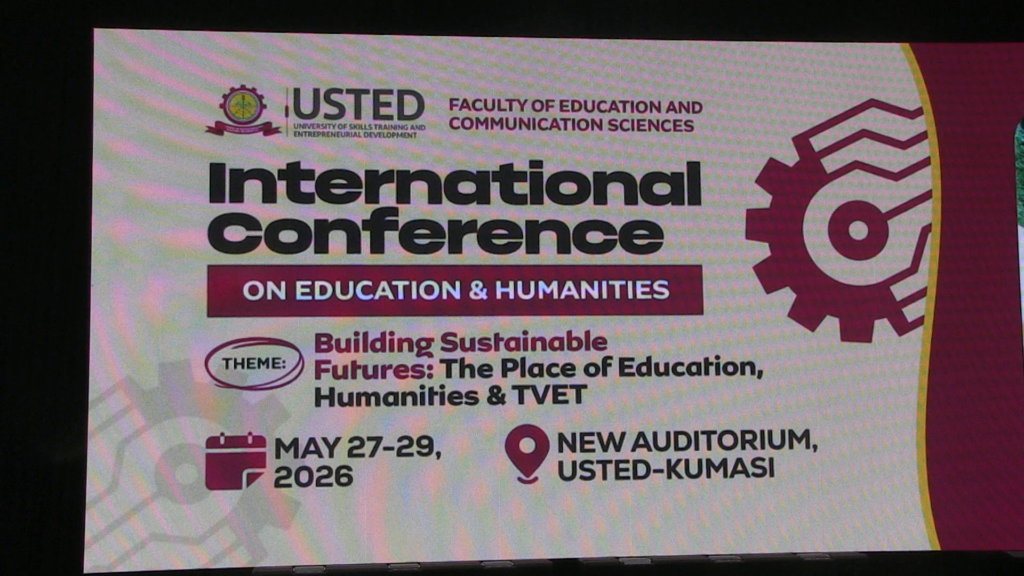
The call was made at the International Conference on Education and Humanities held at the University of Skills Training and Entrepreneurial Development (USTED) in Kumasi under the theme, “Building Sustainable Futures: The Place of Education, Humanities & TVET.”
Speaking on the topic, “The Importance of Humanities and Skills for 21st Century Education,” Founder of the Gifted and Talented Education (GATE) Institute, Anis Haffar, said education must move beyond theory and focus on improving people’s lives.
“For me, theories – especially in developing country like Ghana – will be useful only if grounded and applied to accomplish the need for raising our standards of living, our quality of life,” he said.
Mr Haffar said many educational institutions around the world are increasingly focusing on practical applications of knowledge.
“A good many of them – from K-12 to the universities – have introduced Innovation Labs or Idea Spaces, where thoughts are translated into skills that make tangible products; and services that offer solutions to pressing societal needs,” he said.
According to him, the humanities remain critical because they help develop the thinking needed to address societal problems.
“Though the Humanities don’t give answers, they build the humans who can find the answers through the appropriate questions,” Haffar said.
He described the humanities as disciplines concerned with human values and wellbeing.
“Simply put, the Humanities involve the branches of learning concerned, primarily, with enhancing the values and wellbeing of human beings,” he said.
Haffar argued that humanities and skills development should not be treated as separate fields.
“The Humanities pose the relevant thoughts of the times; the thoughts define the work that has to be done, and the work informs the skills fit for the purpose of living a better life,” he said.
“In a nutshell, for Ghana, the Humanities have to be fused to Skills in Siamese twins.”
He also urged participants to embrace lifelong learning and prepare for a rapidly changing world.
“Things are changing so fast around the world that we can’t afford to be passive, merely sitting to listen to lectures for the sole purpose of receiving certificates,” he said.
Conference draws international participation
Dean of the Faculty of Education and Communication Sciences, Professor Faith Ben-Daniels, said the maiden conference attracted strong interest from academics and researchers from several countries.
“I am thrilled to report that we received over 200 proposals for our very first international conference call under the Faculty of Education and Communication and Sciences,” she said.
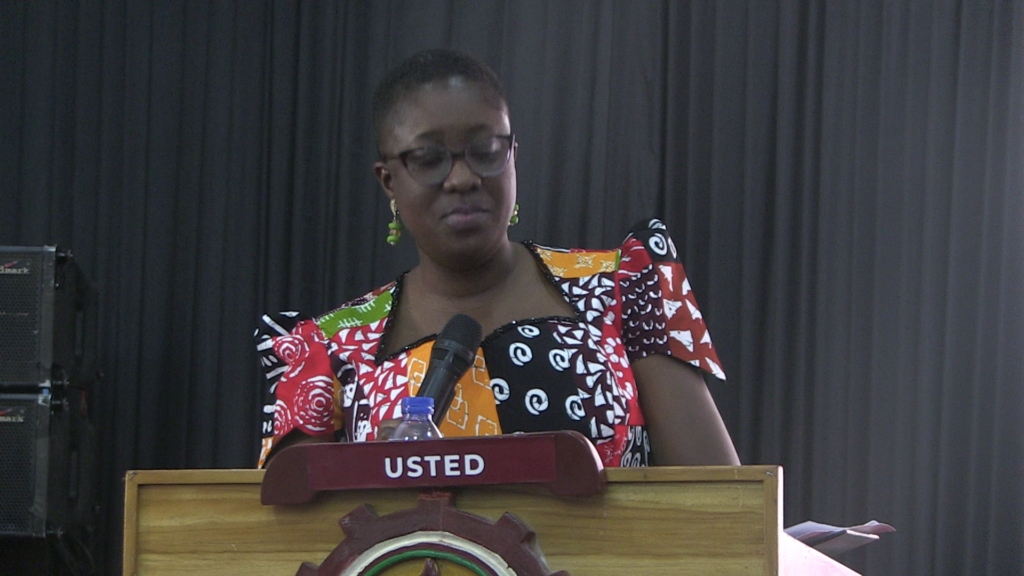
According to Professor Ben-Daniels, participants came from across Africa, Asia and North America.
“We have participants from Nigeria, South Africa, Cameroon, India, the USA and sister universities here in Ghana who are here to share with us their experiences, knowledge and entrepreneurial skills in education, their Humanities, and social sciences,” she said.
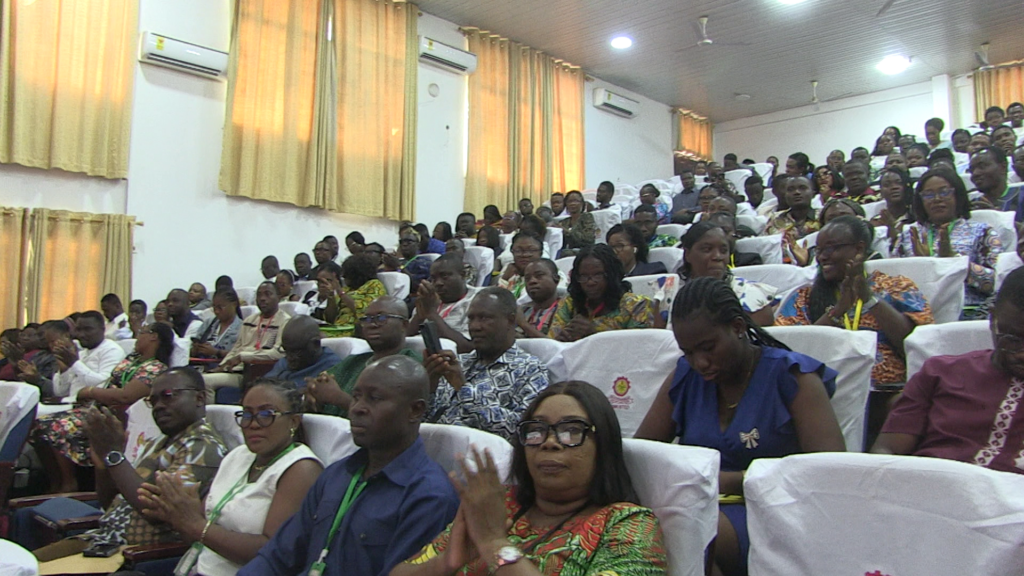
She described the conference as a platform for sharing ideas and building networks. “This conference is here to stay as an annual event to be organized by the Faculty of Education and Communication Sciences,” she said.
Professor Ben-Daniels said the event brought together a large number of participants and presenters. “This year, we have brought together over 250 registered participants and over 150 presenters,” she said.
She encouraged participants to promote the conference across Africa and beyond.
“We entreat all of you here today, present at this maiden edition, to be our voice to tell the continent of Africa and the world that the Faculty of Education and Communication Sciences of the University of Skills Training and Entrepreneurial Development is the hub for the annual ICEH,” she said.
Traditional authorities urged to support education and TVET
Speaking on the sub-theme, “How Traditional Authority Can Contribute to Sustainable Futures Through Education,” Nana Adu Gyamfi Kumanin Berimah Kessie I said education remains central to national development.
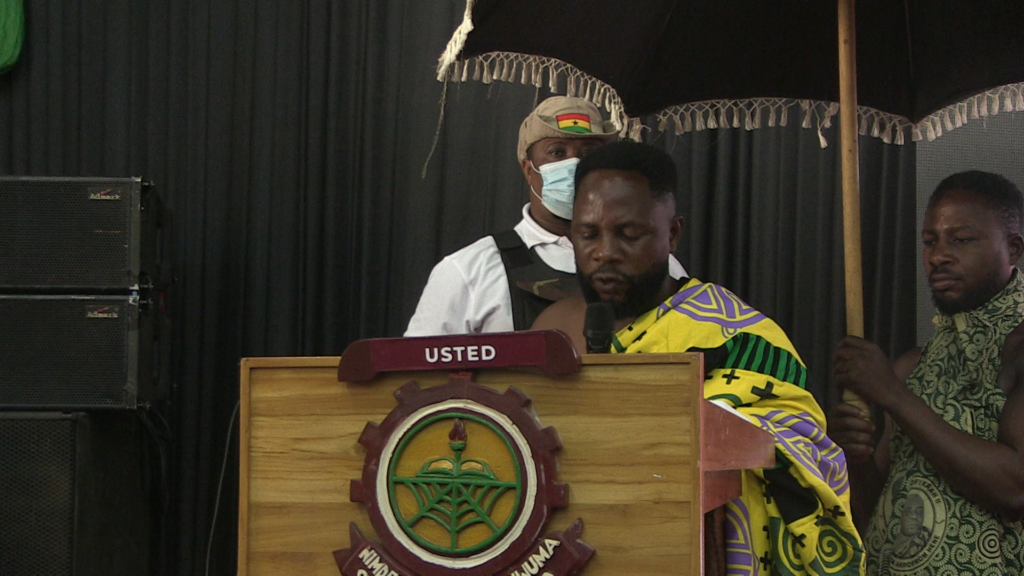
“The future of every nation depends on the quality of its leadership and the strength of its education system,” he said.
He said traditional leaders continue to play an important role in community development because of their close relationship with local people.
“Even today, traditional leaders remain close to the people. They understand the needs of their communities,” he said.
“Traditional leadership is not outdated.”
Nana Kessie I said traditional authorities can help improve access to education and support community development initiatives.
He also highlighted the importance of Technical and Vocational Education and Training (TVET) in addressing unemployment and promoting economic growth.
“For many years, TVET has not received the attention it deserves,” he said.
“Many young people have been made to believe that TVET is inferior to academic education. This mindset must change.”
According to him, practical skills training is essential for creating opportunities for young people.
“TVET is very important for economic growth and job creation,” he said. “A nation cannot reduce unemployment without investing in practical skills training.”
He called for stronger collaboration between governments, educational institutions and traditional authorities to support skills development.
“Therefore, governments, educational institutions, and traditional authorities must work together to strengthen TVET education,” he said.
Nana Kessie I also stressed the growing importance of technology and innovation.
“Digital literacy is no longer optional,” he said. “Young people need skills in technology, communication, problem-solving, and innovation.”
At the same time, he urged young people to preserve cultural values while preparing for the future.
“We must combine modern education with cultural wisdom,” he said.
Nana Kessie I called for collective action to build sustainable societies.
“The future is not something we wait for,” he said. “The future is something we build together. And the time to build is now.”