NEIP will help young entrepreneurs to scale up ideas – Board Chairman

0 0
Read Time:2 Minute, 6 Second

Owusu Nkrumah Ababio, the Board Chairman of the National Entrepreneurship and Innovation Programme (NEIP), says the programme will be a premier hub for young entrepreneurs to scale up their ideas.

He indicated this on Friday, July 4, 2025, after chairing the first board meeting of the programme since their appointment and swearing-in.

The NEIP is a Ghanaian government initiative aimed at fostering entrepreneurship and supporting startups and small businesses.

Its mandate is to provide integrated national support through business development services, startup incubators, and funding for young businesses.

NEIP’s mission is to create a robust ecosystem for entrepreneurship, driving businesses toward success and sustainability and ultimately contributing to Ghana’s middle-income status by building an industry-driven economy with decent jobs.

NEIP provides comprehensive support to startups and small businesses, focusing on their growth and sustainability.

It offers various business development services, including training, mentorship, and access to resources, to help businesses thrive.

In addition, NEIP provides startup incubators and funding opportunities to help young businesses get off the ground and scale their operations. This contributes to the overall economic development of the country by supporting businesses.

NEIP will help young entrepreneurs to scale up ideas – Board Chairman

A key objective of the programme is to create decent and sustainable jobs through the growth of businesses.

NEIP’s work is aligned with the broader national vision of consolidating Ghana’s middle-income status by building a strong, industry-driven economy.

Mr. Owusu Ababio stated that during the meeting they received a comprehensive briefing on NEIP’s current state and strategic health. They also had a productive interaction with management, gaining valuable insights into the agency’s activities.

The board chairman noted that the ‘Adwumawura Programme’ of the government is a flagship initiative that NEIP is working on implementing.

He indicated that moving forward, NEIP will work closely with relevant stakeholders to expedite the passage of the Ghana Startup Agency Bill.

“We are working diligently to create a transformative experience for young entrepreneurs, one that truly revolutionises Ghana’s start-up ecosystem,” Mr. Owusu Ababio assured.

As a seasoned entrepreneur with a passion for youth development and innovation, the Board Chairman emphasised, “I am committed to driving innovation and empowering young entrepreneurs in Ghana.”

“I am dedicated to leading a proactive and results-driven Board that will collaborate with our hard-working CEO, Eric Adjei, and management to ensure its success,” he reiterated.

Mr. Owusu Ababio aims to lead the NEIP with integrity, transparency, and people-centeredness to empower young entrepreneurs and drive inclusive national growth through entrepreneurship.

Happy
Happy
0 %
Sad
Sad
0 %
Excited
Excited
0 %
Sleepy
Sleepy
0 %
Angry
Angry
0 %
Surprise
Surprise
0 %

Legon students demand a ban on NPP Conference amid COVID-19 resurgence

0 0
Read Time:1 Minute, 17 Second

A group of level 400 students at the University of Ghana is preparing to petition the University’s Sports Directorate to block the New Patriotic Party (NPP) from holding its National Annual Delegates Conference at the UG Sports Stadium from July 17 to 19, 2025.

The students have raised concerns about a possible escalation of COVID-19 cases, warning that allowing thousands of delegates from across the country to gather could worsen the outbreak and potentially spread the virus beyond the university community.

They argue the event would violate preventive protocols issued by the University Health Directorate.

On June 23, the University of Ghana Health Services Directorate announced a resurgence of COVID-19 cases on campus and in surrounding areas, urging students, staff, and visitors to remain vigilant.

Two days later, the Dean of Students suspended all social gatherings, affecting events organised by student bodies, including the SRC and GRASAG.

The SRC, in a June 28 notice, also appealed to students to comply with preventive measures to curb the spread of the virus.

In Parliament on July 1, the Minister of Health confirmed 107 positive cases out of 316 suspected infections within the university community but assured that the outbreak had not yet spread beyond campus.

The concerned students say hosting the NPP’s large gathering in the current climate risks turning the stadium into a hotspot for transmission.

They are calling on the Sports Directorate, university management, and government to engage the NPP leadership and halt the conference to prevent a potential nationwide lockdown.

Happy
Happy
0 %
Sad
Sad
0 %
Excited
Excited
0 %
Sleepy
Sleepy
0 %
Angry
Angry
0 %
Surprise
Surprise
0 %

Man killed in robbery attack on Yeji-Kumasi Highway

0 0
Read Time:56 Second

A young man has been killed in an armed robbery attack on the Yeji-Kumasi highway in the Bono East Region.

The incident occurred on Sunday, July 6, 2025, between 6:30 pm and 7:00 pm at Domeabra, a suburb of Yeji in the Pru East District.

Eyewitnesses told Adom News that the robbers signalled the driver to stop.

As he slowed down, one of them fired a gun through the vehicle, hitting the deceased, identified as a livestock seller, around the jaw.

He died before the driver could bring the vehicle to a halt.

The robbers reportedly forced all passengers to lie down on the road before making away with their belongings.

They then fled into a nearby bush before police arrived at the scene.

In recent months, the area has seen a rise in highway robbery incidents, raising concerns among residents.

Many are calling on the Ghana Police Service and the government to urgently strengthen security along the route.

Residents say inadequate support and logistics for the local police are slowing response times and undermining efforts to curb crime in the district.

Happy
Happy
0 %
Sad
Sad
0 %
Excited
Excited
0 %
Sleepy
Sleepy
0 %
Angry
Angry
0 %
Surprise
Surprise
0 %

NACOC and FDA raid Offinso hideout to shut illegal cannabis liqueur factory

0 0
Read Time:1 Minute, 14 Second

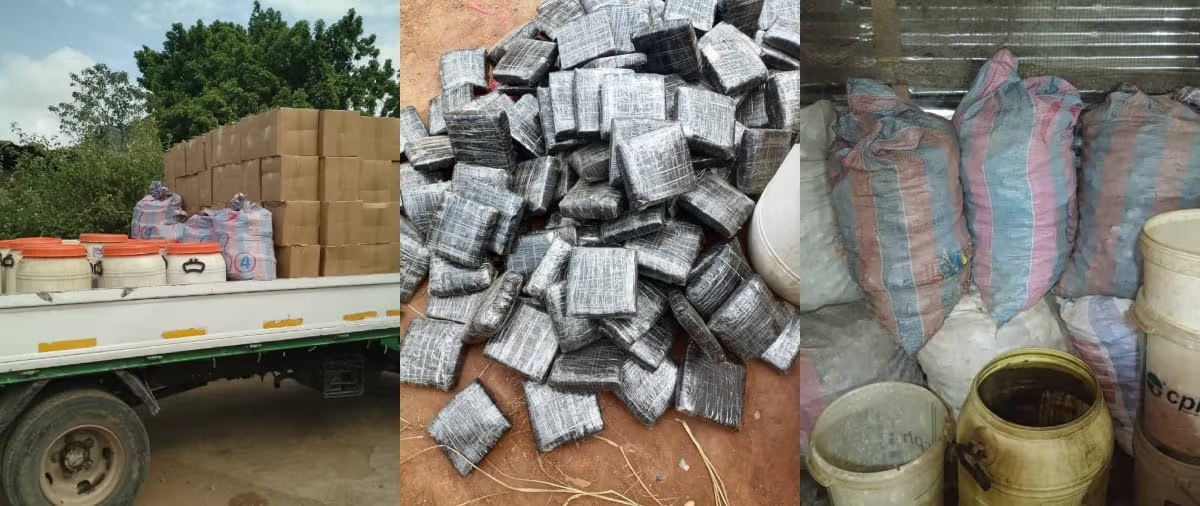
A secret cannabis-infused liqueur factory has been shut down by the Narcotics Control Commission (NACOC) and the Food and Drugs Authority (FDA) in a joint operation at Ntiribuoho in the Offinso Municipality, Ashanti Region.

The illegal facility, hidden inside a two-bedroom structure on a poultry farm, was being used to produce a cannabis-laced alcoholic beverage known as Famude, also marketed as Kings Orange Flavoured Liqueur.

Authorities say the setup was carefully concealed within the farm to avoid detection.

NACOC and FDA raid Offinso hideout to shut illegal cannabis liqueur factory

The bust was carried out by a team of seven officers, four from NACOC and three from the FDA, who acted on intelligence reports.

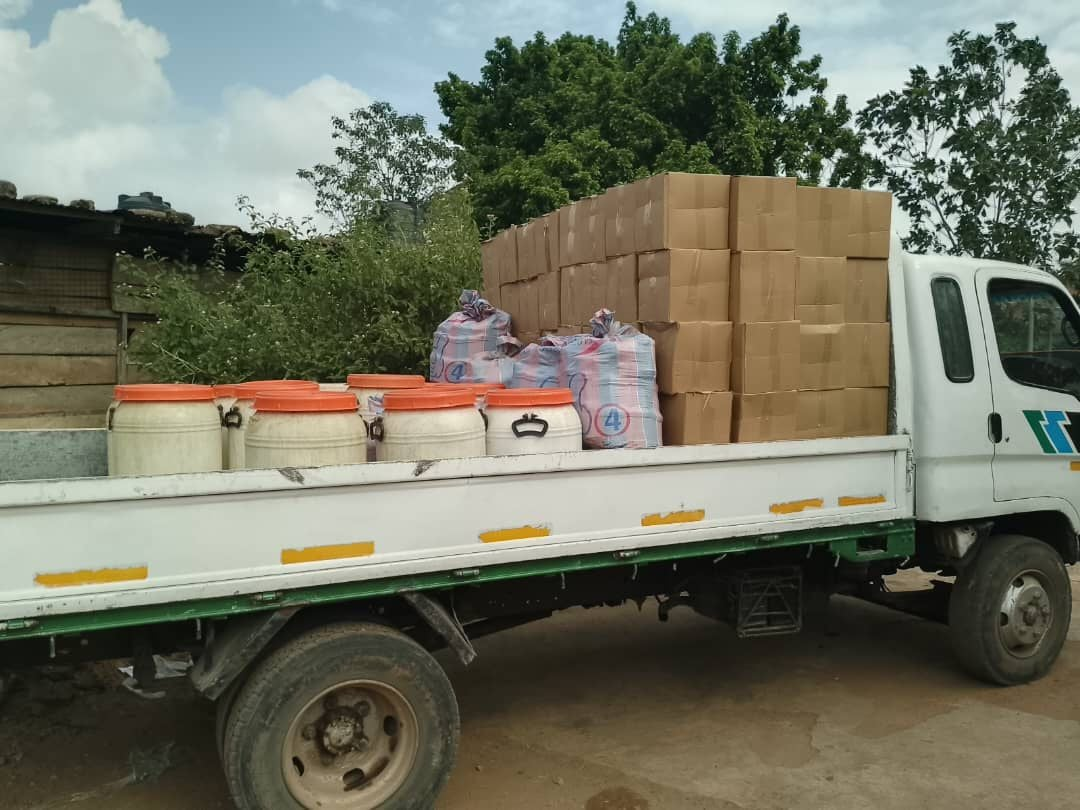
During the operation, they seized large quantities of the unauthorised liqueur and suspected narcotic substances.

One person was arrested at the scene, while others managed to escape. Law enforcement is actively pursuing the remaining suspects.

Officials from NACOC and the FDA stressed their joint commitment to public safety and warned about the health dangers associated with unlicensed products.

NACOC and FDA raid Offinso hideout to shut illegal cannabis liqueur factory

“This operation underscores our joint resolve to clamp down on the distribution of harmful and illegal substances in our communities,” a spokesperson for the FDA said.

They further cautioned that such illicit products violate Ghana’s drug and food safety laws and could endanger lives. Authorities are calling on the public to avoid unapproved consumables and to report any suspicious activities.

The suspect in custody is assisting with ongoing investigations as the hunt continues for the others involved in the underground operation.

Happy
Happy
0 %
Sad
Sad
0 %
Excited
Excited
0 %
Sleepy
Sleepy
0 %
Angry
Angry
0 %
Surprise
Surprise
0 %

200,000 children in Ghana have uncorrected refractive errors- Dr Agyemfra

0 0
Read Time:3 Minute, 15 Second

More than 200,000 children in Ghana suffer from uncorrected refractive errors, a leading cause of visual impairment, with one in four schoolchildren requiring vision correction.

A Chief Optometrist at the Trust Hospital in Accra, Dr Naa Kowah Agyemfra, said that although refractive error, which causes visual impairment, accounts for 50 per cent of the cases, less than 30 per cent of those with refractive errors have access to proper correction due to cost, access issues or myths.

“Obviously, this is not just a clinical problem but a public health crisis and a cultural communication gap,” she stressed.

Dr Agyemfra made the remarks while delivering an address at the second Refractive Error Day Symposium & 8th White Coat Ceremony at the Kwame Nkrumah University of Science and Technology (KNUST)

it was on the theme: “Bridging the gap: Dispelling refractive error myths to improve access”.

The white coat ceremony marked the transition of 100 level 400 Doctor of Optometry students from preclinical studies to clinical practice, where they were robed in white coats, widely recognised as a symbol of medical professionals.

They took the optometry oath, promising to practise the art and science of optometry diligently and conscientiously, uphold and promote the highest standards, ethics and ideals of the profession, as well as safeguard patients’ information.

Disproving myths about refractive errors, she explained that it was false to believe spectacles weaken the eyes.

Instead, she emphasised they help the eyes focus better, stressing “without them, you strain your eyes more and may even develop headaches”.

Additionally, she said sugar does not directly cause refractive errors.

However, it can affect the vision of people with diabetes, but glasses or spectacles are for refraction and not for sugar levels.

She also added, “children, teens and adults can all have refractive errors.”

Dr Agyemfra, also the Chief Executive Officer (CEO) of Eye Express, Accra, emphasised that wearing glasses was not a sign of weakness but a means of empowerment, noting, “refractive errors are not curses but are correctable conditions”.

Recruitment

The President of the Ghana Optometry Association (GOA), Professor Samuel Bert Boadi-Kusi, stated that no optometrists have been employed in the public sector for nearly five years, despite training institutions producing approximately 200 optometrists annually.

200,000 children in Ghana have uncorrected refractive errors- Dr Agyemfra

Instead, he said that what was always done was replacing those in active service who retired, resigned or died.

Therefore, he called on the government to recruit optometrists to work actively, especially in underserved areas.

Furthermore, he urged the Ministry of Health and its agencies to urgently review the long-overdue approval of a two-year horsemanship programme for Doctors of Optometry, with suitable remuneration.

Prof. Boadi-Kusi advocated refractive services to be integrated into primary healthcare and included in the National Health Insurance Scheme (NHIS). He emphasised that refractive error was a health issue and a barrier to education, opportunities and dignity.

Challenges myths

A Professor at the School of Optometry and Visual Science, University of Cape Coast (UCC), Professor Emmanuel Kwesi Abu, who chaired the event, said that globally, refractive errors remained underdiagnosed, undertreated and misunderstood.

Despite the availability of simple, affordable interventions such as spectacles, he expressed concern that millions still suffer because of misinformation, cultural beliefs and limited access to services.

He told the students that their field was rapidly evolving with advances in diagnostic imaging, ocular therapeutics, contact lens innovations, and public health strategies.

Therefore, he encouraged them to stay curious and keep up with new trends.

Impact

In a welcome address, the Head of Department of Optometry and Visual Science at KNUST, Professor Mohammed Abdul-Kabir, stated that refractive error, if left uncorrected, can significantly and adversely affect patients’ well-being and may also lead to poor academic performance among children.

He urged the students stepping out to begin the clinical phase of their training to work harder and stay up-to-date with modern eye health and optometry care techniques.

Happy
Happy
0 %
Sad
Sad
0 %
Excited
Excited
0 %
Sleepy
Sleepy
0 %
Angry
Angry
0 %
Surprise
Surprise
0 %

Deportation looms for Ghanaian students in UK as scholarship support collapses

0 0
Read Time:4 Minute, 45 Second

President of the Ghana PhD Cohort, Prince Bansah, has boldly spoken out on the escalating crisis confronting Ghanaian government-sponsored students in the United Kingdom, describing the situation as deeply distressing, worsening daily, and now jeopardising Ghana’s diplomatic standing.

Speaking on Joy FM’s Super Morning Show, Mr Bansah emphasised, “The reality on the ground is far more egregious than those snippets suggest — our colleagues have suffered beyond what words can capture.”

“Currently, stipends owed range from 8 to 36 months. Some students have not received a single payment in 36 months. For PhD candidates who have been here the full duration of three years, this means they have received nothing.”

He further revealed that even the universities have not been reimbursed to cover tuition.

“Let me clarify, the new registrar, in April, amid student protest threats, came to the UK in early May and engaged with investors. They reached an agreement to begin repaying debts, especially at the University of Birmingham, where they committed to paying about 10% of what they owed. The registrar also met with larger student groups and assured them that stipends would start being paid by the end of May.”

However, Mr Bansah expressed disappointment over the registrar’s return to Ghana, which was marked by a “very scathing media engagement” that “did not clearly communicate the purpose of his visit”.

He added, “That is the current standstill. We have tried repeatedly to contact officials here, but many students say their emails go unanswered.”

The situation is nothing short of excruciating.

Many students have been evicted and now rely on food banks.

“Anyone who has studied abroad understands that in the UK, hunger is a solitary battle — you can’t simply knock on a neighbour’s door like you might in Ghana. When you’re sick here, it’s only you and your God.”

Mr Bansah highlighted the devastating mental toll: “As I speak, some colleagues are battling depression, drowning in debt, and trapped by these conditions. I can attest personally, recently, while writing my final thesis, after delivering a speech, it seemed I had ‘gone off the board.’”

He disclosed that a well-being investigation linked his condition to nearly 20 months without stipends.

“The wellbeing officer informed me this would be escalated to the British Commons. They intended to contact my local Member of Parliament.”

“This is because Ghanaian authorities have refused to address the issue. It needs diplomatic escalation as a human rights concern,” he stressed.

Mr Bansah confirmed receiving an email from his MP last week requesting further details to raise the matter in the British Parliament.

“This is how serious and public this has become — and it threatens Ghana’s diplomatic reputation.”

He recalled some students were withdrawn last year, and he, along with others able to help, sheltered a few. “But we cannot sustain support for most colleagues. The crisis is dire.”

Echoing concerns from fellow students, he described how some male students are forced into menial jobs like “making spends” — slang for casual labour.

“These are harsh realities. At first, I thought the issue might be exaggerated, but flyers advertising such work circulated among Masters and Undergraduates confirm it. If male students are pushed to this, imagine what female students, especially PhDs, endure.”

He explained the unique challenges for PhD candidates: “The PhD journey demands humility and dedication. We avoid publicising this burden to protect our mental health, but we have no choice.”

Unlike master’s and undergraduate students on summer break who can work legally, PhD students have no breaks and work relentlessly.

“This morning, I’m in my office writing pages of my thesis — far beyond the 20 hours per week UK visa rules allow.”

He continued, “You can’t freely seek work either, as employers prefer permanent staff or full commitments. No one wants to hire someone for only 20 hours weekly.”

Mr Bansah called this predicament “huge and heartbreaking”.

“It pains me when people politicise or trivialise this issue. The calibre of students sponsored is well-known, transcending all political divides. Our PhD group numbers just over 80.”

“This is neither a political nor a partisan matter. It’s a grave crisis impacting students’ mental health and Ghana’s international relations.”

He concluded with an urgent appeal: “We understand this is a new government and it’s unfair to fault them for a legacy problem. But we plead for immediate and decisive action.”

Background

The ongoing crisis facing Ghanaian government-sponsored students abroad has escalated to alarming levels.

Many scholars are experiencing prolonged non-payment of stipends and tuition fees, severely affecting their academic progress and well-being.

At the University of Memphis, students have endured a full year without tuition payments from the Ghana Scholarship Secretariat (GSS), despite existing formal agreements under a Memorandum of Understanding (MOU) aimed at supporting their education and enabling them to contribute to national development upon return.

Similarly, in the United Kingdom, students have not received stipends for periods ranging from 8 to 26 months, with tuition fees unpaid for over two academic years. The total debt owed to these students and their institutions is estimated to exceed £39 million.

This financial neglect has resulted in dire consequences, including threats of eviction, exclusion from academic programmes, and the looming risk of deportation.

The situation has been further complicated by conflicting public statements from GSS officials, particularly the Registrar, whose remarks have contradicted earlier commitments made directly to the students.

These developments have sparked urgent demands for government accountability and swift intervention to address the crisis.

The affected students emphasise that their education is not merely a personal endeavour but a critical investment in Ghana’s future.

Happy
Happy
0 %
Sad
Sad
0 %
Excited
Excited
0 %
Sleepy
Sleepy
0 %
Angry
Angry
0 %
Surprise
Surprise
0 %

Traditional festivals are now grounds to settle personal scores – Kumadoe

0 0
Read Time:2 Minute, 44 Second

Security Consultant Richard Kumadoe has raised concerns over the misuse of traditional festival platforms in Ghana to settle personal scores, often with deadly consequences.

His remarks followed the tragic death of Fatima, a second-year student at Bimbilla Senior High School, who was killed by a stray bullet during the annual Fire Festival in Bimbilla, Nanumba North Municipality in the Northern Region.

The incident occurred as a crowd moved in procession from the regent’s palace to Wampu Dam, where festival rituals were expected to take place on July 6.

Speaking in an interview on TV3, Mr Kumadoe shared his concerns, calling for urgent reforms in arms control and festival security.

“Traditional festivals have become vulnerable grounds where people want to settle scores,” he said. “The traditional authorities and the particular chiefs in general have no control over those who come there with those arms, let alone the types of arms they will want them to possess.”

He linked the presence of deadly weapons at festivals and funerals to a lack of oversight in arms licensing and control.

“There are certain categories of individuals in this country whose official business is to import arms into Ghana as a legitimate business. Considering the fact that arms keep spilling off into the hands of illegitimate people, I think we need to consider the due diligence process in that particular area.”

He called for strict background checks and improved registration systems.

“There has to be a strict background check on who is eligible to own a weapon and what type of weapon they are supposed to own. Then the renewal and the registration licensing with the police will have to be enhanced so we can monitor to see where the arms are going.”

He also warned about unlicensed local arms production, saying, “We have a major challenge with people who manufacture arms locally. I will have a word with my brother, Dr Adam Bona, who is a renowned security analyst, and see how they can come up with a strategy to collate all these centres and have a monitoring mechanism.”

Mr Kumadoe pointed to a broader failure of the state to enforce laws.

“Non-punishment of offences will always rationalise bad behaviour and promote anti-social tendencies in society,” he said. “The state itself has lost track when it comes to punitive actions or punishing people who flaunt our laws.”

On the misuse of firearms at social events, he added, “We have also moved from just traditional authorities holding festivals to funerals as well. Funerals for certain categories of people are being accompanied by the shooting of guns, and those who shoot these guns have no legitimacy and sometimes have no association with the family.”

Describing Fatima’s death, he rejected the notion of it being a random event. “This cannot be a stray bullet. This is an amateur. This is somebody who wants to settle a score, and this is somebody who misbehaved.”

He urged the government to take control of the situation before more lives are lost. “It has become high time the state itself takes a central control or takes a centre stage in monitoring or coming up with guidelines as to how traditional festivals, those that are associated with the shooting of guns, are being done.”

Happy
Happy
0 %
Sad
Sad
0 %
Excited
Excited
0 %
Sleepy
Sleepy
0 %
Angry
Angry
0 %
Surprise
Surprise
0 %